Critics of hydraulic fracturing are challenging the wording of a New Brunswick government survey used in its review of the province's fracking moratorium, arguing the questionnaire may not accurately measure public opinion on the controversial practice.
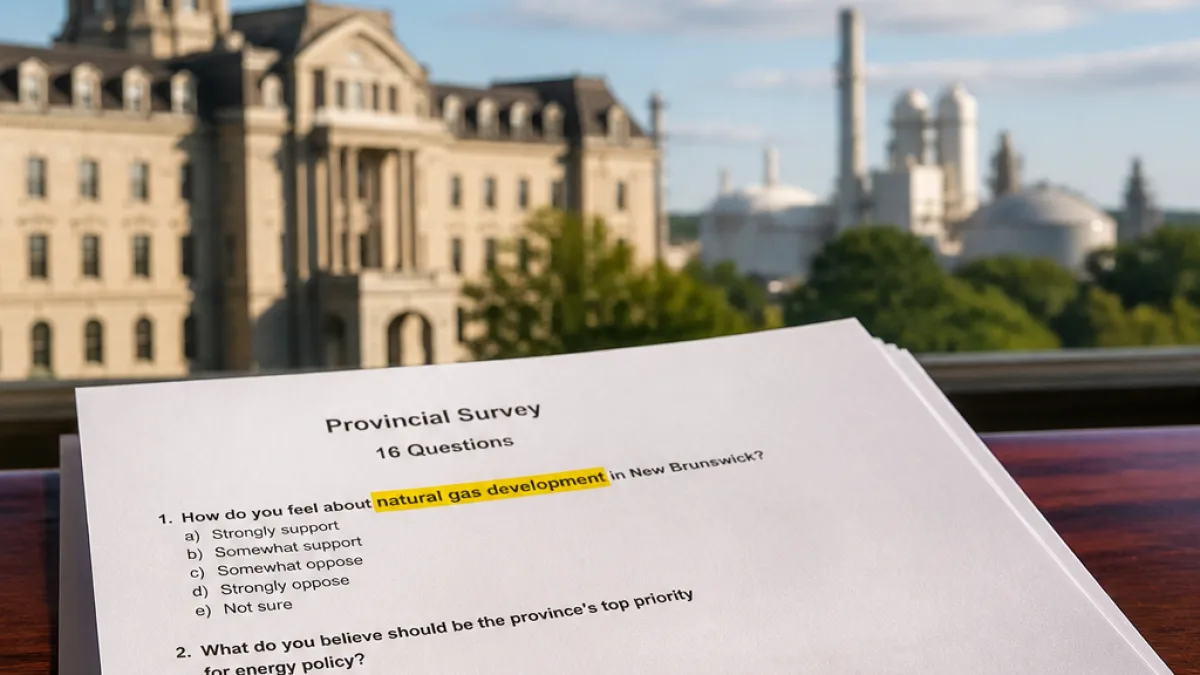
The public consultation closed on Oct. 23, five days before the concerns were reported. The survey contained 16 questions covering respondents' demographic information, their awareness of the moratorium and their views on what the government described as “natural gas development.”
That wording is at the centre of the criticism. Bev Gingras, director of the Conservation Council of New Brunswick, said the language does not clearly ask residents how they feel about gas produced through hydraulic fracturing, commonly known as fracking.
“Using the term natural gas is problematic,” Gingras said.
Gingras said the word “natural” can carry a favourable association and argued that natural gas is not always understood to mean gas extracted through fracking. In her view, the terminology could influence how people respond before they have considered the specific technology covered by the moratorium.
A review announced in August
Premier Susan Holt announced in August that the Liberal government would examine the moratorium, which was adopted 12 years ago. The measure targets hydraulic fracturing, a technique used to extract gas by injecting fluid into underground rock formations.
The survey's wording has prompted calls for the province to commission a new assessment that is independent of the government review. The Conservation Council is among those asking for an outside, third-party process to determine what New Brunswickers think about the moratorium and possible natural gas development.
Louise Comeau, a senior adviser at the Re.Climate Centre at Carleton University, also questioned the approach. Comeau works on developing public trust in renewable energy and said some of the survey's questions appeared to lead respondents toward a particular conclusion.
“Almost the very opening line is, you know, we're under threat,” Comeau said.
What the questionnaire asked
| Survey detail | Information reported |
|---|---|
| Number of questions | 16 |
| Closing date | Oct. 23 |
| Main topics | Demographics, awareness of the moratorium and views on “natural gas development” |
| Policy under review | New Brunswick's moratorium on hydraulic fracturing |
One question asked participants to rate the importance of natural-resource revenue in funding public services, including health care, education and infrastructure. Gingras pointed to that question as another example of language she believes could steer answers by linking resource development with services that residents rely on.
The criticism does not establish how respondents answered the survey, and the source material does not provide results. It does, however, identify a dispute over whether the questionnaire distinguishes clearly between conventional references to natural gas and the fracked gas associated with the moratorium debate.
The disagreement comes as the Holt government considers the future of a policy that has been in place for more than a decade. The province's review could therefore shape discussion of energy development, public revenue and environmental protection, while also testing how the government weighs public consultation.
Calls for a broader public process
For the Conservation Council and other critics, an independent review would provide a way to examine public sentiment without the terminology they say is favourable to development. Their concern is not only about the number of questions, but also about the terms used to describe the issue and the way resource revenues are presented.
The survey's closure means the immediate focus is now on how the government will use the information gathered. The source material does not indicate whether the province plans to release the responses, publish its methodology or conduct another consultation. Those details will matter to residents assessing whether the review reflects opinions about fracking itself, rather than broader attitudes toward natural resources.