Liberals widen quarterly fundraising edge
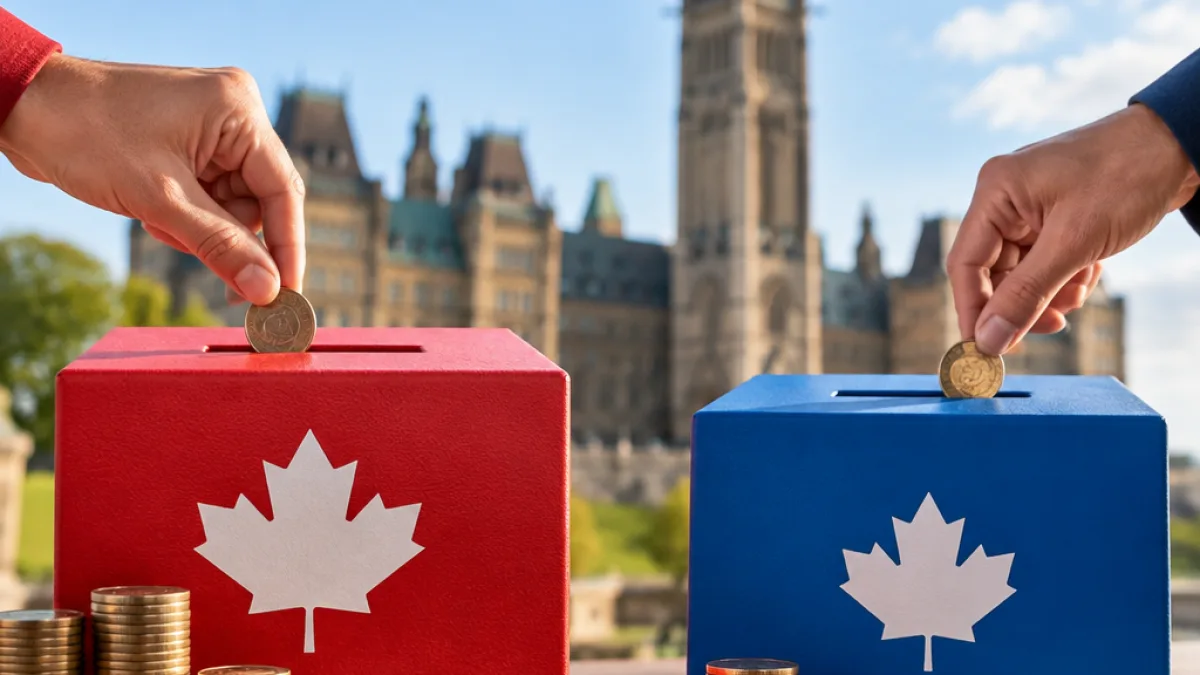
The Liberal Party raised $4.9 million in the third quarter of 2026, surpassing the Conservatives by almost $1 million, according to records published by Elections Canada. The Conservatives collected $3.9 million during the same period.
The figures mark a reversal from the previous quarter, when the Conservatives reported $5 million in contributions and the Liberals raised $4.3 million. On that comparison, Conservative fundraising fell by $1.1 million between the second and third quarters, while Liberal fundraising increased by $600,000.
| Party | Second quarter | Third quarter | Quarterly change |
|---|---|---|---|
| Liberals | $4.3 million | $4.9 million | +$600,000 |
| Conservatives | $5 million | $3.9 million | -$1.1 million |
Fundraising totals do not determine an election result, but they provide a concrete snapshot of the financial support available to national parties. That support can affect a party’s capacity to communicate with voters, organize in ridings and prepare for future campaigns. The latest numbers therefore arrive at a politically significant moment, as both parties face a series of federal by-elections early in December.
Fundraising figures become a point of political attack
Conservative Leader Pierre Poilievre was asked Sunday about his party being overtaken by the Liberals in the third-quarter figures. He responded by directing criticism at Prime Minister Mark Carney and the government’s relationship with business interests.
“using the corporate power brokers that he’s paying off”
Poilievre also accused Carney of providing an unprecedented gusher of gifts to his corporate friends through subsidies and handouts. Those statements are political allegations made in response to the fundraising figures; the Elections Canada records identify the amounts raised by each party but do not, in the supplied information, attribute the contributions to any particular source or explain them through government spending.
Carney, for his part, called six federal by-elections Sunday in ridings located in Quebec, Ontario and Saskatchewan. The vote is set for Dec. 7. The announcement gives the fundraising comparison an immediate electoral backdrop, although the available records do not identify the six ridings or provide polling information about any of the contests.
A test of organization as well as financial support
By-elections are fought in individual constituencies rather than across the country, making local candidates and riding-level organization important to the outcome. At the same time, the contests give national parties an opportunity to test their messages and mobilize supporters between general elections. The third-quarter totals cannot show how much either party will spend in the six campaigns, but they do indicate that the Liberals entered this period with a stronger quarter of fundraising than the Conservatives.
- The Liberals raised $4.9 million in the third quarter.
- The Conservatives raised $3.9 million, down from $5 million in the second quarter.
- Six federal by-elections will take place on Dec. 7 in Quebec, Ontario and Saskatchewan.
The figures will now be read alongside the parties’ campaign activity in those ridings. For the Liberals, the results offer evidence of improved quarterly fundraising compared with the spring period. For the Conservatives, the decline from the previous quarter creates a vulnerability that Poilievre has sought to address politically by attacking the government’s alleged ties to corporate interests.
Neither development, on its own, establishes broader national support. The fundraising records measure money collected during a defined period, while the by-elections will measure voter choices in six specific constituencies. Together, however, they place the parties’ financial performance and competing political narratives at the centre of the next phase of federal politics.