A midterm test tied closely to Trump
Republicans heading into this week’s U.S. midterm elections face a familiar political obstacle: voters often use the contest to pass judgment on the president’s party. This time, however, the challenge is unusually direct. Donald Trump has made the elections a test of his own record, leaving Republican candidates to defend decisions on tariffs, the war in Iran and costly renovations in Washington.
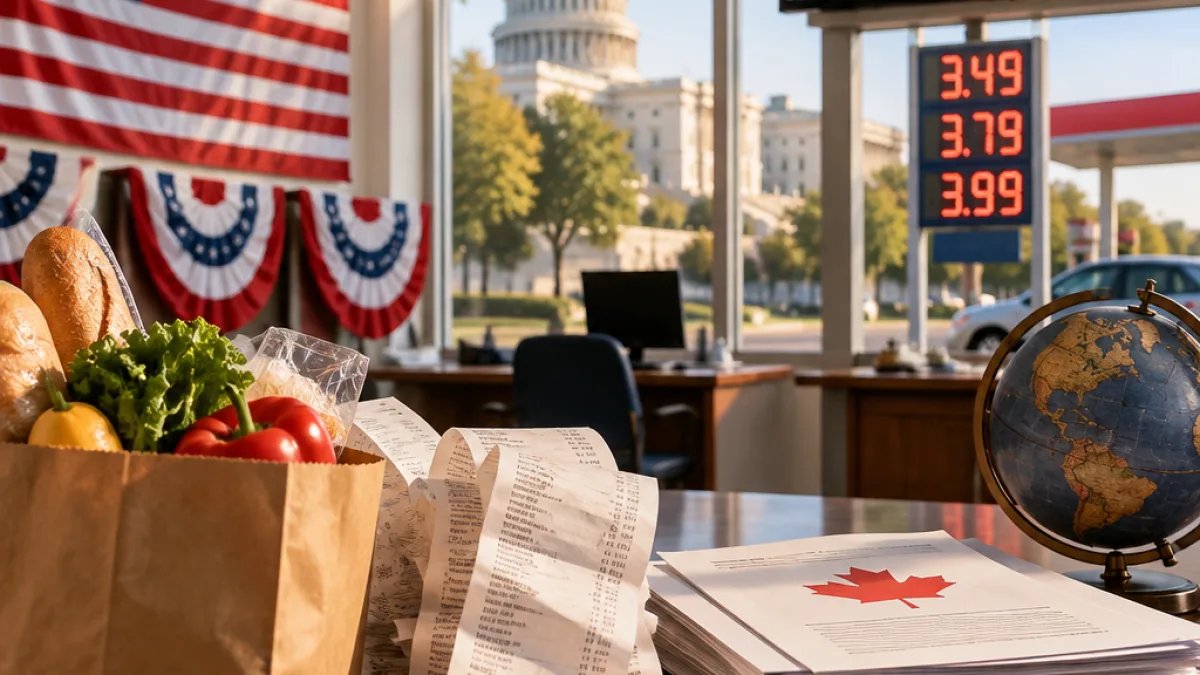
The political risk is that voters may connect those decisions to conditions they experience in their daily lives. Trump’s import taxes have disrupted the agricultural economy and helped trigger a trade conflict with Canada. The consequences have also become part of the debate over gas prices, grocery bills and persistently high inflation. Because Trump has openly claimed responsibility for his administration’s actions, Republicans have less room to attribute the fallout to previous governments.
That has complicated the traditional strategy of distancing vulnerable candidates from an unpopular president. Republicans cannot easily separate themselves from Trump while also relying on his support and defending his agenda. The president, for his part, has continued to insist that the economy is performing well, even as the campaign debate focuses on affordability.
“This administration’s actions are directly responsible for rising costs,” former Democratic president Barack Obama said in Ohio.
Foreign policy becomes an electoral liability
The conflict in Iran has added another difficult issue for Republican candidates. Trump had pledged that the war would be over within weeks, but the fighting has continued for eight months, according to the source, with no clear plan for bringing it to an end. That outcome conflicts with his earlier promise to avoid new Middle East conflicts and has made the issue harder to manage for lawmakers who support the military effort.
Rep. Derrick Van Orden of Wisconsin, identified as one of the most vulnerable Republican members of the House, said during a debate that the war was making it substantially more difficult for his party to retain control of both chambers of Congress. His position illustrates the bind facing Republican candidates: they may support the administration’s policy while still worrying about the political consequences of that policy.
- Tariffs: Import taxes have affected agriculture and contributed to a trade dispute with Canada.
- Affordability: Higher fuel and food costs have become central campaign concerns.
- Iran: The continuing war has raised questions about the administration’s strategy and earlier promises.
- Congress: Republican candidates are defending majorities in both the House and Senate.
Money may not overcome voter concerns
Republicans retain one significant advantage: financial resources. Trump’s political organizations have spent nearly $277 million since September to support Republican candidates, putting the election on course to become the most expensive U.S. midterm contest ever. That spending has allowed the party to maintain a powerful presence in races across the country.
Money, however, may not resolve the broader problem confronting Republican candidates. The tariff dispute has placed them on the defensive in Senate contests in Iowa, Michigan, Kansas, Nebraska, Ohio and Maine, states where agricultural interests and the cost of trade policy have become politically relevant. The party must also defend the president’s economic message while voters continue to express concern about the price of necessities.
Trump has shown little sympathy for those affordability concerns, dismissing them as a “hoax.” That response has made it more difficult for Republicans to present themselves as attentive to household pressures while remaining aligned with the president. The central question for the party is therefore not simply whether Trump can mobilize his supporters, but whether his record has created enough dissatisfaction to overcome that loyalty.
For Canada, the campaign’s focus on tariffs carries particular significance. The trade conflict has already become an issue in American races, demonstrating how decisions made in Washington can shape political debates on both sides of the border. If Republicans lose ground, the result would reflect the domestic consequences of Trump’s policies as well as the broader tendency of midterm elections to punish the governing party. If they hold their majorities, the outcome would indicate that his political organization, financial spending and demand for Republican loyalty were strong enough to withstand those pressures.