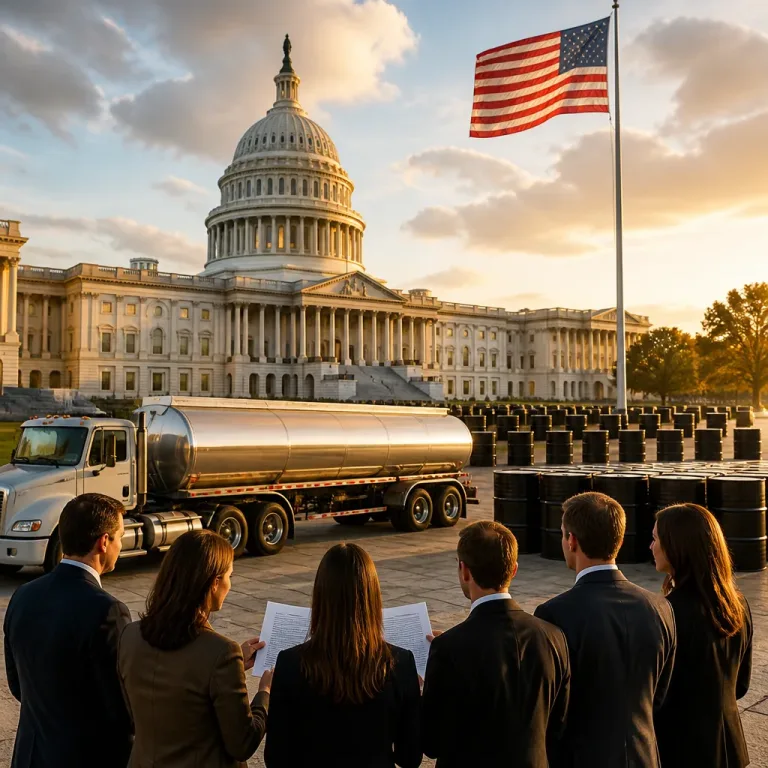

Former president Donald Trump plans to deliver a speech on crime and public safety at the Nassau County Police Academy in suburban Long Island on Friday, using the platform to spotlight recent FBI data that the White House says show a decline in violent crime for 2025.
Pitch to voters in a pivotal county
The appearance is part message‑crafting, part campaign theatre. The White House framed the event as evidence that Trump has fulfilled a central campaign promise to "make America safe again," and as a contrast to Democrats it characterised as antagonistic to law enforcement.
"President Trump promised to make America safe again and the data proves he has done just that," White House spokesperson Lauren Bis said. "Unlike Defund‑the‑Police Democrats, President Trump will always stand with our law enforcement officers and deliver safer American neighbourhoods."
That messaging is aimed, in particular, at voters in Nassau County — a suburban Long Island jurisdiction Mr. Trump narrowly carried in 2024, and one that has not been reliably Republican in recent memory. The county contains two Democratic-held U.S. House seats that Republicans see as competitive this fall, and it is home turf for county executive Bruce Blakeman, the Trump‑backed Republican challenging New York governor Kathy Hochul.
Broader political context
The trip comes as Republicans seek to capitalise on one of their traditionally strongest issues: public safety. But the timing also has political risk. Mr. Trump’s approval numbers are described as lagging, and the administration faces criticism over an unpopular conflict in Iran, which remains unresolved and could diminish the electoral traction of a domestic policy focus.
Analysts will watch whether the criminal‑justice theme translates into measurable support for Republican candidates in the fall, especially in districts where local concerns about policing and safety intersect with national debates.
Other developments noted alongside the visit
The live coverage of U.S. politics on Thursday also flagged several items the White House and Republican strategists must contend with alongside the crime narrative:
- A man named Luigi Mangione, accused of shooting a health‑insurance executive, is due in federal court and is expected to plead guilty to stalking or similar charges.
- Actions by allies of Mr. Trump on the Kennedy Center board escalated the dispute over how the celebrated cultural institution should commemorate the former president — moves that could conflict with a federal court order.
- The Pacific‑based aircraft carrier USS George Washington began sailing toward the Middle East amid reports of ongoing mental‑health and supply problems aboard the long‑deployed USS Abraham Lincoln.
Each of these items reflects competing storylines that could shape public impressions: domestic law‑and‑order messaging, high‑profile criminal cases, cultural institutions grappling with political symbolism, and military movements tied to foreign crises.
| Event | Location | Purpose |
|---|---|---|
| Trump speech | Nassau County Police Academy, Long Island | Highlight 2025 FBI crime statistics and promote Republican candidates |
| USS George Washington deployment | Pacific to Middle East | Respond to security developments amid reports of issues on USS Abraham Lincoln |
What to watch next
The immediate questions are empirical and political: whether the FBI figures the White House plans to release will withstand scrutiny and whether they will shift voter sentiment in closely contested suburban districts; and how national concerns — notably the war in Iran and Mr. Trump’s approval ratings — will blunt or amplify the law‑and‑order message.
For now, the announcement signals a deliberate decision by the former president and his allies to lean into crime and safety as core campaign themes, and to deploy symbolic events in swing areas where margins can be thin and perceptions of public safety can sway undecided voters.
As the midterms approach, both parties are likely to test competing narratives: Republicans emphasising falling violent‑crime metrics and support for police; Democrats highlighting other issues that may resonate with suburban voters, from the economy to foreign policy and community safety approaches that do not depend solely on policing.