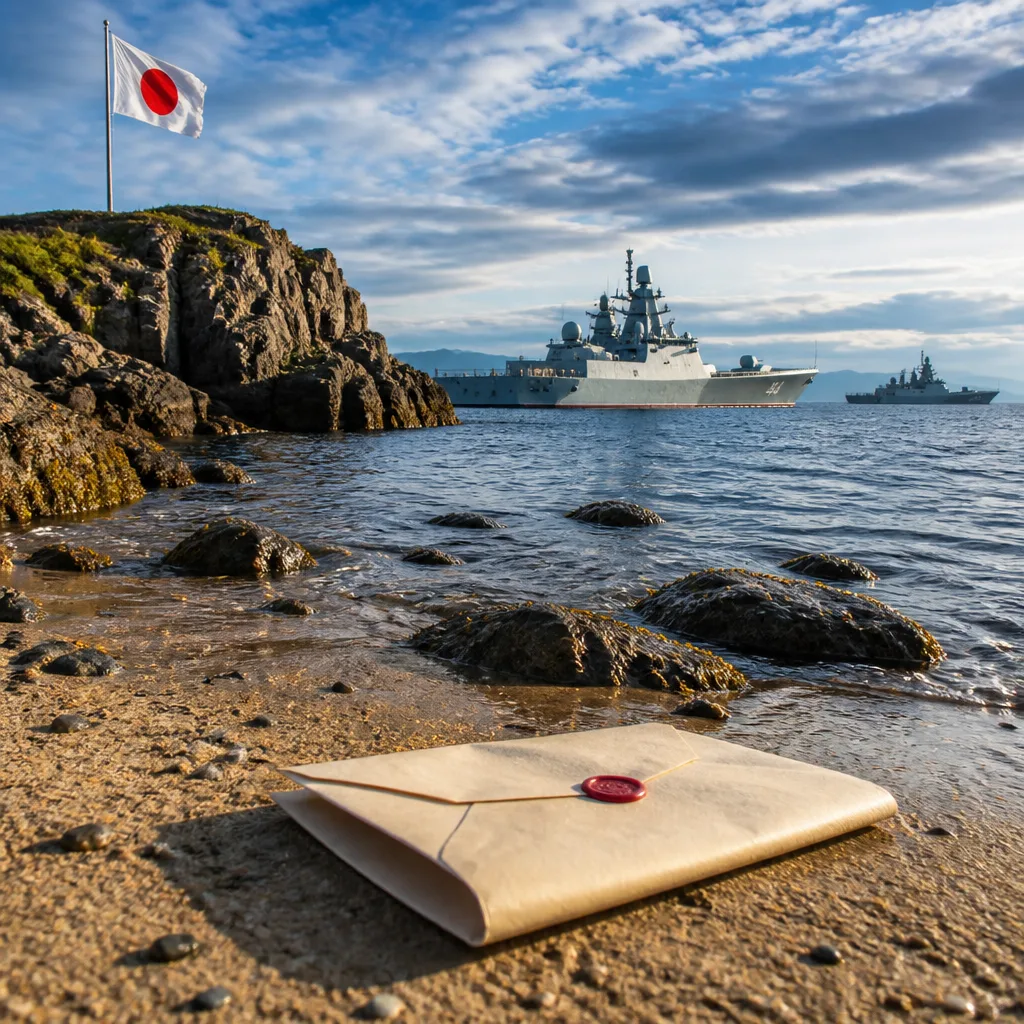
WASHINGTON — The United States on Friday declared its recognition of Japan’s sovereignty over the islands visited by Russian President Vladimir Putin, sharply underscoring allied unity in the face of a move that Tokyo called a violation of its territory.
Rapid diplomatic responses
George Glass, the U.S. ambassador to Tokyo, posted on X that Washington remains “unwavering in its support” for its ally and “recognition of Japanese sovereignty over the Northern Territories.” The Northern Territories is the Japanese name for the group of islands also referred to as the Kurils, territory long contested since the end of World War II.
“The United States remains unwavering in its support of its most important ally and in its recognition of Japanese sovereignty over the Northern Territories.” — George Glass, U.S. ambassador to Tokyo
Japanese Prime Minister Sanae Takaichi described the islands as “an inherent part of Japan’s territory, both historically and under international law,” and Tokyo summoned Russia’s ambassador in response to Mr. Putin’s visit — the first by a Russian president to the islands since 2010, when Dmitry Medvedev travelled there.
The Russian embassy in Tokyo pushed back, saying its ambassador told Japanese officials the islands are “an integral part of the Russian Federation” and that Mr. Putin’s travel there was not “a matter for discussion with foreign states.”
International and multilateral reactions
A spokeswoman for U.N. Secretary-General Antonio Guterres, Shirin Yaseen, framed the matter as an issue between the two countries, saying it was “a bilateral issue between member states.” Her comment came as international capitals weighed how publicly to respond while managing other ties with Moscow.
Analysts note the visit heightens tensions in a part of the world where alliances and territorial claims have grown more sensitive amid broader geopolitical competition. For Washington, the response aligns with a pattern of supporting allies in territorial disputes, reinforcing the U.S.-Japan security relationship in the Indo-Pacific.
What transpired and what it means
Mr. Putin’s trip to the northern islands — seized by the Soviet Union in 1945 at the close of the Second World War — represents a symbolic affirmation by Russia of its claim. Japan has maintained that the islands were taken unlawfully and has sought their return through decades of negotiation.
The immediate consequences are diplomatic: Tokyo summoned Russia’s ambassador, and Washington issued a clear public rebuke of Moscow’s actions. The episode may complicate any near-term prospects for a bilateral settlement and could harden domestic positions in both Tokyo and Moscow.
- Key actors: United States (George Glass), Japan (Prime Minister Sanae Takaichi), Russia (Russian embassy in Tokyo), United Nations (Shirin Yaseen).
- Historical note: The last Russian presidential visit to the islands occurred in 2010 during Dmitry Medvedev’s presidency.
- Diplomatic effects: Tokyo summoned Moscow’s envoy; Washington reiterated explicit support for Japan’s territorial claim.
| Actor | Position |
|---|---|
| United States (George Glass) | Recognises Japanese sovereignty over the Northern Territories |
| Japan (Sanae Takaichi) | Calls the islands an inherent part of Japan historically and under international law |
| Russia (embassy in Tokyo) | Maintains islands are integral to the Russian Federation; visit not open to outside discussion |
| United Nations (Shirin Yaseen) | Describes the matter as a bilateral issue between member states |
For Ottawa, which sits outside the immediate territorial dispute but participates in allied security discussions, the incident is another reminder of the volatility in global diplomacy. Canada’s foreign-policy posture often aligns with allies on principles of territorial integrity and rules-based order; developments in the Indo-Pacific continue to influence conversations at NATO and other multilateral fora.
At a minimum, the episode underscores how symbolic gestures — presidential visits, public statements and the summoning of envoys — can quickly inflame long-standing disputes and force allied capitals to take explicit positions. Whether this visit will alter negotiation dynamics over the islands remains uncertain, but in the short term it has sharpened rhetoric and drawn lines between Moscow, Tokyo and Washington.
As the immediate diplomatic ripples are assessed, governments in the region and beyond will be watching whether this deepened assertiveness on territory translates into broader shifts in posture or policy.