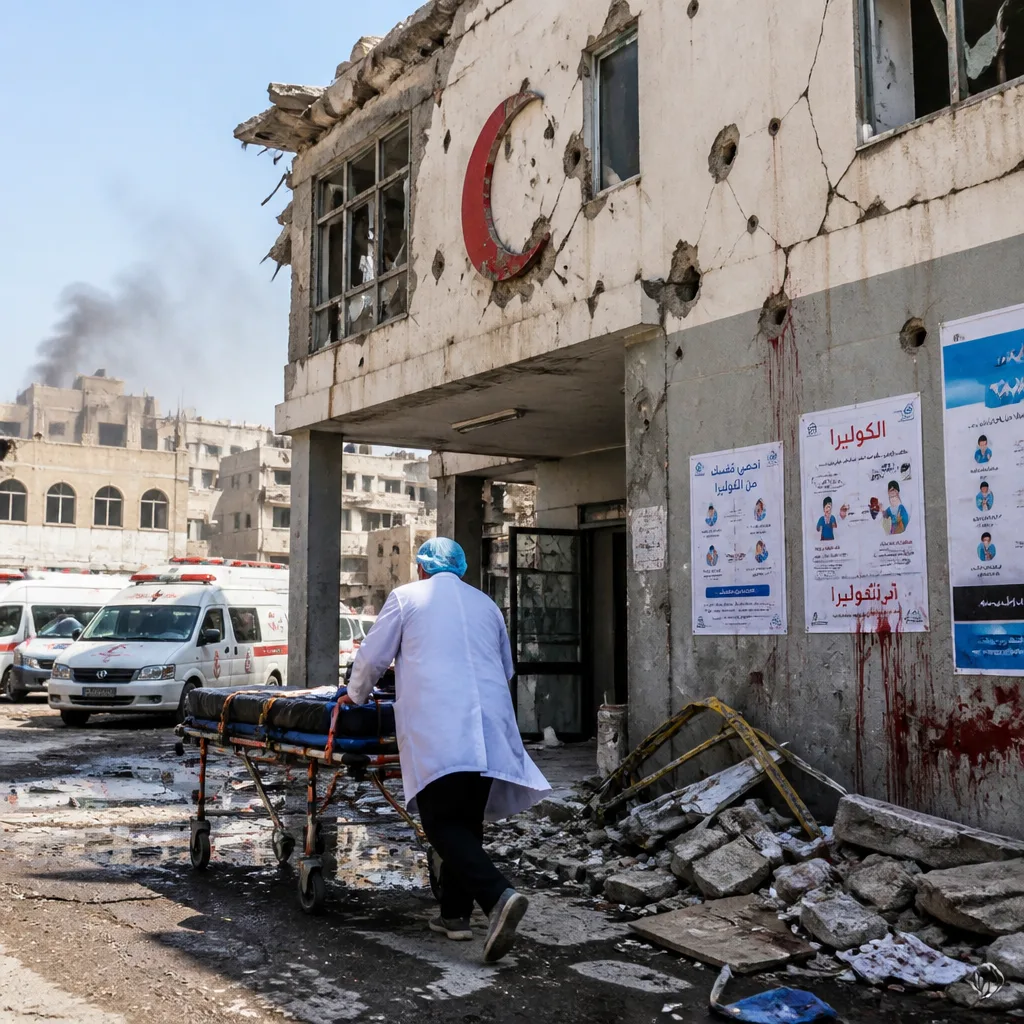
The World Health Organization says intensified fighting in Yemen is driving a health system already eroded by more than a decade of conflict to the verge of collapse, compounding the country’s humanitarian emergency and heightening the risk of large-scale disease spread.
Health services disrupted as violence intensifies
Speaking from Cairo in remarks relayed to journalists in Geneva, WHO emergency director for the eastern Mediterranean region Annette Heinzelmann described how insecurity, destruction of infrastructure and the displacement of health workers are preventing many Yemenis from receiving essential care. She said nine health facilities or assets have been either damaged, rendered inoperable, closed or directly attacked in the hard-hit provinces of Taiz, Lahj and Hodeidah.
“Yemen’s latest escalation is pushing an already fragile health system towards breaking point,” Heinzelmann said.
The agency reported that some hospitals have had to shift staff and operating capacity away from routine services to treat a surge in trauma cases. As a result, comprehensive emergency obstetric and newborn care has been suspended in two hospitals in Marib and Ras Al-Arah, the WHO said.
Disease outbreaks and malnutrition
Even before the most recent hostilities, WHO estimated that only about 60 per cent of Yemen’s health facilities were fully functional. The renewed violence has aggravated pre-existing challenges including high levels of malnutrition and active outbreaks of communicable diseases.
- Cholera: nearly 8,000 suspected cases this year with 22 deaths.
- Dengue: more than 9,600 suspected cases with 37 deaths.
- Measles: over 22,000 suspected cases and 128 deaths.
The WHO cautioned that cramped and overcrowded living conditions among displaced populations increase the likelihood of disease transmission and make delivery of humanitarian aid more difficult.
Scale and consequences of displacement
United Nations figures cited by the WHO indicate that at least 145,000 people were displaced in Yemen during the current month alone as clashes intensified. The mass movement of people, combined with damage to water and sanitation systems and limited access to parts of the west coast, raises the prospect of larger outbreaks and further deterioration of public health.
| Indicator | Reported 2026 figures (year‑to‑date) |
|---|---|
| Suspected cholera cases | ~8,000 (22 deaths) |
| Suspected dengue cases | ~9,600 (37 deaths) |
| Suspected measles cases | ~22,000 (128 deaths) |
These figures underline the dual humanitarian and public health challenge: responding to immediate traumatic injuries from combat while attempting to control preventable infectious diseases in a weakened system.
What this means for humanitarian response
The WHO pointed to a combination of barriers hampering relief efforts: insecurity that limits access for aid workers, shortages of essential medicines and supplies, and the redirection of scarce clinical capacity toward emergency trauma care. Those constraints threaten routine services including maternal and newborn care, vaccinations and treatment for malnutrition.
International agencies and donors face the task of scaling up medical and logistical support rapidly, while negotiating safe humanitarian access to communities cut off by fighting. The WHO’s warning is an appeal for greater resources and protection for health infrastructure to avert further loss of life from both conflict and epidemics.
As Yemen’s conflict enters another destructive phase, the health outlook for millions of civilians depends on restoring access to functioning health facilities, delivering lifesaving supplies and bolstering vaccination and water‑sanitation efforts to curb the spread of communicable disease.