The Alberta government is moving to reduce and standardize the education share of property taxes, a decision Premier Danielle Smith says will save property owners nearly $100 million across the province.
The revised provincial rate will apply to residential, farmland and non-residential properties, with municipalities using the new system when they calculate property taxes in 2027. The province also plans to hold the education tax rate unchanged for the following three years.
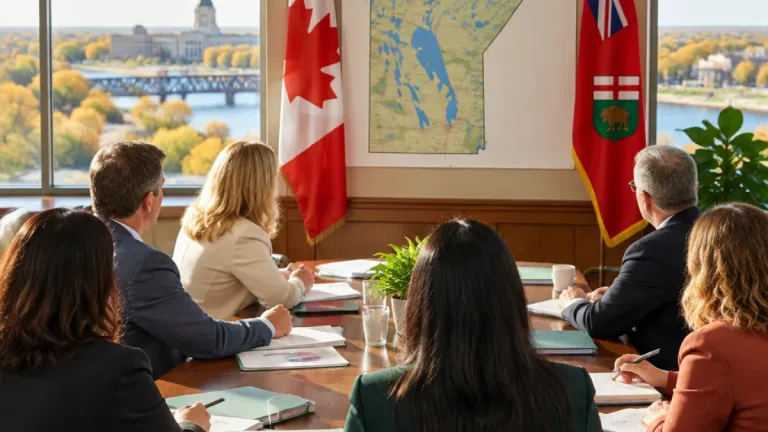
Smith announced the policy Friday at Calgary city hall alongside cabinet ministers and Calgary Mayor Jeromy Farkas. The move comes after an unusually sharp dispute between the province and Alberta’s largest city over the education levy’s role in Calgary’s 2026 property-tax increase.
A change aimed at the provincial portion of the bill
The education levy is collected through municipal property-tax bills, but the money is directed to the provincial government. Under the new approach, municipalities will apply one provincewide education rate to assessed property values rather than using differing local rates.
The announcement does not provide the specific new rates in the information released Friday. It does establish the timing: the reduced rate is to appear on municipal assessments beginning in 2027, and the province intends to keep that rate fixed for three years.
For property owners, that means the change targets one component of the tax bill, not necessarily the full amount owed to a municipality. Local councils remain responsible for their own municipal tax decisions, while the education portion continues to be set by the province.
| Policy detail | What the province announced |
|---|---|
| Start date | Applied to municipal property assessments in 2027 |
| Covered properties | Residential, farmland and non-residential |
| Rate structure | One provincewide education property-tax rate |
| Planned duration | Rate frozen for three years |
| Estimated savings | Nearly $100 million provincewide |
Calgary’s tax fight set the stage
The policy follows criticism from Calgary officials after the education levy rose sharply in 2026. The average Calgary homeowner is paying about $390 more in property taxes this year. Of that increase, approximately $49 is tied to the city’s 1.8 per cent municipal tax increase, while about $338 is attributed to the province’s 21 per cent increase in the education levy.
Farkas had described that provincial increase as the largest provincial property-tax hike in Alberta’s history. On Friday, he said lowering the education rate should help reduce the overall pressure facing Calgarians when the city prepares its next four-year budget cycle.
The mayor also said the current split of Calgary’s property-tax collections sends about 58 cents of each dollar to the city and 42 cents to the provincial government through the education tax. That breakdown underscores why provincial changes can materially alter a homeowner’s final bill even when a municipal council makes only a modest adjustment.
Transition protection for some property owners
The province says the standardized system will include a one-time transition tax credit in 2027 for owners in municipalities where the new provincial rate is higher than the rate currently in place locally.
That provision is intended to cushion the shift to a single Alberta-wide rate, but the source material does not specify the size of the credit or identify which municipalities would qualify. Property owners will therefore need to examine their 2027 assessments and tax notices to see how the new calculation affects them.
- The reduced education rate is scheduled to begin in 2027.
- The rate is to remain frozen for three years.
- A one-time credit is planned where the standardized rate is higher than the existing local rate.
- The change affects the education portion of property taxes, not municipal tax-setting authority.
Opposition challenges the government’s framing
Opposition Leader Naheed Nenshi rejected the government’s description of the measure, calling it a “fake” property tax freeze and arguing that it does little to address affordability. His criticism reflects the political dispute surrounding whether holding one provincial levy steady is enough to provide meaningful relief when total property-tax bills also depend on municipal decisions and assessed values.
The province, for its part, is presenting the policy as a direct reduction in a tax that property owners see on their municipal bills. Its estimate of nearly $100 million in savings applies across Alberta, rather than identifying a specific saving for an individual household, farm or business.
For Calgary, the announcement offers a measure of relief after the 2026 increase became a flashpoint between city hall and the provincial government. For the rest of Alberta, the practical effect will depend on the new standardized rate, local assessments and the municipal tax decisions that remain outside the province’s education-tax policy.