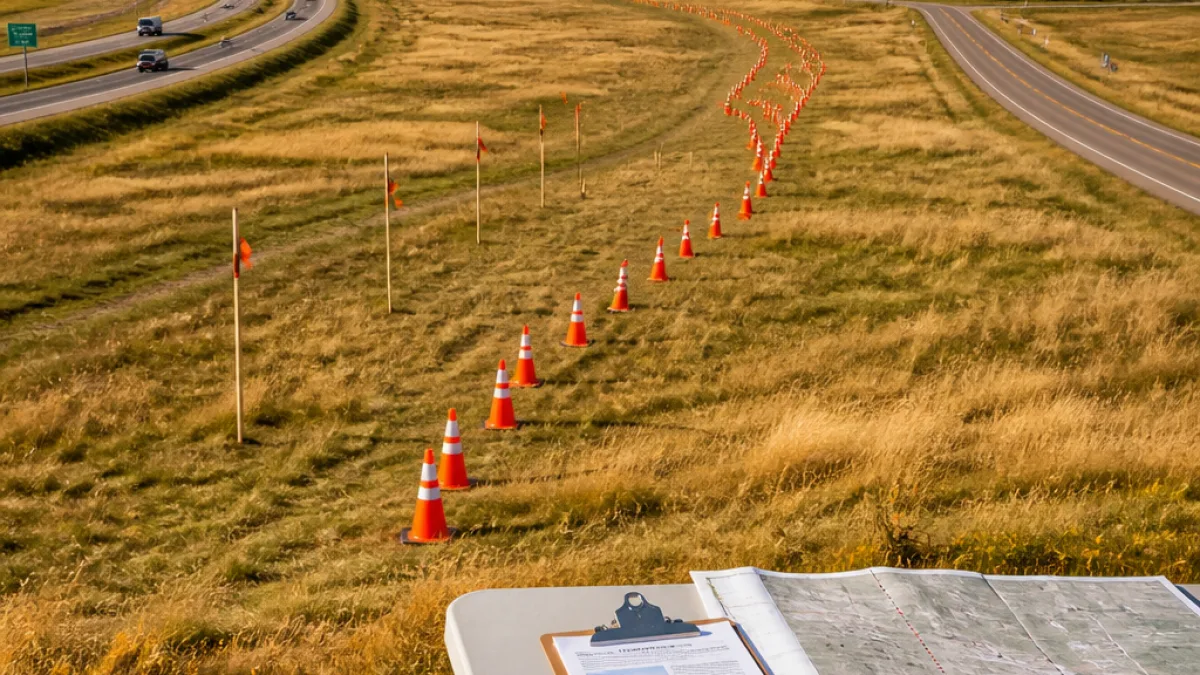
The Alberta government has opened a functional planning study examining a potential highway bypass east of Airdrie as traffic volumes continue to rise on Highway 2 and the surrounding region expands.
Scope and purpose of the study
The study will consider a route stretching from the northeast corner of Stoney Trail, east of Airdrie, to Highway 2 near Carstairs. Officials say the work will identify a preferred alignment, potential interchange connections with local roads and plans for acquiring the land needed for a future right-of-way. The province frames the exercise as preparatory — planning that shapes future construction rather than committing funds to build now.
- Examine a corridor from Stoney Trail (northeast of Airdrie) to Highway 2 near Carstairs
- Identify a preferred alignment and interchange locations
- Outline land acquisition needs for a future right-of-way
- Engage the public online and in person during September
Why it matters to Airdrie
Highway 2 between Calgary and Airdrie currently carries about 125,000 vehicles per day, according to provincial figures. The six-lane divided freeway is forecast to reach capacity within the next 20 to 30 years. Plans already exist to eventually expand the section between Calgary and Airdrie to as many as 10 lanes, underlining the scale of anticipated growth.
Closer to Balzac and the CrossIron Mills area, roughly 35,000 vehicles use Highway 2 daily. Continued residential and commercial growth in Airdrie and Balzac is expected to push those numbers higher, increasing congestion and raising concerns about travel times and safety.
| Location | Daily vehicles (approx.) | Current lanes |
|---|---|---|
| Calgary–Airdrie | 125,000 | Six (planned to expand up to 10) |
| Near CrossIron Mills | 35,000 | Part of same freeway corridor |
Timing, funding and public input
Provincial officials stress the planning study is a preparatory step; construction of any bypass has not been funded as part of the current three-year construction program and would require future funding approval. The study is scheduled to be completed by the end of 2027, though the timeline remains subject to change.
"Construction of the proposed bypass is not included in its current three-year construction program and would depend on future funding approval."
Public engagement is already under way. An online consultation runs from Sept. 8 to 29. A drop-in information session is planned for Sept. 15 from 4 to 7 p.m. at the Balzac Community Hall Association, providing a chance for residents, businesses and stakeholders to review preliminary work and offer feedback.
Local consequences and considerations
For Airdrie residents, a bypass could offer options: an alternate route around congested areas, improved safety where traffic is heavy, and a more direct route for commercial vehicles travelling between the northern sections of Highway 2 and Highway 1 to the east. Those potential benefits come with trade-offs that the planning study will need to map out — including the footprint of a new corridor, how it intersects with local roads and what land would be required.
Economic development is cited by the province as a potential upside: a bypass could support growth by improving regional connections for freight and commuters. But with construction not yet funded, the study is mainly a tool to preserve options and inform long-term decisions on how best to manage a corridor expected to reach capacity within two to three decades.
As Airdrie continues to grow, the province’s study will determine whether a formal bypass route is feasible and what it would mean for residents, local municipal planning and future infrastructure investments. The current public-engagement window provides the most immediate opportunity for local input into that process.