The federal government announced a $22.4-million contribution to infrastructure at Kelowna International Airport (YLW) on Monday, a move city officials say will remove servicing barriers to development on airport lands and open 165 acres for future employment uses.
Money, land and services
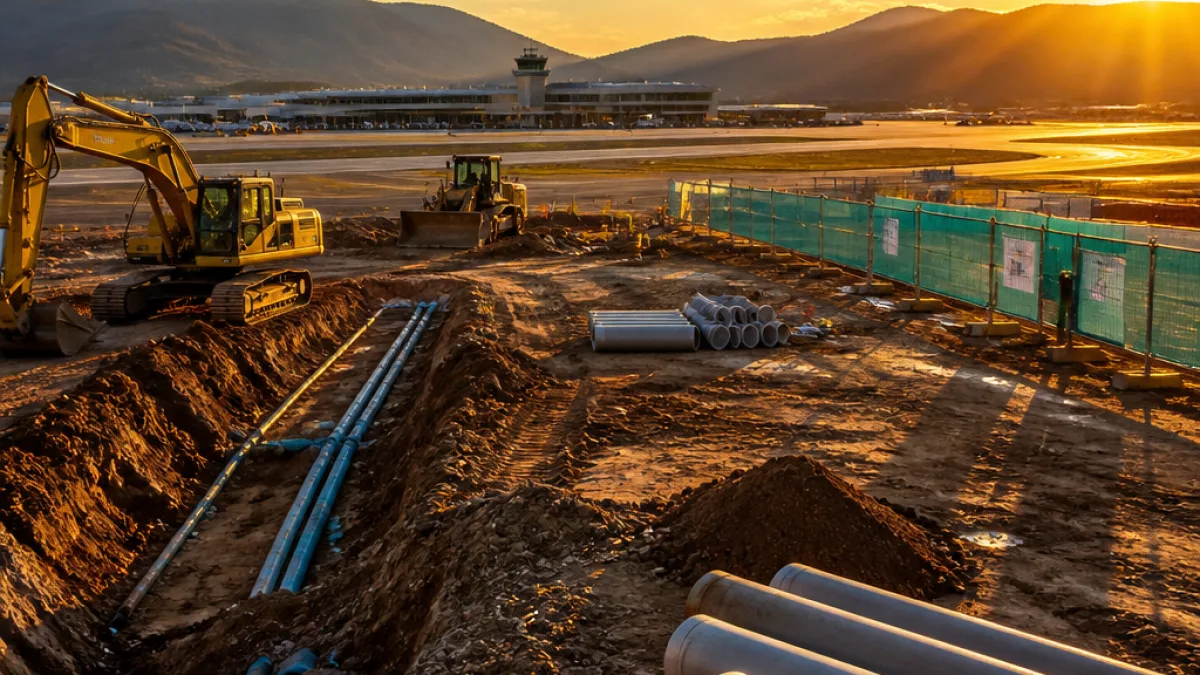
Stephen Fuhr, Kelowna's Member of Parliament and Secretary of State for Defence Procurement, revealed the funding for the YLW Economic Enabling Infrastructure Project under the Build Communities Strong Fund. The project is aimed at constructing new water, sanitary sewer, stormwater, electrical and communications systems to service the airport's east lands.
“The Kelowna International Airport is already a major economic engine for our region,” said Fuhr. “This investment will unlock valuable airport lands, attract new investment and aerospace companies, and create skilled Canadian jobs. We’re strengthening Kelowna’s economy while creating new opportunities for Canada’s aerospace industry to grow, right here in the Okanagan.”
Airport officials say the full infrastructure project will cost $58.8 million. After the federal contribution, the remaining $36.4 million will be financed through the Municipal Finance Authority (MFA), Kelowna Mayor Tom Dyas told Black Press Media. Dyas said MFA financing will be repaid using airport fees and will not affect municipal property taxation.
What will be built — and what it unlocks
According to a YLW press release, construction will establish utility capacity and direct connections to support future aerospace, aviation, logistics, advanced manufacturing, technology and training facilities. The first phase of work is expected to ready about 90 acres of land for development.
- Project name: YLW Economic Enabling Infrastructure Project
- Federal contribution: $22.4 million (Build Communities Strong Fund)
- Total project cost: $58.8 million
- Remaining financing: $36.4 million via MFA, to be repaid through airport fees
- Land to be unlocked: 165 acres of airside employment and industrial lands; first phase to service ~90 acres
| Funding source | Amount |
|---|---|
| Federal (Build Communities Strong Fund) | $22.4M |
| City / MFA financing | $36.4M |
| Total project cost | $58.8M |
Local impact and questions
City and airport leaders frame the project as a means to spur local economic growth while keeping tax increases off residents. By establishing the core utilities, officials say the city will be in a position to market development-ready parcels to aviation and aerospace firms and related manufacturers — industries that tend to demand immediate access to services, heavy electrical capacity and reliable communications.
Fuhr suggested Canadian aviation firms were already showing interest in the newly available lands. In his remarks he named aerospace growth as a priority for the Okanagan, and airport officials pointed to potential for logistics, advanced manufacturing and training facilities.
Despite those expectations, the public information provided so far does not include a timeline for construction, specific tenants or projected job numbers tied to the development. Those details are likely to emerge as servicing work progresses and parcels are brought to market.
Kelowna has been balancing rapid growth, housing pressures and the need for employment lands. Unlocking airside industrial acreage could provide higher-paying, tradeable-economy jobs and diversify the local employment base, but it also raises land-use questions about airport expansion, environmental impacts and long-term planning that municipal councils and the Regional District of Central Okanagan will need to monitor.
For now, the municipal financing plan — to be repaid from airport revenues rather than property tax — will be a key point for residents watching how the city pursues economic development while managing public finances.
Airport director Phillip Elchitz confirmed the scope and costs in statements released alongside the federal announcement; Mayor Tom Dyas reiterated the city's approach to financing. The project positions YLW to be more than a passenger gateway, aiming to deepen its role as an economic engine for Kelowna and the wider Okanagan.