
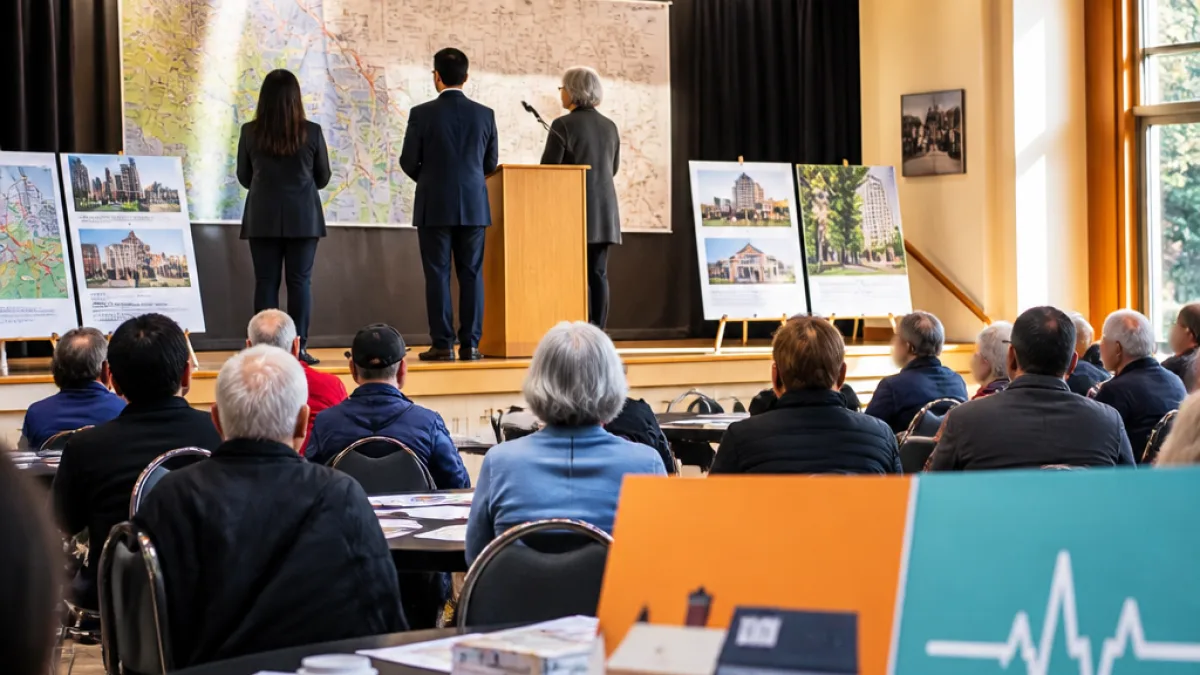
Candidates centre debate on housing affordability and local services
Three candidates for Coquitlam city council used a recent Parvaz TV Canada and Skyrise Media Society forum to set out competing visions for managing the city’s growth, with housing affordability dominating the conversation. Ali Cena, Benjamin Perry and Philip Bachmann each outlined priorities that touch on land use, renter protection and how the city might press for better health services and transit as the region continues to expand.
All three candidates flagged the need for more housing options, but they diverged on the tools and timing the city should use. Ali Cena highlighted the importance of increasing family-sized units, diversifying municipal revenue streams and consulting residents earlier in the development process. Cena said those steps would help balance neighbourhood needs with growth pressures.
Benjamin Perry focused on renter protections and streamlining approvals, arguing that responsible, faster development is a way to relieve affordability pressures. Perry framed his approach around delivering an "affordable, livable, and environmentally sustainable city."
"An affordable, livable, and environmentally sustainable city."
Philip Bachmann emphasised using city-owned land to support co-operative and subsidized housing and proposed requiring a component of below-market units in new developments — the forum noted his call for a 20 per cent below-market requirement.
Health services and municipal advocacy
The candidates discussed health-care access in Coquitlam, acknowledging the limits of municipal authority while promising stronger local advocacy. All three said they would press the provincial government on hospital funding and construction, even as they recognised hospitals fall under provincial jurisdiction.
They also raised the need for better urgent and primary care access, and suggested the city could play a role in attracting physicians and supporting local clinics, although specifics were not detailed at the forum.
Transportation and neighbourhood safety
Transportation was another common theme. Candidates called for improved bus service and SkyTrain coordination, expanded park-and-ride capacity and safer pedestrian crossings. They stressed the need to synchronise infrastructure planning with population growth to avoid congestion and preserve neighbourhood livability.
- Housing: family-sized homes, renter protections, co-op/subsidized units, 20% below-market proposal.
- Health: stronger municipal advocacy for hospitals and better access to urgent and primary care.
- Transit: enhanced bus and SkyTrain service, more park-and-ride spaces, safer crossings.
Community engagement and culture
The candidates also spoke about inclusion and civic participation. They pledged support for cultural festivals and measures to make public participation more accessible, stressing that residents’ voices should shape development decisions and municipal priorities.
In closing remarks, each candidate summarised distinct priorities: Cena emphasised affordability, financial transparency and stronger resident consultation; Perry returned to the themes of affordability, livability and environmental sustainability; and Bachmann prioritised affordable housing, public transportation and deeper climate action.
| Candidate | Top housing idea | Other focus |
|---|---|---|
| Ali Cena | More family-sized homes | Earlier development consultation, diversify revenue |
| Benjamin Perry | Renter protections, faster approvals | Responsible development, sustainability |
| Philip Bachmann | Use city land for co-op/subsidized housing; 20% below-market units | Transit and climate action |
The forum ended with a call for voters to learn more about the candidates and to take part in the municipal election. For Coquitlam residents weighing the trade-offs between growth, community character and services, the candidates’ proposals map distinct choices on how the city should steer its next chapter.
As the election approaches, residents will be watching how each candidate’s platform translates into specific policy measures and whether the municipality can secure provincial support for major projects like hospital expansion — a reminder of the interplay between local planning and regional responsibilities on the West Coast.
















