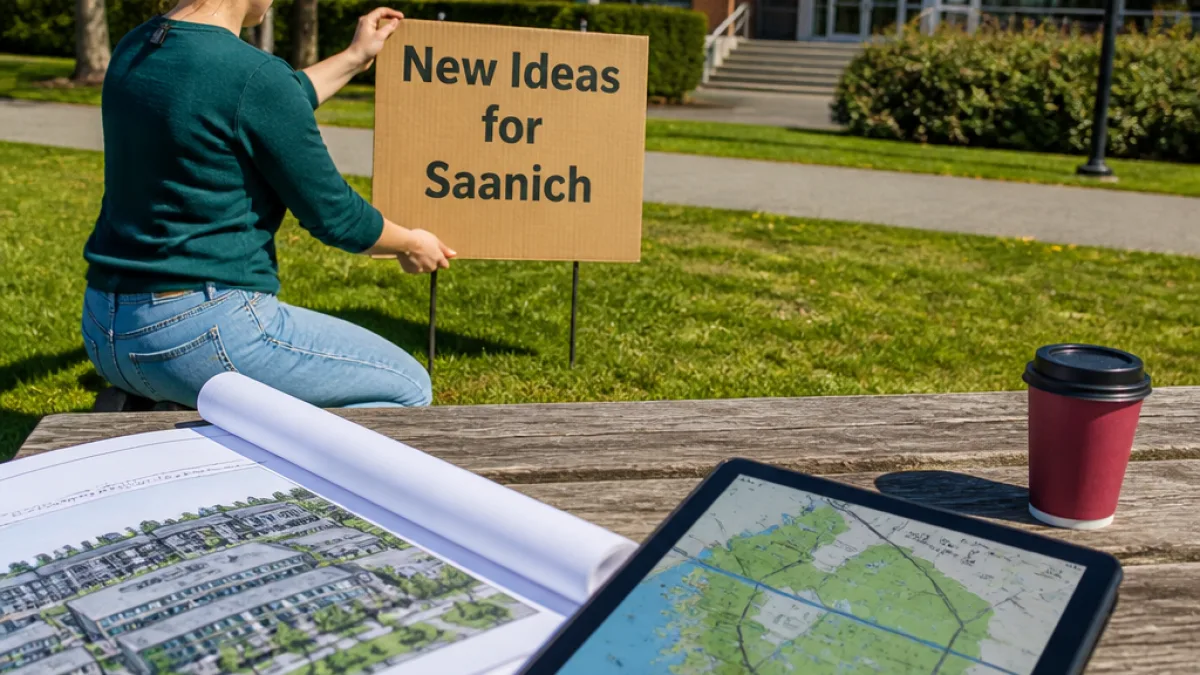
Tia Sibbald is running for Saanich council on a platform built around a simple promise: bring new ideas to a municipality she says needs to become self‑sustaining without overburdening residents. A trained chemist and a Saanich resident for 24 years, Sibbald describes herself as a political newcomer whose background in advocacy and public outreach equips her for the job.
From science communicator to municipal hopeful
Sibbald has a track record of public engagement rooted in health care and education. In the early 2000s she produced Healthcare Fix, a television series that ran for three seasons and convened doctors, nurses and academics to examine challenges in B.C.’s health system. She also founded the Association for Future Women Scientists and Engineers, an organization aimed at encouraging more women into STEM careers by connecting students with local scientists and engineers.
Those experiences, she said, inform her approach to municipal politics: bring experts together, listen to residents and build practical solutions that avoid creating new debts for taxpayers.
“I don’t have much to offer on the current problems of the council that I did not help create, but I am here to share a vision,”
Sibbald said while campaigning and knocking on doors she heard persistent concerns about the local economy and household finances. From those conversations she began shaping a platform that aims to strengthen Saanich’s economic base while protecting residents from higher taxes.
Economic diversification and a tech focus
A central plank of Sibbald’s platform is attracting technology companies and fostering an industrial hub to create local jobs and spur innovation. She wants to put “Saanich on the scientific map” by encouraging firms to invest in the community and by supporting local initiatives that connect research, training and employment.
Her stated goals centre on two linked objectives: job creation and economic diversification. Sibbald argues that growing a local tech sector would reduce the municipality’s reliance on traditional revenue sources and create higher‑paid employment opportunities for residents.
- Promote Saanich as a destination for tech investment
- Create an industrial hub to link employers with local talent
- Protect residents from tax increases by pursuing sustainable growth
Questions about feasibility and municipal priorities
Sibbald acknowledges she is new to municipal governance, saying she “doesn’t sound like a politician and don’t look like a politician,” but insisting that a fresh perspective can counter entrenched approaches. Her platform so far focuses on vision rather than detailed policy prescriptions; it emphasises outcomes — more jobs, innovation and fiscal restraint — rather than specific zoning changes, incentive schemes or funding models.
That gap between aspiration and operational detail will likely be a focus of scrutiny as the campaign progresses. Municipal candidates typically face questions about how proposed industrial or tech strategies fit within regional planning frameworks, how they affect housing, transportation and infrastructure, and what trade‑offs they present for existing residents and businesses.
| Priority | Intended outcome |
|---|---|
| Attract tech companies | Create local jobs and investment |
| Industrial hub | Concentrate employers and foster innovation |
| Fiscal restraint | Limit tax burden on residents |
Residents and stakeholders will be watching how Sibbald’s ideas align with Saanich’s existing economic development strategies, its housing and transportation plans, and the broader priorities of the Capital Regional District.
For now, Sibbald’s campaign rests on a clear narrative: that municipal government needs new voices willing to combine practical scientific training with public engagement. Her experience producing a multi‑season television series on health care and founding an organisation to encourage women in STEM are the credentials she highlights as evidence she can convene communities and move ideas forward.
With the fall election approaching, the coming weeks will reveal whether that message resonates with voters who must balance hopes for economic opportunity with concerns about affordability and municipal services.