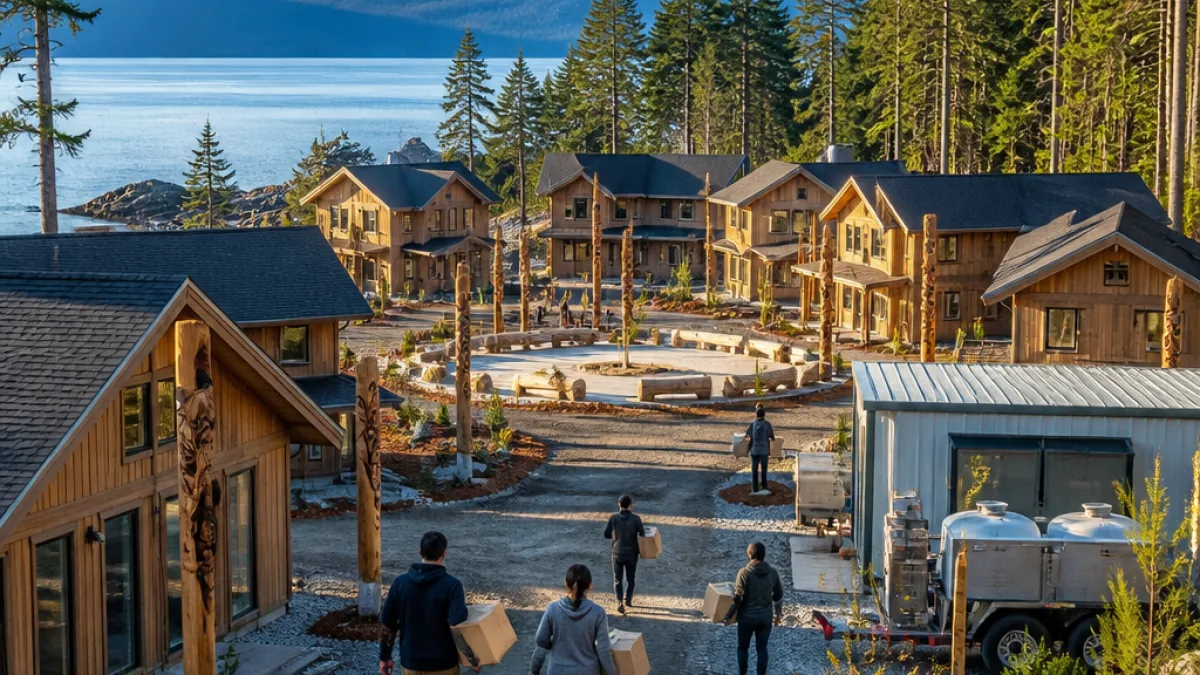
A new Tlowitsis First Nation village on northern Vancouver Island will welcome its first residents on Oct. 1, marking a long-awaited return home for families who have been dispersed for more than 60 years.
Return to country after decades
The community, called Nenagwas, stands on land off York Road south of Campbell River and is modelled after the Tlowitsis’ original village, Kalagwees, which was on Turnour Island south of Alert Bay. Elders and hereditary leaders described the opening as the culmination of a multi‑decade effort to restore a physical and cultural home for people scattered up and down the coast of British Columbia and beyond.
Arnie Smith, who was eight when he and hundreds from the Tlowitsis were displaced, said the moment is overwhelming. His wife, Julia Smith, told reporters she did not expect to live long enough to see the community rebuilt. Her reaction underlines the personal scale of the project for families who have waited generations.
“We’ve made it this far. We have somewhere to call home. We’ve got something to build off now. We have something for our children,” said Daniel Smith, a Tlowitsis hereditary chief.
Housing and infrastructure plan
The new village already includes a water treatment plant and 10 complete homes. Construction is planned in phases: a further 15 homes are to be finished by next summer, and 100 more are planned over the next seven years. Tlowitsis Nation Chief Negotiator Dallas Smith framed the project as a way “to bring everybody home,” noting the Nation’s population of about 500 people is widely dispersed.
- Location: Nenagwas, off York Road, south of Campbell River
- First move-in: Oct. 1
- Completed homes: 10
- Short-term build: 15 homes by next summer
- Long-term build: 100 homes over seven years
| Phase | Homes | Timing |
|---|---|---|
| Initial | 10 | Complete |
| Near term | 15 | By next summer |
| Long term | 100 | Over next seven years |
Community and cultural significance
Leaders described Nenagwas as more than housing: it is an attempt to re‑establish a contiguous community and cultural centre for a people who have lived in scattered locations from northern Vancouver Island to as far south as San Francisco and as far east as Minnesota. Hereditary Chief Dick Joseph told reporters the reconstitution of a home village helps hold people together and preserves traditions that might otherwise erode when families live far apart.
For North Vancouver readers, the project is a reminder of the province’s broader conversations about Indigenous rights, land and community rebuilding. While Nenagwas is physically distant, the social and policy issues it raises — housing, infrastructure on remote and coastal lands, and efforts to restore Indigenous communities — resonate across Vancouver’s North Shore and the Lower Mainland.
The blessing held on the site in recent days signalled a formal beginning for the settlement’s occupancy. Tlowitsis hereditary and elected leaders highlighted the decades of planning behind the project; one leader said the idea had been dreamed of for more than 40 years before recent construction began.
As families prepare to move back, the focus will shift to completing the next phases of housing and building the services that sustain a community: schools, health supports and economic opportunities. For several elders and leaders quoted at the blessing, the immediate achievement — a place to call home — was cause enough for celebration.