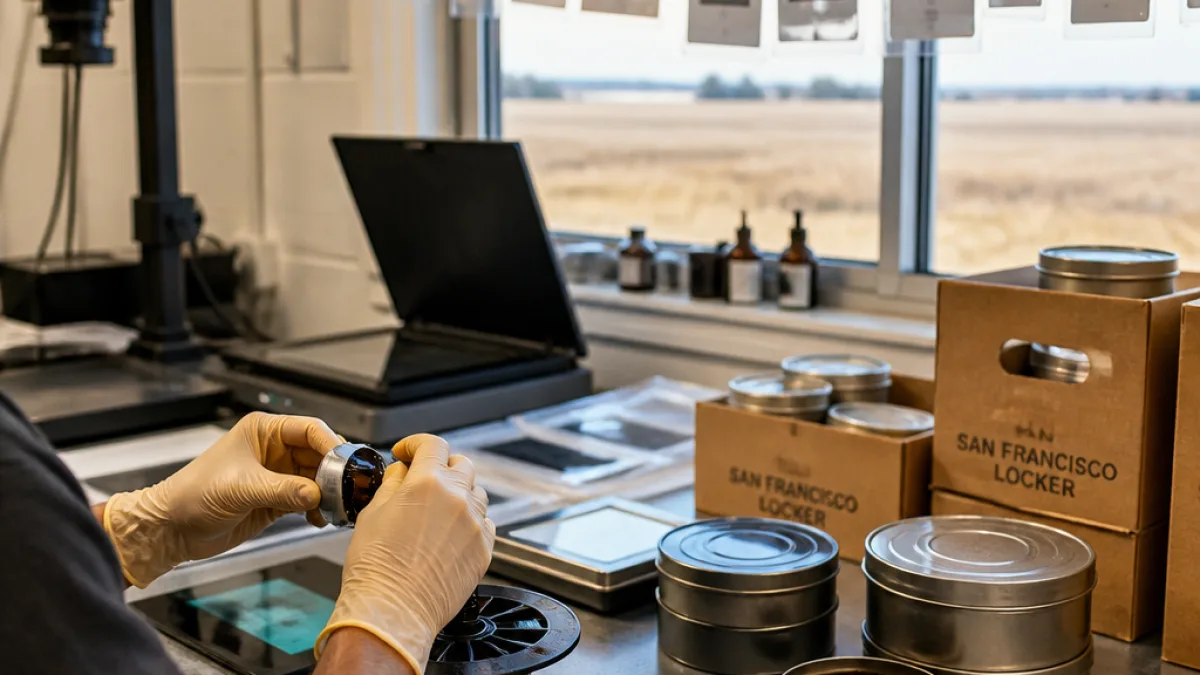
Indian Head, Sask. — A small film‑processing company in Indian Head has taken on the task of unraveling a decades‑old photographic mystery: 80 rolls of unprocessed film believed to document San Francisco’s 1960s counterculture, including anti‑war demonstrations and concerts by major performers.
From a storage locker in San Francisco to a prairie darkroom
The material comes from a collection discovered years ago in an abandoned San Francisco storage locker. Alongside thousands of previously printed slides and photographs are the sealed rolls of film now arriving at Film Rescue, a Saskatchewan business that specialises in developing and restoring older photographic media.
Film archivist Gerald Freyer said the collection offers a rare, on‑the‑ground view of a pivotal period in the city’s history. “That collection is really something special because it shows history itself and that’s why we are so proud to have this collection here,” he said.
“I always had a hint that this might have been a solitary individual, someone who somehow had the presence of mind to shoot but didn’t seem to show an interest in publishing,” said Bill Delzell, president of SpeakLocal.
What’s in the cache
The archive contains thousands of images already identified as showing prominent figures and moments from the era. Among the names associated with the collection are Timothy Leary and Allen Ginsberg, as well as musicians such as Carlos Santana and Jerry Garcia pictured on a truck headed into Golden Gate Park for a concert. The unprocessed film could reveal new angles or previously unseen events.
- Thousands of slides and printed images were already known to exist.
- Eight‑zero rolls of unprocessed film arrived at Film Rescue for development.
- Archivists hope processing will help identify the anonymous photographer and fill gaps in the visual record of the 1960s scene.
Why the Saskatchewan connection matters
It might seem odd that material from San Francisco’s counterculture is being developed on the Prairies, but Film Rescue specialises in handling aged film stock that can be delicate and unpredictable. The company’s expertise makes Indian Head a logical place to attempt safe recovery of images that could otherwise be lost.
The work has local significance beyond the technical: it underscores Saskatchewan’s role in preserving cultural heritage and highlights small‑town businesses that offer niche services with international reach.
What archivists hope to learn
Beyond producing new images, archivists are looking to learn more about the person who shot the pictures. The existing collection suggests the photographer was focused on documenting events without seeking publication. If metadata, notations on film canisters or distinctive shooting styles emerge, researchers may be able to attribute the work or at least narrow possibilities.
| Known figures in the collection | Context |
|---|---|
| Timothy Leary | Psychedelic movement, counterculture thinker |
| Allen Ginsberg | Beat poet and anti‑war voice |
| Carlos Santana | Musician; pictured heading to park concert |
| Jerry Garcia | Musician and cultural icon; pictured with Santana |
Next steps and preservation concerns
Developing long‑dormant film is a careful process. Film stock can shrink, the emulsion may have deteriorated, and chemical changes over time can make recovery unpredictable. Film Rescue’s approach will be conservative, prioritising image stability and digital capture so the photographs can be archived and studied without further damaging the originals.
If successful, the images will be digitised and shared with partners and researchers who can place them in historical context. Organisers connected to SpeakLocal, which currently holds the collection, have expressed interest in making the material available to those researching the era.
Why this matters to Saskatchewan readers
The story ties a prairie shop to a global cultural moment. It’s a reminder that expertise in small communities can have an outsized impact: an Indian Head lab might be the place where lost moments of the 1960s are first seen again. For residents, it’s a point of local pride and a practical example of how cultural preservation happens outside major metropolitan centres.
As Film Rescue proceeds, researchers and members of the public will be watching to see what emerges from those 80 rolls. The results could add new images to the visual record of the era and, perhaps, bring the identity of a previously anonymous documentarian into clearer focus.
Updates are expected as rolls are developed and images are assessed for quality and provenance.