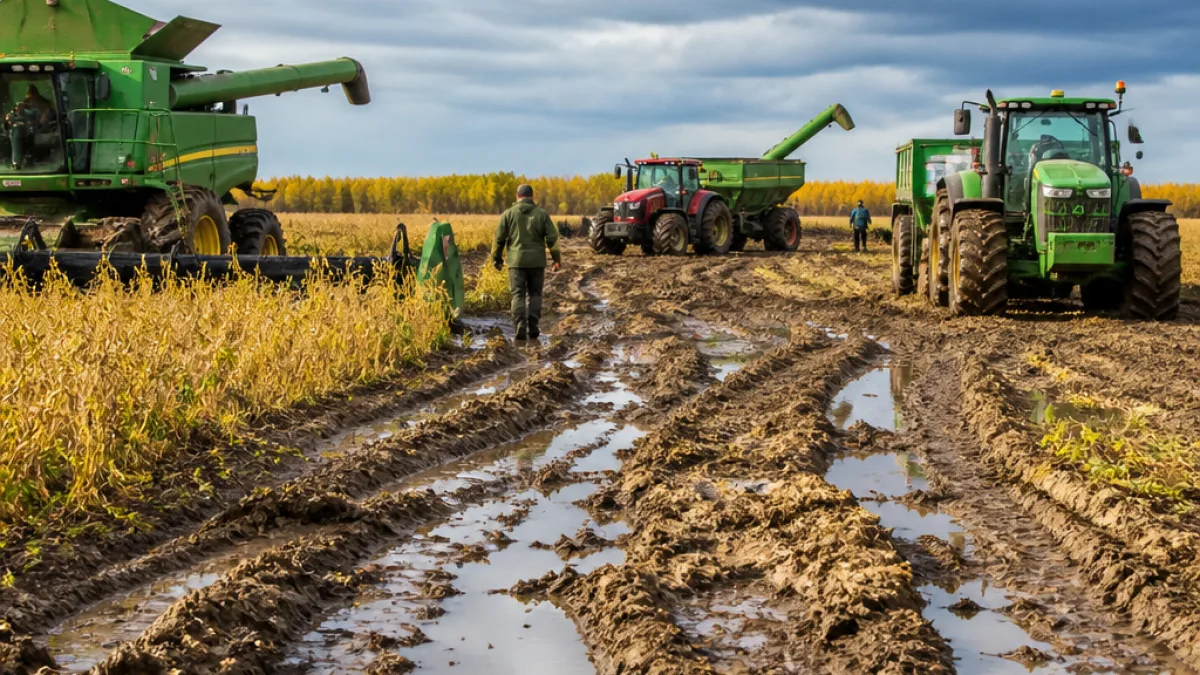
Saskatchewan's harvest is running markedly behind schedule, with the province only 41 per cent complete as of Sept. 21, according to the Ministry of Agriculture's latest weekly crop report covering Sept. 15 to 21.
Behind the averages
That provincial pace is well under the usual rate for this time of year. The five-year average for Sept. 21 sits at 82 per cent, while the 10-year average is 73 per cent. Farmers across the province reported slower-than-normal progress last week as rain, high humidity and wet fields limited the number of days crews could get equipment into standing crops.
Moisture and lingering wet conditions are being blamed for both the slow pace and emerging crop-quality issues. The ministry's report notes some cereal and pulse crops still in the field are showing poor quality and evidence of sprouting.
Regional differences
Progress varied substantially by region. The southwest continued to lead the province, while the northwest and northeast lagged.
| Region | Percent complete |
|---|---|
| Southwest | 67% |
| West-central | 45% |
| Northwest (includes Lloydminster) | 26% |
| Southeast | 38% |
| East-central | 29% |
| Northeast | 24% |
The report notes the northwest region had the biggest week-over-week gain, moving from 16 per cent complete the prior week to 26 per cent, after warmer weather allowed crews back into fields.
Crops: some nearly finished, others far behind
Not all crops are equally affected. Several winter cereals and pulses are nearing completion, while oilseeds and soybeans trail.
| Crop | Percent complete |
|---|---|
| Fall rye | 99% |
| Winter wheat | 97% |
| Lentils | 92% |
| Field peas | 91% |
| Canola | 26% |
| Soybeans | 10% |
Those disparities mean harvest operations are uneven: some producers are wrapping up, while others face weeks of fieldwork under less-than-ideal conditions.
Rainfall and moisture
The heaviest rainfall reported last week occurred in the southeast. The Moosomin area recorded 75 millimetres of rain, pushing some fields into surplus moisture conditions. Overall, topsoil moisture was described as mostly adequate across cropland, hayland and pasture, but surplus moisture was observed in certain areas.
Safety and supports
The ministry reminded producers to remain vigilant about equipment fire risk. Wet combines can still accumulate debris and a build-up of material on hot components has contributed to an increase in machinery fires in recent weeks. Producers were advised to keep fire mitigation supplies on hand and to regularly clear debris from combines.
Drivers are also being asked to take extra care when encountering slow-moving farm equipment on roadways as harvest activity continues.
For those feeling the strain of a drawn-out harvest, supports remain available. The Farm Stress Line offers confidential, toll-free support at 1-800-667-4442.
What this means locally
Growing-season variability is nothing new on the prairies, but this year's lag raises a number of practical concerns for producers and rural communities: quality downgrades and sprouting can reduce returns on crops left standing; prolonged field operations increase equipment and road-safety risks; and wetter-than-normal conditions can complicate fall seeding decisions for winter crops or pulse rotations.
For now, farmers are watching weather closely. Warmer, drier stretches would allow many operations to accelerate, but continued rain or cool conditions would extend harvest timelines and may increase the number of loads delayed by quality issues.
- Reported provincial harvest completion: 41% (as of Sept. 21).
- Five-year average: 82%; 10-year average: 73%.
- Notable rainfall: Moosomin area 75 mm last week; surplus moisture in some pockets.
Producers and rural residents who rely on the harvest for income and local services will be watching the weeks ahead closely as the province moves into the crucial autumn window.