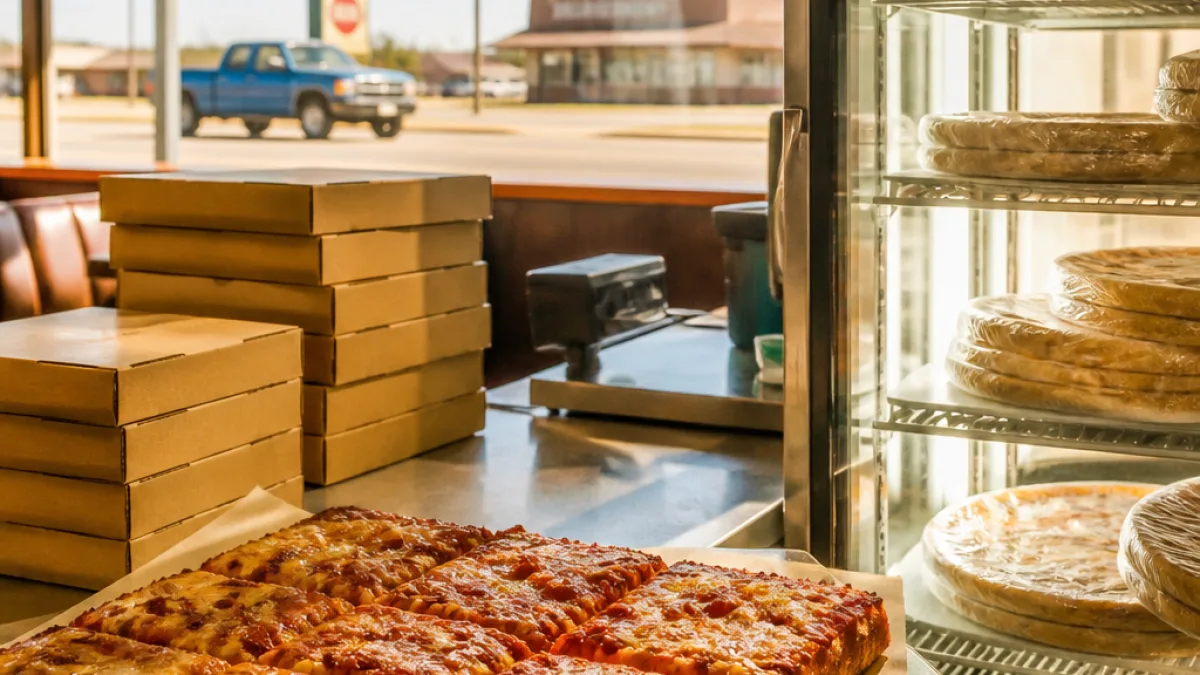
Saskatchewan-style pizza — the kind with a deep crust, a layering of toppings and a distinctive square cut — is an everyday taste across the province. For the Iatridis family of Moose Jaw, that style is woven into their family business story, a run of restaurants that began in the 1960s and grew into a prairie institution during the 1970s and 1980s.
Family roots and growth in Moose Jaw
The Iatridis name in Moose Jaw hospitality stretches back to 1963. A turning point came in 1974, when the family purchased the first Rodos Pizza at the location now occupied by Rexall Drugs. From that starting point, the business expanded in stages: a South Hill location opened in 1976, a Regina outlet followed around 1981, and another Moose Jaw outlet on the highway began serving customers in 1984.
| Year | Event |
|---|---|
| 1963 | Family restaurant roots begin in Moose Jaw |
| 1974 | Purchase of first Rodos Pizza (current Rexall location) |
| 1976 | South Hill location opens |
| ~1981 | Regina location opens |
| 1984 | Moose Jaw highway location opens |
What makes it Saskatchewan-style?
The local pizza differs from the thin-crust pie many Canadians expect. It is built for a hearty appetite: a thick base, generous layering of cheese and toppings, and a structural approach to cutting and serving that reflects how substantial each slice is.
“These are cut in squares as opposed to triangles because they’re too thick,” John Iatridis, the owner of The Mad Greek, said. “If you were to try and cut this in a triangle and you pick it up, everything would fall out because the toppings are so thick.”
The square cut is practical: each piece is stable enough to hold heavy cheese and piled-on toppings. A large Saskatchewan-style pie can serve as a meal on its own — enough, by the family’s reckoning, to feed four adults.
More than a local favourite — a pie people travel for
Customers have long treated these pizzas like prairie passports. The Iatridis family remembers people ordering pies to take home across the country. In some cases, patrons asked for pizzas to be frozen so they could carry them by plane as gifts at Christmas.
Truck drivers stopping in Moose Jaw also helped spread the pie’s reputation, buying pizzas to take on long hauls — to the West Coast, the East Coast and even as far as California. That kind of devotion turns a regional food into something with a life beyond its city of origin.
- Durability: Thick crust and heavy toppings make the pizza travel-ready.
- Cutting style: Square pieces keep toppings from spilling.
- Scale: Large pizzas are filling enough to be a full meal for families.
Local foodways and cultural memory
What seems like a small regional difference — how a pizza is put together and sliced — is part of a larger story about community and continuity on the Prairies. Family-run restaurants, steady truck routes and seasonal travel all fold into how food traditions stick and spread.
For folks who grew up with Saskatchewan-style pizza, the shape, heft and layers carry memory: school nights, game-day menus, and the routine of stopping at a familiar storefront on a long drive. For those who moved away and ate it infrequently, the pie becomes a piece of home worth hauling in a cooler or packing in a suitcase.
Why it matters today
Regional dishes help define places and connect people to them. In Saskatchewan, the thick, square-cut pizza is one of those modest markers. It’s not just about taste; it’s about how local businesses adapted to customers’ needs — from serving families to packaging pies for travel — and how those choices shaped an enduring food identity.
As the Iatridis family’s story shows, a recipe and a way of serving it can become a province-wide shorthand for comfort and community. When someone from Moose Jaw or Regina talks about a Saskatchewan pizza, they’re talking about history, travel, and a family business that fed both the town and the imagination.