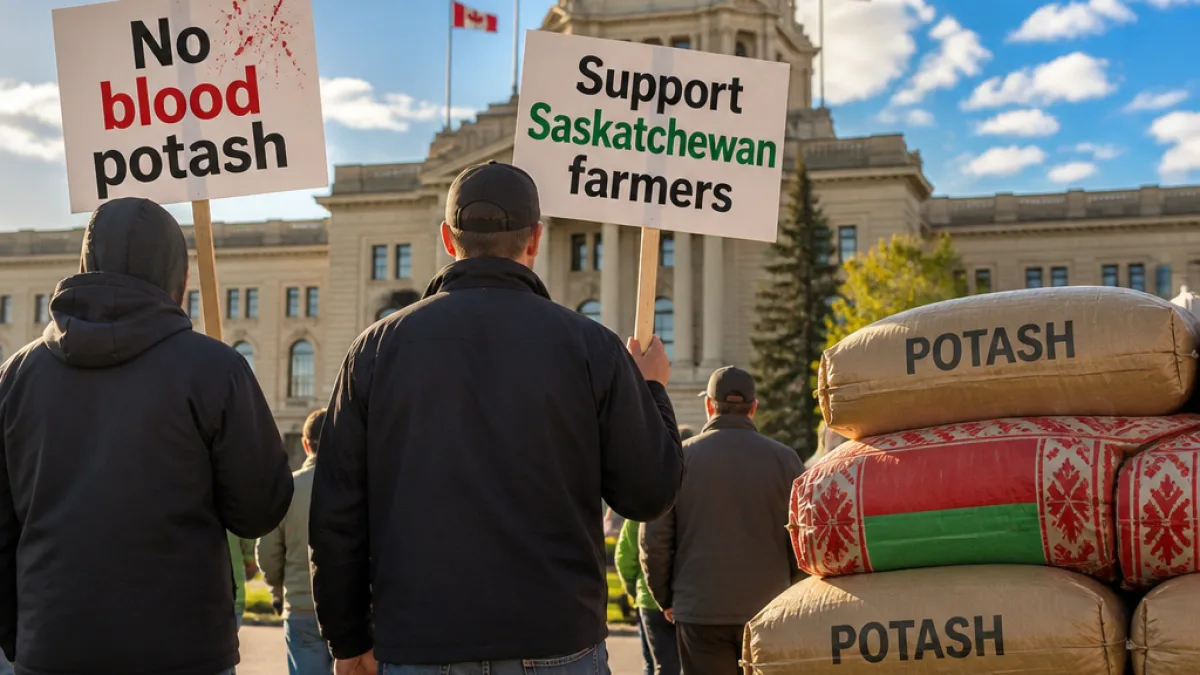
Premier Scott Moe has taken aim at a reported plan by former U.S. president Donald Trump to purchase potash from Belarus, saying the idea “doesn’t make sense” and would amount to supporting Russian aggression.
Sanctions, supply chains and Saskatchewan’s stake
On social media, Moe argued that more than 40 countries, including Canada and many of its allies, have sanctions against Belarus for what he called the country’s support for Russian President Vladimir Putin’s invasion of Ukraine. He said buying what he described as “blood potash” from Belarus would be unethical and counterproductive for North American farmers.
“More than 40 countries – Canada and its allies – have sanctions against Belarus for supporting war criminal Putin’s invasion of Ukraine. Buying blood potash from Belarus is supporting Russian aggression. It’s wrong and it doesn’t make sense.”
Moe also raised practical concerns about the logistics of moving Belarusian potash to U.S. farmers, noting that shipments would likely transit through Russia and then across oceans before reaching midwestern markets. He questioned whether that route could be cheaper, more sustainable or more ethical than potash shipped from Saskatchewan.
Voices from provincial and federal politics
The reaction in Saskatchewan was immediate. NDP leader Carla Beck described the idea as an attack on the province’s potash sector and said it would harm families and communities on both sides of the border. At the federal level, Regina–Qu’Appelle MP Andrew Scheer labelled Belarus a “communist dictatorship” with a poor human-rights record and said his party condemned the reported suggestion.
| Person | Comment |
|---|---|
| Scott Moe | Said buying potash from Belarus “doesn’t make sense” and called it supporting Russian aggression. |
| Carla Beck | Called the proposal infuriating and said it would hurt families and communities. |
| Andrew Scheer | Condemned the idea and referred to Belarus as a “communist dictatorship.” |
Why potash matters to Saskatchewan
Saskatchewan supplies a substantial share of the world’s potash, the mineral fertilizer that helps crops retain nutrients and boosts yields. Mines, processing plants and related services sustain jobs and tax revenue in many rural communities across the province. Any public suggestion that buyers look elsewhere for supply — particularly to a sanctioned country — touches on both economic livelihoods and broader geopolitical concerns.
Even without formal trade negotiations under way, public commentary from a former U.S. president can affect market perceptions, relationships between producers and buyers, and political debate. That makes the reaction from provincial leaders and the federal Conservative caucus politically important regardless of whether any deal proceeds.
Practical questions about sourcing and sanctions
Moe’s statement focuses on two linked issues: the ethics of purchasing from a sanctioned country and the logistics of transporting potash from Belarus to American farmers. He noted that, given current restrictions, material would likely transit Russian territory and then be shipped across oceans, which raises questions about cost, emissions and compliance with sanctions regimes.
- Sanctions: More than 40 countries have measures against Belarus tied to its backing of Russia’s actions in Ukraine.
- Logistics: Shipments would likely move through Russia before being exported overseas to North America.
- Local impact: Saskatchewan producers say North American supply offers shorter supply chains and established trade relationships.
While Moe and other Saskatchewan politicians framed the suggestion as a direct threat to the province’s industry, the details of any U.S. decision — whether it was a policy priority or an exploratory remark — remain unclear from the statements posted to social media. What is clear is that the prospect prompted swift pushback here at home.
What comes next
At this stage, provincial leaders have publicly criticised the idea and framed it as harmful to Saskatchewan’s economy and values. Federal Conservatives have echoed those concerns. Any further developments would hinge on follow-up statements or policy moves from U.S. officials and whether formal trade talks or exemptions were ever proposed.
For prairie communities that rely on potash jobs and royalties, the debate is less abstract: it’s about preserving markets, protecting livelihoods, and ensuring that trade decisions align with Canadian foreign-policy positions on sanctions and human rights.
Coverage will continue as officials on both sides of the border respond and as industry stakeholders weigh in on the potential economic consequences.