Allegations surface over Conservative caucus' U.S. ties
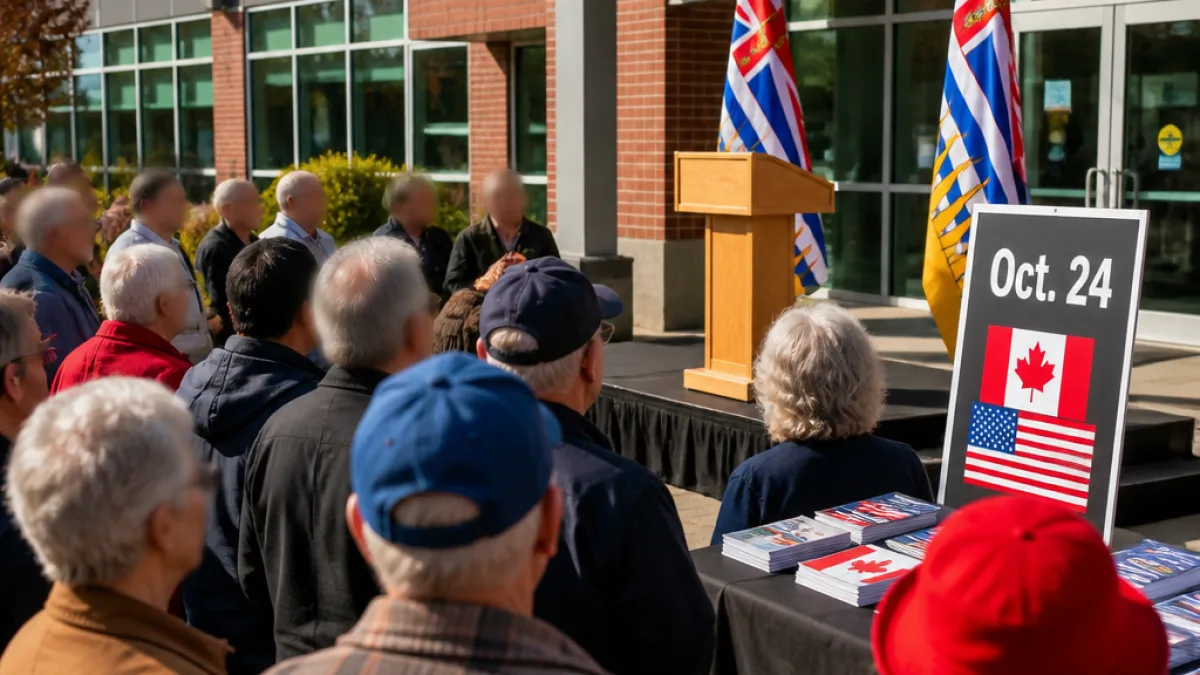
British Columbia New Democrat Leader David Eby escalated his criticism of the provincial Conservative Opposition on Thursday, saying some members of the caucus have a vision of the province as a “protectorate of the United States.” The comments come as provincial parties prepare for a snap election set for Oct. 24.
Eby’s remarks, made at a campaign event in Maple Ridge, singled out social media posts and actions by Conservative MLAs that he said point to an ideological alignment with U.S. political movements. He referenced a repost by Conservative MLA David Williams last year that labelled parts of B.C. as within a “Republic of Western Canada” described as a U.S. protectorate. Eby also raised concerns about Conservative caucus members meeting the U.S. Ambassador to Canada, Pete Hoekstra, and suggested some within the party had indicated they would consider dropping the province’s ban on U.S. alcohol.
“Lorne Doerkson seems like a nice guy. But I never heard him say the word ‘Trump’ before this election,”
The allegation is a sharp critique of the Opposition’s interim leader, Lorne Doerkson, whom Eby accused of being unwilling or unable to rein in members he described as aligned with “MAGA-style” politics south of the border.
Conservative leader rejects the charge
Doerkson pushed back in a statement, saying that standing up to U.S. President Donald Trump requires action rather than rhetoric and argued that strong domestic policy would make the province less vulnerable to external pressure. “You don’t stop a bully with tough talk three weeks before an election,” he said, adding the NDP had a decade to strengthen the province and had failed to do so.
Doerkson has repeatedly described Trump as a “bully” since Premier David Eby called the snap election earlier this week. His comments mark a rhetorical shift from the Conservative leadership under former leader Kerry-Lynne Findlay, who resigned on Sunday.
What Eby is pointing to
The specific elements Eby cited are concrete though limited in public record: a social-media image reposted by an MLA that depicted the notion of a regional “Republic of Western Canada,” a caucus visit with the U.S. ambassador and reports that some Conservatives discussed lifting the ban on U.S. alcohol imports into B.C.
Those items formed the backbone of Eby’s argument that parts of the Conservative caucus are promoting a political orientation that would place the province closer to U.S. political influence.
- Social media: Reposted image by Conservative MLA David Williams showing areas labelled as a ‘Republic of Western Canada’ described as a U.S. protectorate.
- Diplomatic meeting: Reports that some Conservative caucus members met U.S. Ambassador Pete Hoekstra.
- Policy suggestion: Allegations that caucus members suggested dropping B.C.’s ban on U.S. alcohol.
Political context and implications
The accusation lands amid a crowded, fast-moving campaign that Premier Eby called unexpectedly, even though the NDP entered the election with a majority government. The claim also follows internal turmoil in the Conservative ranks: former leader Kerry-Lynne Findlay’s recent resignation and an interim leadership under Doerkson have raised questions about the party’s messaging and cohesion going into the vote.
For voters, Eby’s framing raises the stakes beyond domestic policy debates. If elements in the Opposition are perceived to favour closer alignment with U.S. political positions, that could shift the debate over provincial autonomy, cross-border trade and regulatory independence — issues that resonate across B.C.’s coastal, resource and urban communities.
How the parties are presenting themselves
Both leaders sought to cast the argument in blunt terms. Eby warned the province would suffer from “chaos” if an Opposition aligned with U.S. right-wing movements were to gain influence; Doerkson accused the NDP of empty attacks and called for evidence of substantive Conservative weakness on the international stage.
| Item | What was reported |
|---|---|
| Social-media repost | Image describing parts of B.C. as within a ‘Republic of Western Canada’ and a U.S. protectorate |
| Diplomatic contact | Conservative caucus members reportedly met U.S. Ambassador Pete Hoekstra |
| Policy suggestion | Reports some suggested lifting the ban on U.S. alcohol |
As the campaign progresses, voters will weigh whether such exchanges reflect substantive policy differences or electoral posturing. The charges add another dimension to a short campaign in which party leaders must explain not only local priorities but how provincial choices interact with international relationships.
Media coverage and debates in the coming weeks are likely to probe those suggested U.S. ties further and ask Conservative candidates to clarify their positions on trade, regulation and provincial sovereignty as British Columbians decide who will lead the province after Oct. 24.