
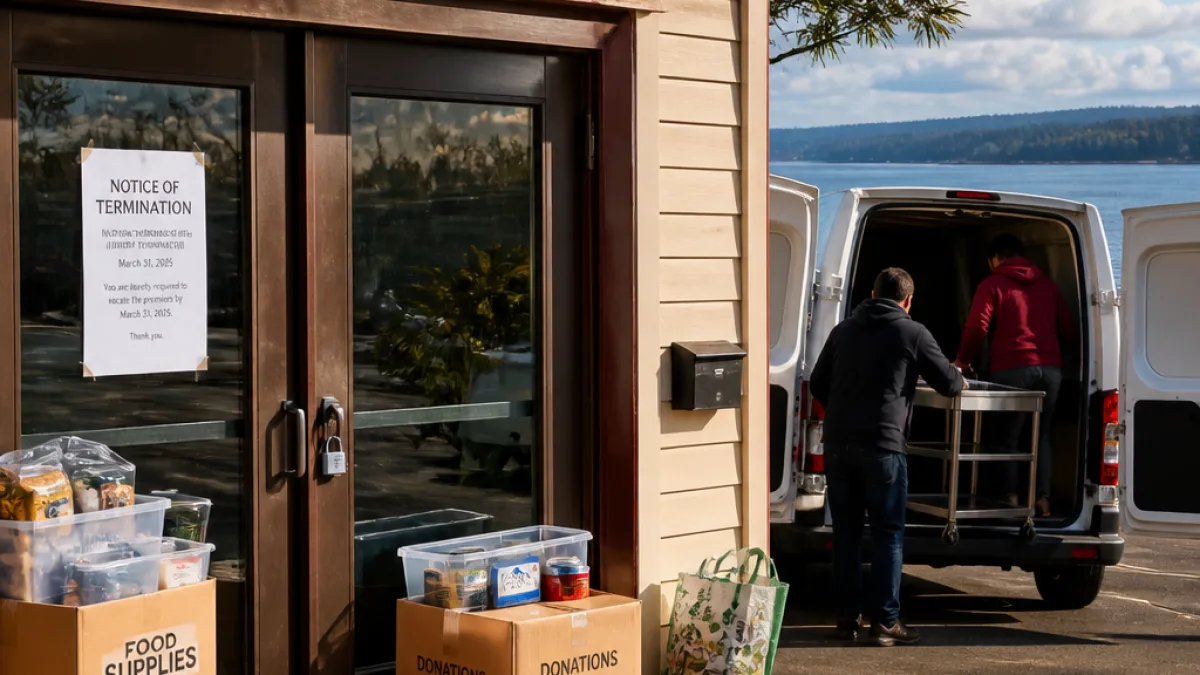
More than a dozen local food entrepreneurs and charity groups who have used the Rising Hope Community Kitchen at 2025 Bowen Rd. were given a shock in August when the facility’s operator informed them they must vacate by Sept. 30.
Short notice, long consequences
The kitchen, purchased by the Island Crisis Care Society from the former Nanaimo Bakery, opened in 2022 with a mandate to provide affordable, fully licensed commercial space for food creators. Tenants say it has been a scarce and essential resource — especially for producers who must operate in a facility approved by the Vancouver Island Health Authority.
On Aug. 19 the society emailed tenants notifying them that the kitchen would be rented to a single tenant going forward: West Coast Fresh Foods, a company that supplies convenience stores across Vancouver Island. Tenants told the operator they would collectively match the income from that one commercial renter or accept a short extension to carry them through the important holiday season; they say both requests were denied.
"We offered — we will pay extra, just keep us until Christmas, Christmas is the best season. And he refused to do that," said baker Rawan Rajab, who operates her business, Rawan’s Riches, from the shared kitchen.
Who is affected
Those forced to leave include micro-enterprises and non-profit food programs that depended on affordable access to a licensed kitchen. Tenants describe the options available in Nanaimo as either non-existent or prohibitively expensive, making the loss of Rising Hope potentially existential for some operations.
- More than a dozen businesses and non-profits received notice they must vacate.
- The society plans to lease the space to one commercial operator only.
- Tenants requested payment or a temporary extension and say those offers were rejected.
Personal and practical impacts
One tenant, originally from Syria, recounted how the kitchen enabled her to produce traditional Middle Eastern sweets, including baklava, in a facility that meets health regulations — an essential requirement for selling to retailers and markets. Without access to an approved commercial kitchen, many vendors cannot legally prepare and sell their products.
Tenants say the timing is particularly damaging: late September and the months afterward include some of the busiest sales periods for small food businesses. Several said they had already booked markets and wholesale orders that they now risk being unable to fill.
Community vision vs. commercial reality
When Island Crisis Care Society acquired the building, the stated purpose was to create a welcoming, licensed space where food creators could develop skills and launch ventures. Tenants interpreted that vision as a shared, incubator-style operation. The society’s decision to narrow the tenancy to a single commercial client marks a stark shift from that founding promise, according to those affected.
Society executive director Ted Pahl is identified in reporting as the point person for the organisation, but tenants say negotiations over shared payment or a brief extension were unsuccessful.
What’s next
With only days to go until the stated move-out date, tenants are scrambling to secure alternative compliant kitchen time in Nanaimo or on Vancouver Island. Several said available commercial kitchens are either booked, distant, or too costly to be viable. The lack of accessible, affordable licensed kitchen space highlights broader pressures on micro-food enterprises as Nanaimo grows and rents rise.
| Key dates | Event |
|---|---|
| 2022 | Rising Hope Community Kitchen launched |
| Aug. 19 | Tenants emailed with notice to vacate by Sept. 30 |
| Sept. 30 | Deadline given for tenants to leave |
The unfolding situation raises questions about the future of incubation space for food entrepreneurs in Nanaimo, the role of non-profits in preserving affordable commercial infrastructure, and how the city can support small producers who contribute to local culture and livelihoods.
As tenants continue to seek options, the coming weeks will test the resiliency of Nanaimo’s small food sector and the community supports that were supposed to underpin it.