Johanne Lee says she has been waiting eight years for a straightforward answer: is the abandoned well beneath her land leaking methane or not, and what will be done about it?
“All I want to know is: is it leaking or not, and what’s the plan from this point forward?”
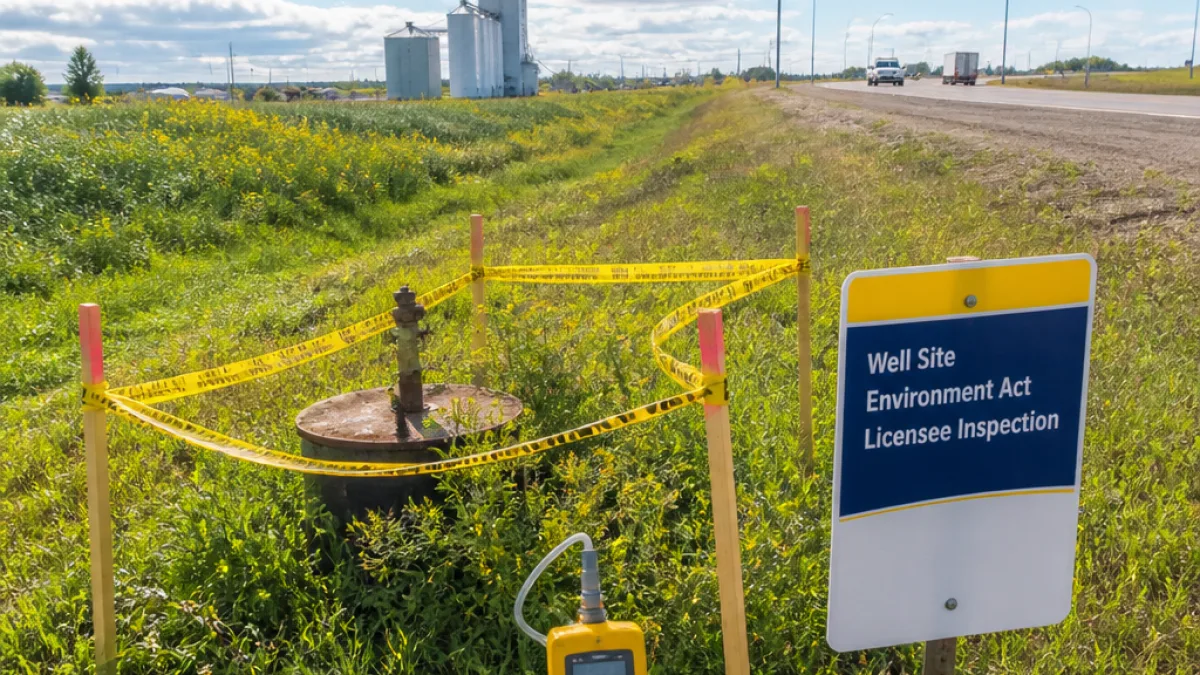
Lee and her husband bought nearly 35 hectares (86 acres) of land near Swift Current in 2007. They discovered the presence of an abandoned oil well only after applying in 2018 to subdivide about 16 hectares (40 acres) they no longer needed. The well, drilled in 1985, sits near a paved service road, a grain elevator and the Trans‑Canada Highway.
She says the discovery came as a surprise: nothing on the land title or in documents from their purchase disclosed the buried well. Community planning informed them at the time that development would be restricted within 125 metres of the site and that access to the well would have to be preserved in case heavy equipment was required to repair it.
The restriction has had tangible consequences for the couple. Lee says the presence of the well has made developing and selling the parcel difficult and that the family has effectively been left holding land they cannot use as intended. “Our land is worthless with a well on it that’s leaking,” she said.
Who is responsible and what does the province say?
The well was later acquired by TAQA North, the operator flagged in correspondence and regulatory records. The Ministry of Energy and Resources has told Lee the site is safe and remains under monitoring. TAQA North did not respond to multiple requests for comment.
Lee has taken additional steps to draw attention to the issue, erecting a methane warning sign along the service road beside the property. The sign is a visible reminder of the unresolved questions about environmental risk and long‑term liability.
Timeline
| Year | Event |
|---|---|
| 1985 | Well drilled (later abandoned) |
| 2007 | Lee family purchases the property |
| 2018 | Subdivision application reveals abandoned well |
| 2026 | Eight years after discovery, Lee continues to seek clarity |
Local impact and unanswered questions
The situation highlights several practical and regulatory concerns for landowners facing abandoned energy infrastructure:
- Development restrictions: Proximity rules can limit subdivision and land use, reducing marketability.
- Environmental risk: Potential methane leakage can pose health and safety concerns, and create stigma on property.
- Liability and costs: Responsibility for remediation and monitoring often falls to operators, but when companies are unresponsive or insolvent, landowners can feel left in limbo.
Lee said she wants the province and the operator to be clear about monitoring results and the plan for remediation, if any. The Ministry’s assertion that the site is safe does not relieve residents of wanting independent, accessible information about the condition of wells under or near private holdings.
Broader context
Abandoned and inactive wells are not unique to this property. Across Saskatchewan and other prairie provinces, legacy wells have created ongoing regulatory and environmental challenges. Monitoring, decommissioning and reclamation programs exist, but timelines and funding can vary depending on the operator’s status and the specifics of each well.
For people with property affected by legacy wells, officials and industry say the appropriate first steps are to request monitoring reports, confirm the identity of the registered licence holder and pursue inquiries with provincial regulators. In this case, the Ministry of Energy and Resources has said the site is being monitored; the operator, TAQA North, did not respond to requests for comment.
Lee’s persistence reflects a broader frustration among some rural landowners who face uncertainty when legacy energy infrastructure surfaces after decades. She is asking not only for technical answers about methane but also for clarity on the next steps so the family can make plans for the land they have owned for nearly two decades.
Officials and companies involved in well oversight can provide documentation such as monitoring records and reclamation plans upon request. Landowners with similar concerns are advised to keep records of communications with regulators and operators and to seek information from the Ministry of Energy and Resources about the status and safety of nearby wells.
Contacted repeatedly about the Swift Current site, TAQA North did not reply. The Ministry continues to describe the location as safe and under monitoring.