The Yellowstone to Yukon Conservation Initiative, a decades‑long project to reconnect wild landscapes from the U.S. Rocky Mountains to northern Canada, has been named one of 15 finalists for the 2026 Earthshot Prize.
What the nomination recognises
Launched in 1993, the initiative has grown into a cross‑border partnership of private landowners, governments, scientists and Indigenous Nations working to preserve and restore a continuous conservation corridor across roughly 3,400 kilometres of mountain country. According to the Associated Press, the group has helped create 204 wildlife crossings and contributed to protecting about 24 million hectares (approximately 59 million acres) of land.
The Earthshot Prize, backed by Prince William, awards five winners £1 million each to expand environmental solutions. Being named a finalist recognises the initiative's long‑term focus on connectivity — ensuring animals can move safely across roads, fences and developed areas.
How the work began
The corridor idea grew from scientific tracking of a wolf known as Pluie in the early 1990s. Fitted with a satellite collar, Pluie travelled across three U.S. states and two Canadian provinces. That movement data highlighted a simple but important conclusion: isolated parks and reserves are inadequate for species that range widely. Grizzly bears, wolves and caribou need landscape connectivity to maintain healthy populations.
"The solution is surprisingly simple," Jodi Hilty, president and chief scientist of the Yellowstone to Yukon initiative, told The Associated Press. "Animals need space to move, and they don't recognize borders. So we bring people together in this landscape to the same table. We work with them all to come up with the solution in order for animals to be able to move freely across the landscape."
Engineering safer movement
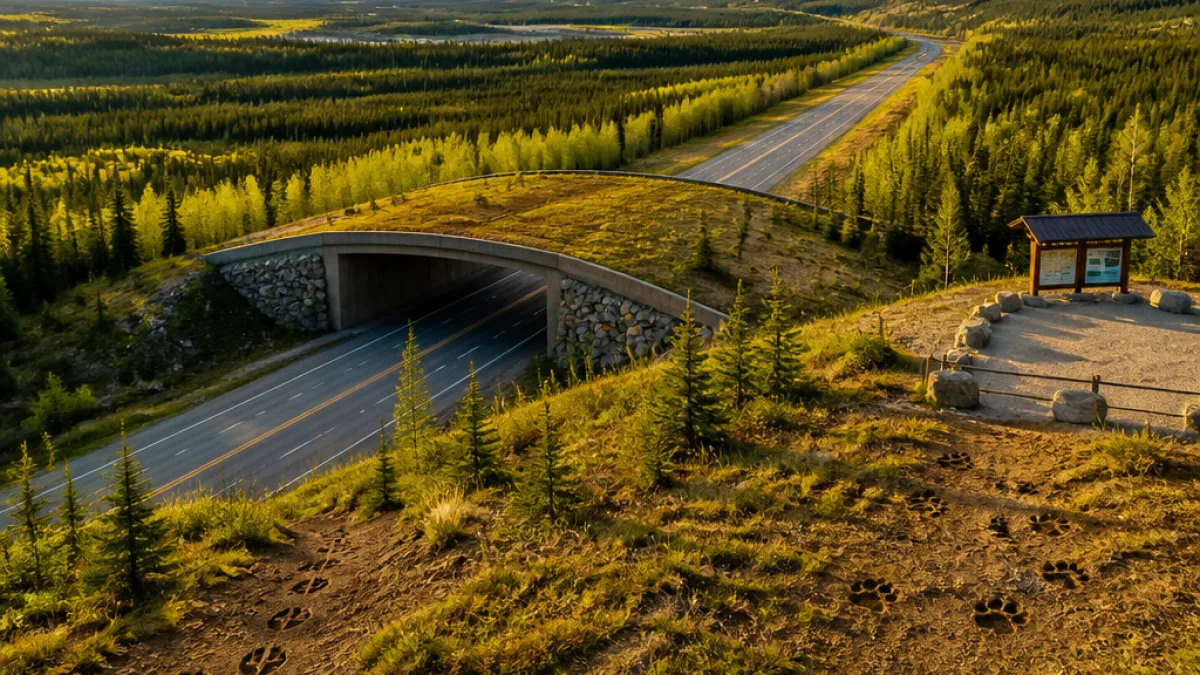
Much of the initiative's practical work addresses collisions and barriers created by modern infrastructure. Busy highways through mountain valleys are an ongoing threat to wide‑roaming species. The initiative supports engineering solutions such as wildlife overpasses, underpasses and strategically placed fencing to funnel animals toward safe crossing points.
Those structures are increasingly common in parts of the Rocky Mountains and are credited with reducing vehicle collisions and reconnecting fragmented habitat. The initiative's role is frequently to coordinate between transportation agencies, conservation groups, local communities and Indigenous governments to plan and implement crossings where they will be most effective.
Partnerships across jurisdictions
The Yellowstone to Yukon model emphasises collaboration: private landowners, municipal and provincial/state governments, scientists and Indigenous Nations share knowledge and negotiate solutions. That collaborative approach is central to work in the North, where land use decisions often require consultation with Indigenous governments and where Indigenous knowledge can help identify critical movement corridors.
- Established in 1993 to reconnect landscape from Yellowstone to northern Canada
- About 3,400 kilometres of corridor across the Rocky Mountains
- 204 wildlife crossings constructed with initiative's support
- Roughly 24 million hectares of land protected to date
For Yukon communities, the initiative's recognition underscores the territory's role in continental conservation goals. Wildlife that range into and through Yukon — including migratory caribou herds and predators such as wolves and bears — depend on north–south connectivity across provincial and international lines.
| Metric | Value |
|---|---|
| Length of corridor | Approximately 3,400 km |
| Wildlife crossings supported | 204 |
| Hectares protected | About 24 million ha |
Why it matters here
In the Yukon, conservation work often occurs against a backdrop of changing climate, evolving land claims and development pressures. Initiatives that work across borders and jurisdictions are important because they can align regional priorities with the broader requirements of species whose ranges ignore political boundaries.
The Earthshot nomination may bring additional funding and attention to projects that improve habitat connectivity and reduce harmful wildlife–vehicle collisions. For Indigenous Nations and northern communities, investment in these measures also creates opportunities to incorporate traditional knowledge and local stewardship practices into large‑scale planning.
Being an Earthshot finalist does not guarantee a prize, but the recognition highlights a long, persistent effort to think beyond protected areas and design landscapes where wildlife can move freely across North America — a goal with clear implications for Yukon’s wild places and the people who live near them.