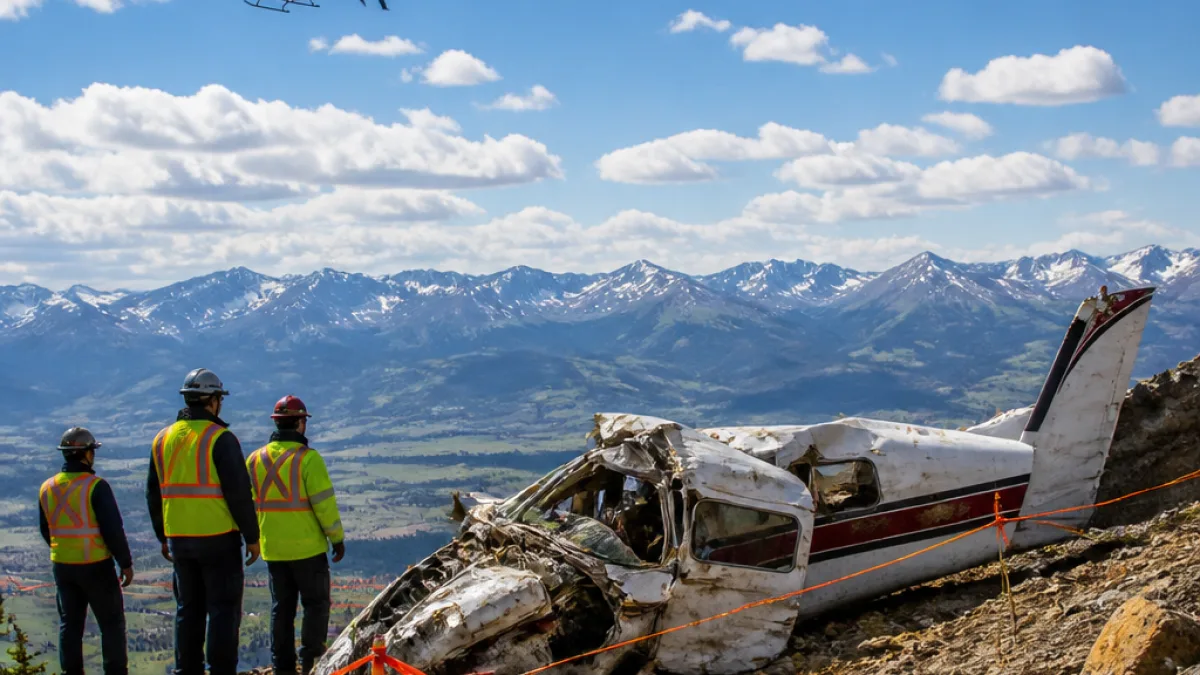
Two people were killed when a Cirrus SR22 crashed into a mountainside in southwestern Alberta on Sept. 5, the Transportation Safety Board of Canada said Thursday. Investigators will not be deploying to the scene because of the landscape and the condition of the wreckage, the board said, though it is coordinating recovery and will examine the aircraft once it has been retrieved.
Where and when the crash occurred
The instrument flight departed Springbank Airport around 8:50 a.m. Mountain Time and was bound for Campbell River, B.C. The aircraft came down roughly 30 nautical miles west-southwest of the departure airport at about 9:15 a.m. that morning, TSB media relations told reporters in an emailed statement.
TSB response limited by terrain
The TSB said the site conditions and the state of the wreckage make a direct deployment unsafe or impractical at this time. The agency is working with recovery teams at the site and plans to examine the wreckage once it has been retrieved from the mountainside.
“Given the terrain in the area, and the condition of the aircraft wreckage, TSB investigators will not be deploying to the site at this time,”
The board did not provide further detail on the identity of the victims, the operator of the aircraft or whether weather or mechanical issues may have been factors. No timeline was offered for when the wreckage might be moved or when an on-site examination could proceed.
What is known — and what remains to be learned
At present, the publicly confirmed facts are limited to the flight plan, the aircraft type and the times and location of departure and crash. The TSB statement makes clear that while the organization will not be conducting an on-site investigation immediately, it remains involved and intends to perform its standard wreckage examination after recovery.
- Aircraft: Cirrus SR22
- Departure: Springbank Airport, ~8:50 a.m. MT
- Destination: Campbell River, B.C.
- Crash location: ~30 nautical miles west-southwest of Springbank
- Crash time: ~9:15 a.m. MT
- Fatalities: Two people on board
Timeline
| Event | Time (Mountain) |
|---|---|
| Departure from Springbank | ~8:50 a.m. |
| Approximate crash time | ~9:15 a.m. |
When the TSB cannot immediately access a site, investigators typically rely on witness reports, radar and communications records, aircraft tracking data, and coordination with local police and recovery crews until wreckage can be examined. The agency’s eventual inspection of the aircraft structure, systems and recorded data — if any is recoverable — can help establish the sequence of events and potential causal factors.
Local and regional implications
Crashes in mountainous or remote terrain present particular recovery challenges. Steep slopes, exposure to weather and limited access routes can delay retrieval of remains and wreckage, and complicate preservation of evidence. Families and local communities often face prolonged uncertainty while recovery is organized.
For pilots and operators, the incident is a sober reminder of the hazards of flying in mountainous corridors, especially under instrument flight rules where visual references may be limited. The TSB’s final report — once produced — often includes safety findings and recommendations aimed at preventing similar accidents.
WE NEWS will continue to follow developments and will publish updates when the TSB releases further information, when recovery operations conclude, or when additional official statements are provided by authorities involved in the on-site work.