GOLD OROGEN RESOURCES has received regulatory clearance from the Government of Yukon to move from surface work into its first systematic drill testing at the Golden Culvert and WIN properties on the Tombstone Gold Belt.
What the approval allows
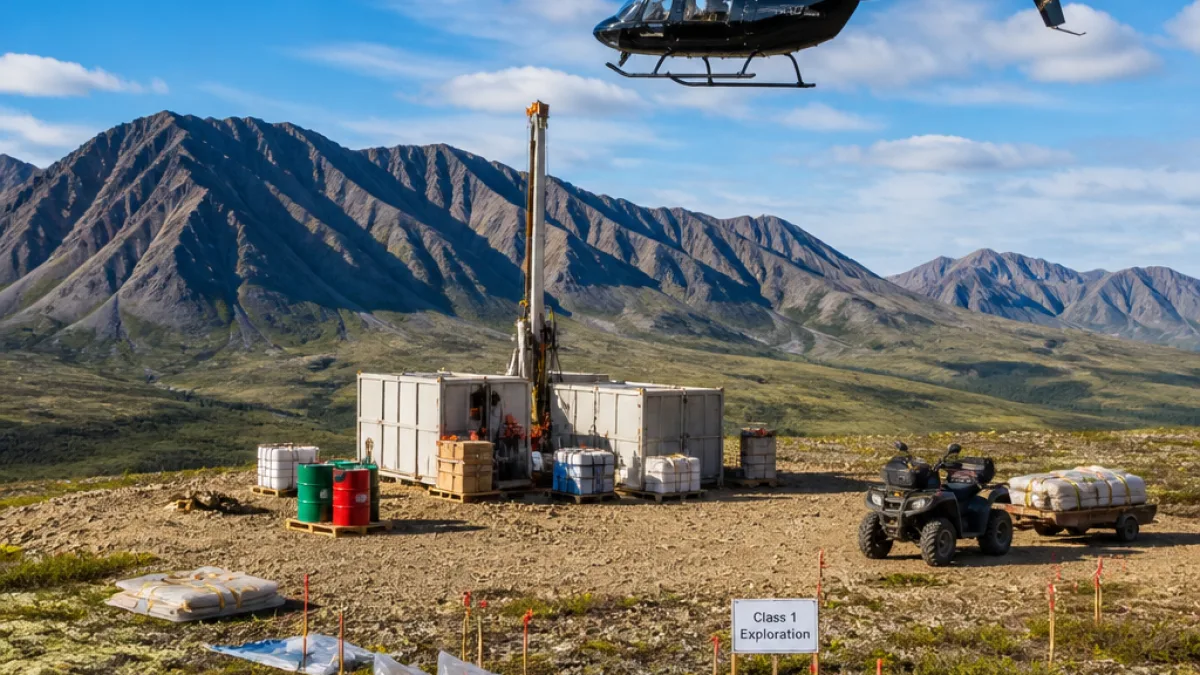
The Class 1 Exploration Notification authorises a program that includes rock and soil sampling, geological mapping and up to 10 helicopter-supported diamond drill holes, each planned to reach roughly 400 metres. The company says the work will be completed without construction of new roads or trails, and the 2026 operating window extends to Oct. 31, 2026.
The move marks a regulatory milestone for the junior explorer as it transitions from repeated surface seasons into systematic subsurface testing of both Reduced Intrusion Related Gold System (RIRGS) targets and sedimentary-hosted orogenic-style targets.
Priority targets and local consent
Gold Orogen has identified three priority targets for the upcoming program: Border and Stingray, which the company classifies as RIRGS-style targets, and Spine, a sedimentary-hosted target noted for sheeted quartz vein mineralisation.
The permitting announcement notes the Ross River Dena Council has given conditional consent pending the negotiation of an exploration agreement — an important step for activity on or near traditional territory. Gold Orogen did not provide a budget for the 2026 program in its statement.
- Up to 10 drill holes approved
- Planned depth of approximately 400 metres per hole
- Helicopter access; no new roads or trails
- Three priority targets: Border, Stingray, Spine
- 2026 field season runs to Oct. 31, 2026
Where the projects sit in the Yukon mining picture
The Golden Culvert and WIN claim blocks lie at the southern end of the Tombstone Gold Belt. The Tombstone Belt has become an area of heightened interest for explorers in recent years, with adjacent and regional projects drawing financing and technical attention. For Gold Orogen, the approval unlocks the first drill tests aimed at two contrasting geological models — RIRGS and sedimentary-hosted orogenic mineralisation — on contiguous claim blocks.
| Target | Style | Notes |
|---|---|---|
| Border | RIRGS | Priority for drill testing |
| Stingray | RIRGS | Priority for drill testing |
| Spine | Sedimentary-hosted | Sheeted quartz vein mineralisation |
Local and public interest considerations
Exploration into the Tombstone Belt has implications that go beyond company shareholders. Drilling programs require logistical planning, consultation and environmental safeguards. The use of helicopters instead of new roads reduces lasting surface disturbance, a choice that may ease concerns about access impacts; however, it does not remove the need for thorough environmental baseline work and robust agreements with affected Indigenous governments.
The reference to conditional consent from the Ross River Dena Council underlines how exploration on Yukon land increasingly proceeds with partnership and formalised arrangements rather than unilateral permitting. Those arrangements commonly cover environmental monitoring, employment opportunities, economic benefits, and measures to protect culturally important sites.
What to watch next
Investors and community observers will be watching for several forthcoming items:
- Details of any exploration agreement with the Ross River Dena Council;
- Timing and logistics for helicopter-supported drilling; and
- Drill results from the Border, Stingray and Spine targets that will indicate whether follow-up phases are warranted.
Gold Orogen said this will be its third consecutive field season on the properties. The company’s next public updates are likely to include program timing and, once drilling is under way, assay results that will give the first direct tests of the subsurface continuity of the identified targets.
For the Yukon, responsible and well‑consulted exploration can lead to local jobs and business for northern contractors, but it also requires careful stewardship of land and resources to balance short-term economic activity with long-term environmental and cultural values.