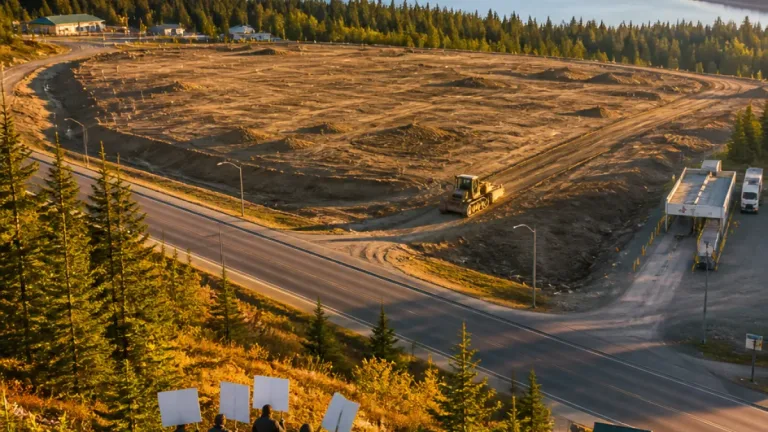
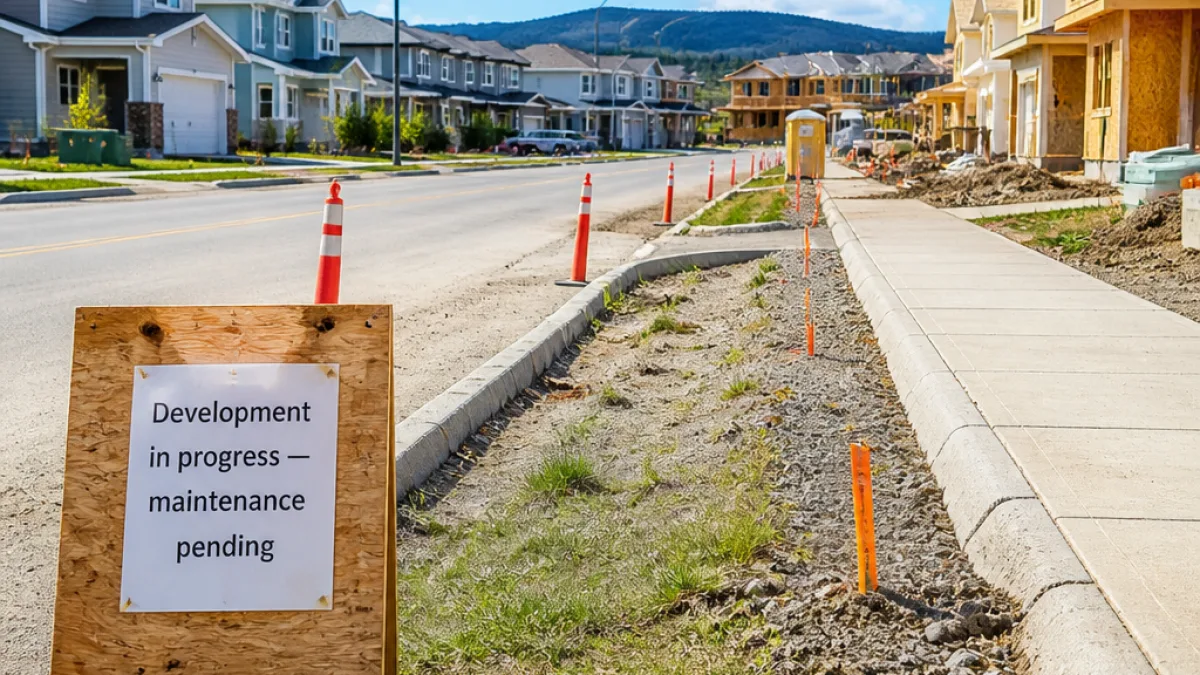
As Whistle Bend expands, residents are raising concerns about unkept roadsides and boulevard plantings in newly developed pockets of the subdivision — a symptom, they say, of a larger jurisdictional uncertainty between the City of Whitehorse and the Yukon government.
Who looks after the green spaces?
The dispute centres on when land maintenance shifts from territorial developers to municipal caretaking. The territory typically handles construction and initial landscaping during development; the city assumes ongoing maintenance only after the land has been declared fully developed and responsibility formally transferred.
That arrangement has left some Whistle Bend residents frustrated. While some streets and boulevards have been accepted into the city’s maintenance roster, other stretches remain under territorial control and appear neglected to neighbours used to more consistent upkeep.
Growth outpaces the handover
Whistle Bend is the largest and fastest-growing neighbourhood in Whitehorse, home to roughly 4,700 people according to the Yukon Bureau of Statistics’ March 2026 figures. Construction began in 2010 and multiple phases of development are ongoing or have not yet begun. The pace of building means the line between 'finished and transferred' and 'still in development' moves slowly across the subdivision.
One notable example is Casca Boulevard, a primary route in and out of Whistle Bend. The city’s spokesperson, Matthew Cameron, told CBC News that while some sections of Casca Boulevard have been transferred, others have not, and that the city’s maintenance responsibilities apply only once the territory completes development and the handover process is formalized.
Residents voice practical concerns
People who live in Whistle Bend describe a patchwork of conditions along roadsides: in some places boulevards look tended and planted; in others, volunteer or wild vegetation such as sweet clover blooms unchecked. For residents, the issue is both aesthetic and practical. Proper boulevard maintenance affects pedestrian safety, snow clearing, drainage and the overall sense of neighbourhood care.
- Clarity: Residents want a clear, public timeline for when territories of land will move from developer/territory responsibility to city maintenance.
- Consistency: Homeowners expect predictable standards of boulevard and roadside upkeep across the subdivision.
- Communication: People say they need more transparent communication so they know which agency to contact for issues such as planting, mowing and snow removal.
Why the handover matters
Formal transfer of responsibility is a legal and administrative process that ensures the city has authority to budget for maintenance, dispatch crews and enforce bylaws. Until that transfer happens, the territorial government retains control of the lands, including decisions about landscaping and long-term infrastructure. When growth is steady and predictable, handovers proceed logically; when development is phased and ongoing, gaps can emerge.
| Area | Maintenance status |
|---|---|
| Some sections of Casca Boulevard | Transferred to City maintenance |
| Newer phases and yet-to-be-completed streets | Remain under territorial development responsibility |
What residents can expect next
City officials say transfers occur after land is fully developed. The territory, as developer, completes construction and then the formal acceptance triggers municipal maintenance. Residents who want faster action are pushing for clearer timelines and more proactive communication from both levels of government.
For community members, the practical steps are straightforward: report boulevard or roadside concerns to the City of Whitehorse when areas are believed to be transferred; otherwise contact the Yukon government’s land‑development office for locations still listed as under development. Keeping a record of correspondence may help expedite responses where responsibility is disputed.
As Whistle Bend continues to grow, the challenge for both governments will be balancing rapid development with timely handovers so neighbourhoods do not develop in a patchwork of maintenance standards. For residents, the hope is for faster clarity and co‑ordinated action so public spaces reflect the expectations of a maturing community.
Reporting from Whitehorse by Kaylee Johns, Yukon correspondent.