Mississauga will receive up to $401.4 million from the governments of Ontario and Canada to support infrastructure that enables new housing and to accelerate local transit projects, the city announced Thursday.
Funding tied to development charge reductions
The money is part of the Development Charges Reduction Program, a federal-provincial initiative that helps municipalities who have reduced development charges invest in the infrastructure required to support growth. City officials say Mississauga was one of the first municipalities in Ontario to substantially reduce development charges — in some cases by up to 100 per cent — to encourage homebuilding and improve affordability.
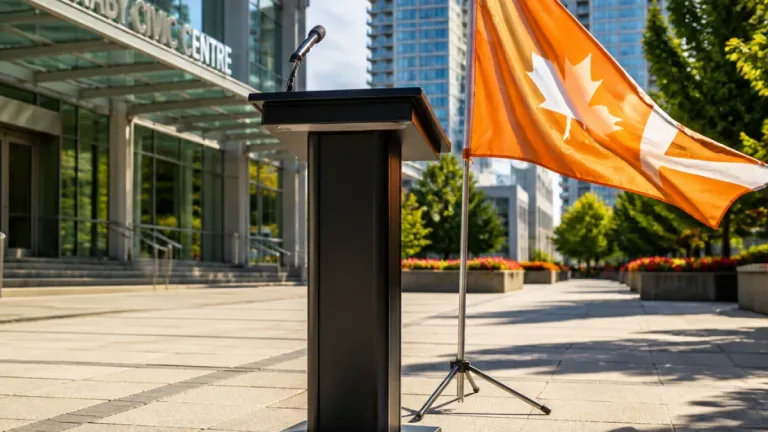
Under the agreement, the City has committed to maintain its development charge reductions until March 31, 2029. Municipal leaders and provincial and federal representatives attended an official announcement in Mississauga, including Mayor Carolyn Parrish, Premier Doug Ford, Rob Flack (Minister of Municipal Affairs and Housing), Jennifer McKelvie (Parliamentary Secretary to the Minister of Housing and Infrastructure), and Peter Fonseca (Member of Parliament for Mississauga–East Cooksville).
Which projects will be supported
The announcement highlighted two transit-focused priorities among the housing-enabling infrastructure projects to be funded:
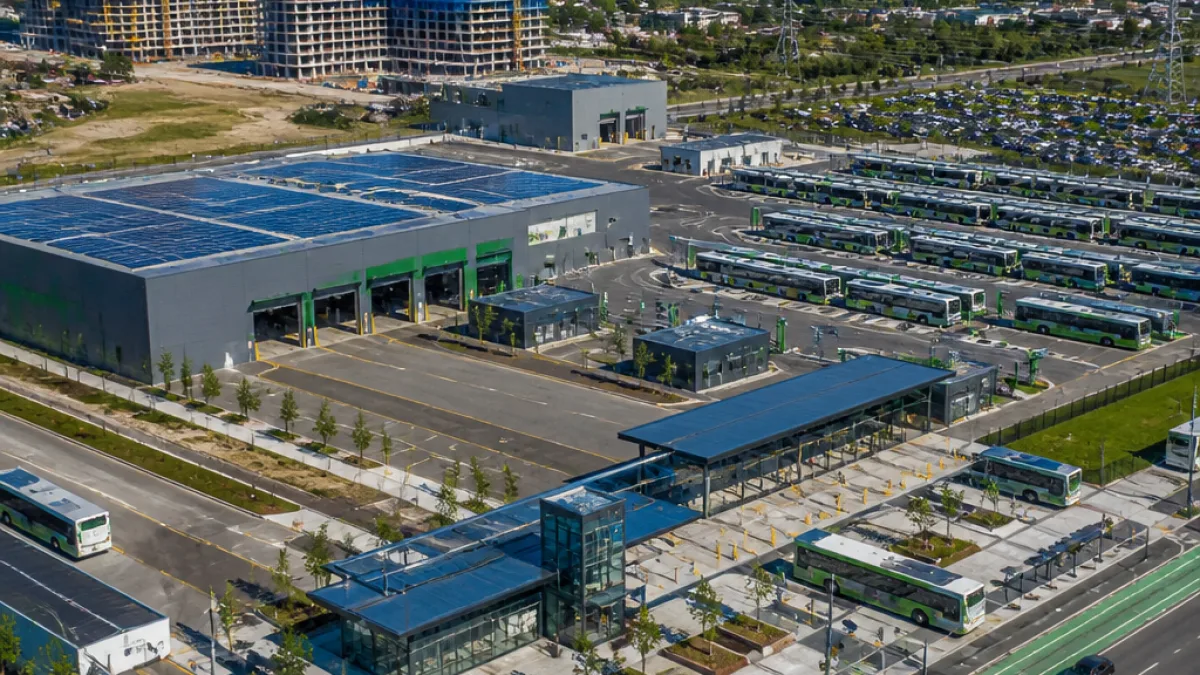
- New zero-emissions transit maintenance and storage facility planned on City-owned land at 7300 West Credit Avenue to support future service growth.
- New downtown transit mobility hub intended to improve connections in the city core and support higher-density development.
City staff note transit investment is critical for Mississauga, now Canada’s seventh-largest city, as the municipality prepares for a growing population and higher demand for public transit.
“These investments, which the City has long advocated for, will help support Mississauga’s growing population and deliver lasting benefits for residents and businesses,” the city said in its announcement.
Planning for ridership growth and fleet needs
The City is projecting a 50 per cent increase in transit ridership by 2035, and estimates it will require an additional 250 buses to meet demand. MiWay currently operates from its Edward J. Dowling Transit Facility and other sites; the new maintenance and storage facility is intended to support that expanded fleet while moving the system toward zero-emission vehicles.
| Project | Description |
|---|---|
| Zero-emissions maintenance & storage facility | Planned on City land at 7300 West Credit Avenue to support fleet expansion and electrification. |
| Downtown transit mobility hub | New hub to improve downtown connections and support higher-density housing and business growth. |
Local context and implications
Mississauga’s decision to reduce development charges — and in some cases phase them out for certain housing types — was aimed at lowering upfront costs for builders and encouraging construction of new homes. The federal-provincial funding is designed to offset the municipal revenue impact of those reductions by financing the infrastructure that growth requires.
For residents, the combined effect is meant to be twofold: faster delivery of new housing supply and better transit service to support higher-density neighbourhoods. For the city’s fiscal planners, the funding helps fill a gap between reduced charge revenues and the capital investments needed for roads, sewers, transit and other servicing tied to growth.
City councilors and staff have previously argued that targeted investments in housing-enabling infrastructure are essential to enable new developments to proceed without placing undue strain on existing services. The announcement underscores the provincial and federal governments’ willingness to partner with municipalities that take steps to lower housing costs through incentives such as development charge reductions.
Details on project timelines, procurement and the precise allocation of the up-to-$401.4-million envelope were not included in the city release. Municipal staff will be expected to provide further information as planning advances and capital projects move into design and construction phases.
Mississauga officials said the funding will support the city’s continuing efforts to accommodate growth while advancing sustainability goals through investments such as the planned zero-emission transit facility.