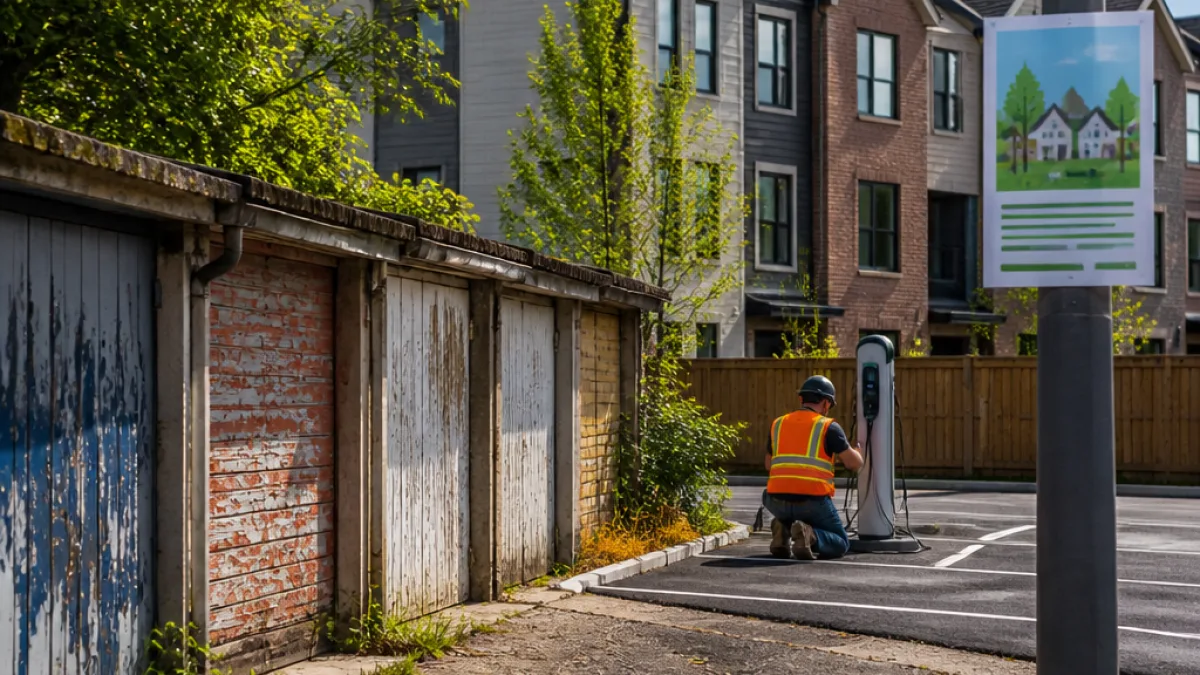
The council in Milton Keynes has approved a five-year strategy to review and repurpose its portfolio of more than 2,000 garages and carports, signalling an aggressive push to convert unwanted garage sites into housing, additional parking and electric-vehicle charging facilities.
What the plan will do
Milton Keynes City Council said the strategy seeks to retain and invest in garages that are "valued by residents" while identifying "derelict and vandalised" sites for redevelopment. Work will begin immediately to catalogue relevant locations and develop proposals for alternative uses, the authority said.
“By investing in garages that residents want to use and reimagining sites that aren't wanted, we can create more parking options, unlock spaces for new homes and improve neighbourhoods.”
The quotation is attributed to Deputy council leader Lauren Townsend, who framed the strategy as a means of making better use of municipal land to deliver benefits directly to local people.
Scope and expected outcomes
The council presented the plan as a pragmatic mix of preservation and transformation. It expects several outcomes:
- Reduced maintenance costs by focusing resources on garage sites in demand;
- Creation of new parking options and EV charging infrastructure;
- Redevelopment opportunities that could unlock space for new homes and community facilities;
- Improvements to run-down areas suffering from vandalism or neglect.
Officials said the aim is not wholesale demolition but targeted reinvestment: keep the garages residents want, reimagine those that are dilapidated or unused.
Numbers that matter
The authority’s portfolio — cited at over 2,000 garages and carports — forms the backbone of the plan. The council described the approach as a five-year programme to reassess sites and bring forward proposals to deliver local benefits.
| Item | Detail |
|---|---|
| Garage/carport portfolio | More than 2,000 sites |
| Strategy length | Five years |
| Primary outcomes | Housing, parking, EV charging, community facilities |
Relevance to Ontario municipal debate
While this plan applies to Milton Keynes in the United Kingdom, the issues it addresses — underused municipal assets, local demand for parking, pressures for additional housing, and the roll-out of EV infrastructure — are familiar to municipal governments across Canada. The approach of preserving valued facilities while repurposing derelict sites offers one model for balancing maintenance budgets with wider community needs.
For residents and councillors in Ontario, such strategies raise questions about how to identify sites for conversion, how to consult local communities about trade-offs between parking and housing, and how to phase upgrades to include EV charging. The Milton Keynes plan highlights a pragmatic path: quantify the portfolio, prioritise investment in what works, and redevelop the remainder for higher-value uses.
Next steps announced
The council said it will begin immediately to identify suitable locations and develop proposals for alternative uses. The plan emphasises community input and the potential to deliver "real benefits for local people" through targeted redevelopment and reinvestment.
Local observers and municipal staff elsewhere will likely watch the programme’s implementation and outcomes over the coming five years to assess whether the strategy reduces maintenance costs, increases housing supply and improves neighbourhood conditions where derelict garages have blighted sites.