Ottawa and Queen’s Park announced a joint $9‑billion investment package aimed at bolstering critical mineral development, shoring up Canada’s steel industry and helping automakers modernize assembly lines — and included in the plan is a matched $1‑billion contribution from the federal government to support road infrastructure into the Ring of Fire.
Federal match clears path for northern infrastructure
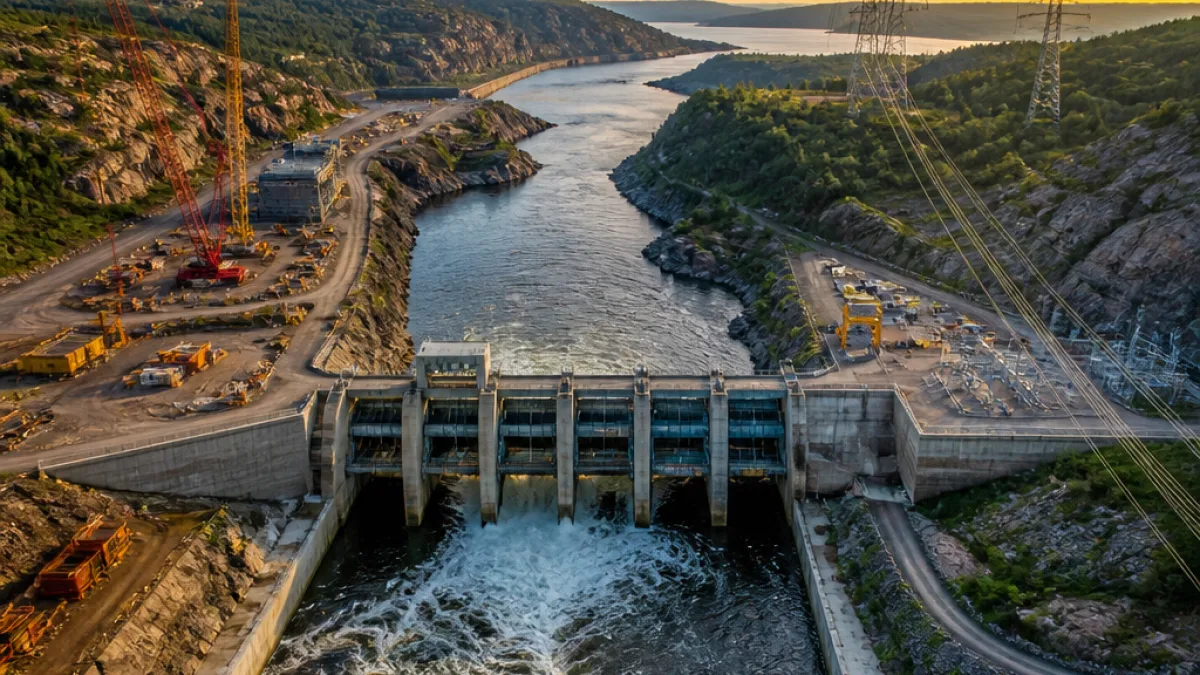
The funding announcement, delivered in Ottawa on Oct. 21 by Prime Minister Mark Carney, confirms the federal government will match the province’s previously announced commitment to construct access roads into the mineral‑rich Ring of Fire region in northern Ontario. The Ring of Fire has long been touted as crucial to the development of nickel, chromite and other critical minerals needed for clean technologies and electric vehicle production.
Officials framed the plan as a way to strengthen Canada’s industrial sovereignty and support domestic supply chains from extraction through to manufacturing. The initiative is intended to provide certainty for companies and workers at a time of rising global trade tensions and shifts in supply‑chain relationships.
"From mine to mill to (assembly) line,"
Carney used that phrase to describe the package, which is intended to move resources through Canadian processing and into downstream manufacturing. He highlighted existing federal investments in heavy industries while arguing for an additional top‑up to protect jobs amid a trade dispute with the United States.
Major allocations aimed at steel and auto sectors
The largest single allocation in the package is $5‑billion earmarked for the Canadian steel sector. That funding is intended to help plants, including producers in Sault Ste. Marie and Hamilton, pivot to new markets and modernize equipment so they can diversify product mixes and reduce reliance on U.S. customers.
Approximately $2.5‑billion is designated for the automotive sector in southwestern Ontario to assist automakers in modernizing assembly lines and investing in next‑generation vehicle technologies.
Carney said the move is about controlling what governments can control and ensuring Canadian manufacturers have access to domestically produced inputs. He also pointed to strengthened enforcement measures at the Canada Border Services Agency to protect domestic producers from unfairly priced imports.
"We have the best steelworkers in the world, we have vast natural resources and yet we import over 6.5 million tonnes of steel a year and that’s often because we don’t make the steel that Canadian companies need,"
That was among the remarks delivered as part of the announcement, used to underline the rationale for the investments.
What the package includes
- $5 billion for the steel industry to support upgrades and market diversification
- $2.5 billion for automakers to modernize assembly lines and support innovation
- $1 billion federal match for Ontario’s Ring of Fire road commitment
Beyond these headline amounts, officials did not release a detailed breakdown for the remainder of the $9‑billion package at the announcement.
| Program area | Allocation |
|---|---|
| Steel sector | $5.0B |
| Automotive sector | $2.5B |
| Ring of Fire roads (federal match) | $1.0B |
| Other/unspecified | $0.5B (not detailed) |
Local impact and outstanding questions
For communities across Ontario — from the industrial plants in Sault Ste. Marie and Hamilton to mining and Indigenous communities in the Far North — the announcement signals new federal and provincial attention to jobs and infrastructure. The matched Ring of Fire road funding could unlock years of project planning and lead to construction contracts and resource‑related activity in the north.
But the announcement leaves several practical details unresolved. Officials did not outline timelines, permitting arrangements, environmental assessments or how benefits would be shared with local and Indigenous communities directly affected by Ring of Fire development. Those are critical components that will determine whether the money translates into shovel‑ready projects and long‑term economic benefits.
Similarly, steel and auto manufacturers will be looking for clarity on application processes, eligibility rules and timing for disbursements. Local workers and unions will also seek assurances that funding will translate into secured jobs and training for workers adapting to new technologies.
As the province and Ottawa move from announcement to implementation, municipalities, industry and Indigenous leaders will be watching for concrete plans and engagement processes that address both economic and environmental concerns.
This package marks a significant step in federal‑provincial co‑operation on industrial policy. For northern Ontario communities, the matched commitment for Ring of Fire roads could be transformative — but many implementation questions remain to be answered before the promise becomes pavement and jobs.