
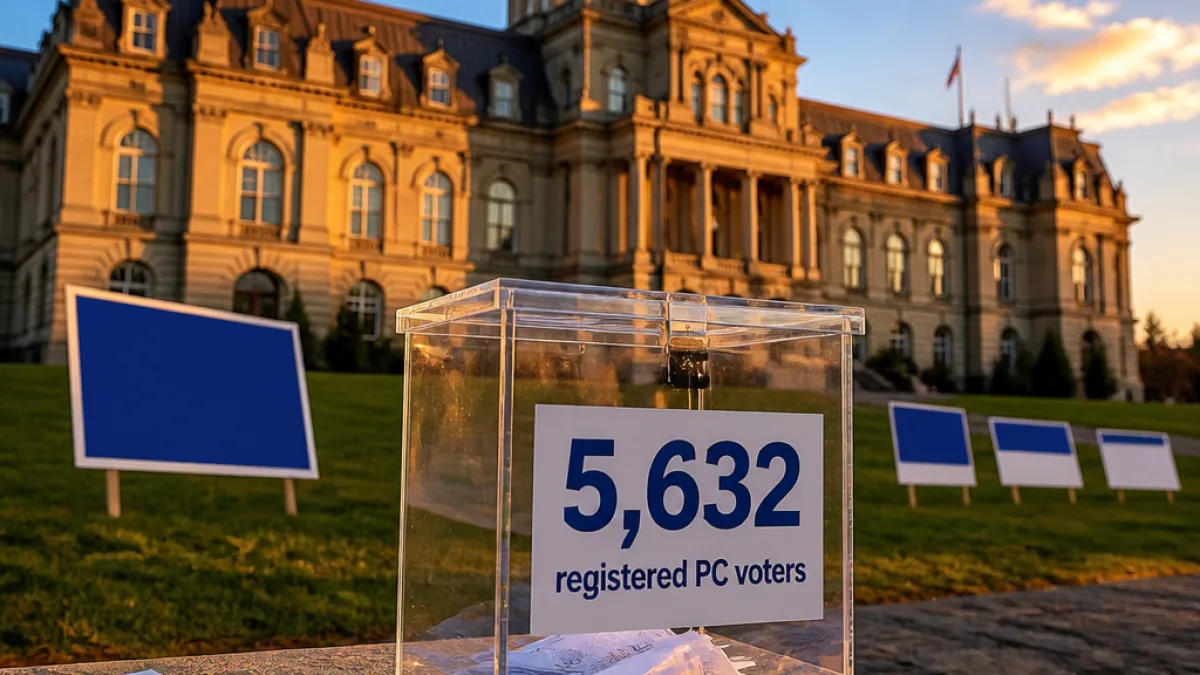
Two candidates vying for the leadership of the New Brunswick Progressive Conservative Party say a total of 5,632 registered party voters will determine who succeeds the current leader.
Small electorate, high stakes
The number, provided by the leadership contenders as they enter the final stretch of the race, highlights that a relatively compact group of party members will decide one of the province’s consequential political questions.
Party leadership contests frequently draw intense attention because the winner can shape policy direction, cabinet choices and electoral strategy. In this case, the pool of registered voters is limited to those who met the party’s requirements to take part in the leadership selection process and have formally registered to vote in the contest.
- Registered voters: 5,632
- Context: Total number comes from the two leadership contenders as of the final stretch of the campaign.
- What’s at stake: The registered voters will choose the party’s next leader.
The relatively small electorate means targeted campaigning, membership drives and get-out-the-vote efforts can have an outsized effect. Candidates typically concentrate resources on persuading registered supporters and signing up new members eligible to vote in such contests.
Local implications
For New Brunswickers, the outcome of the PC leadership race matters beyond internal party affairs: the party is a primary contender for government in the province. The identity and priorities of the new leader will influence how the party frames issues such as health care, education, economic development and relationships with communities across New Brunswick’s anglophone and francophone regions.
Because the leadership electorate is concentrated within party ranks, the contest will be won or lost on the basis of mobilisation within those memberships rather than broad public opinion. That dynamic can sharpen internal debates and raise the importance of grassroots networks and local riding associations.
What the figure means for campaigning
With 5,632 registered voters, campaigns will be able to run highly targeted outreach — from one-on-one calls and local events to digital contact — to sway the result. The campaign messages that resonate with this group may be more narrowly tailored than those aimed at a general provincial electorate.
Political operatives often say that in small-electorate leadership races a few dozen votes can be decisive. While the exact margin needed to win this contest is not available in the information released by the contenders, the number of registered voters underscores the narrow path to victory and the importance of every registered participant.
Transparency and verification
The count of registered voters was disclosed by the two leadership contenders. Party officials typically administer the registration process and the vote, and are responsible for announcing official figures and results. At this point, the figure of 5,632 represents what the campaigns report as the number of people eligible to cast ballots.
| Item | Figure |
|---|---|
| Registered Progressive Conservative voters in leadership contest | 5,632 |
The parties involved and their supporters will now turn to final get-out-the-vote efforts. Observers and the wider public will watch how the campaigns allocate resources and seek commitments from those registered to vote.
Looking ahead
As the leadership race moves toward its conclusion, the number of registered voters will be a recurring reference point in coverage of the contest. It frames both the scale of participation and the intensity of the competition.
For New Brunswickers interested in the outcome, the contest serves as a reminder that party membership and participation in internal processes can have a direct effect on provincial politics. Those who wish to follow developments closely should look for official communications from the Progressive Conservative Party about verified registration figures, voting procedures and the date and method of the leadership vote.
The leadership contest underscores that, in party politics, a comparatively small number of engaged members can exert significant influence over the direction of a party and, potentially, the province as a whole.