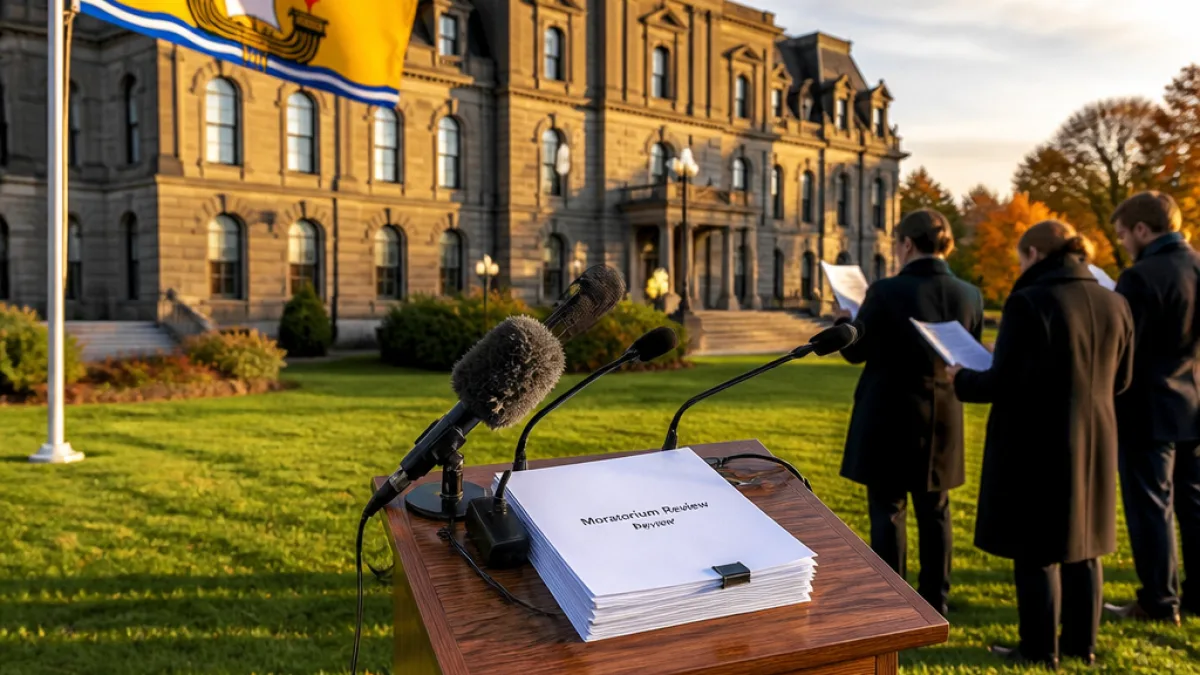
Premier Susan Holt announced Wednesday that her government will conduct a review of New Brunswick’s moratorium on natural gas development, a policy that currently covers the recovery method known as hydraulic fracturing, commonly called fracking. The decision has the potential to reshape debate around energy, jobs and environmental protection in the province.
What the review covers
The review will revisit the existing moratorium on natural gas exploration and extraction that has been in place for several years. While details on timing, scope and the panel or experts to be engaged were not released with the announcement, the move signals the provincial government’s intent to reassess whether restrictions should remain in place.
The moratorium currently limits onshore natural gas development and the use of fracking within New Brunswick. Proponents of lifting or loosening the ban say it would allow the province to exploit a local energy resource, retain spending within the provincial economy and attract investment. Opponents continue to cite environmental risks and impacts on water, land use and local communities.
Immediate reactions and the opinion context
An opinion column published alongside the announcement described the review as “a positive first step” toward unlocking what the columnist called the province’s “massive natural gas potential.” The piece argued that New Brunswickers now pay for gas produced elsewhere and that relaxing restrictions could keep more energy dollars within the province.
That perspective is likely to be matched by industry stakeholders and some municipal and regional voices keen to diversify economic opportunities. At the same time, environmental groups, municipalities and some rural residents have historically opposed fracking over concerns about groundwater, seismic activity and long-term land-use consequences.
Questions New Brunswickers are likely to ask
- How long will the review take, and who will be consulted?
- Will Indigenous communities and local municipalities be part of the process?
- What environmental safeguards would be required if fracking were allowed?
- How would potential revenues and jobs be balanced against environmental and social costs?
Until the government releases terms of reference or an advisory panel list, many of those questions will remain unanswered. The announcement does not automatically change the moratorium; it initiates a process to examine whether the policy should be amended or lifted.
Potential local impact
Any change to the moratorium could have direct effects on landowners, municipalities and the resource sector. New Brunswick’s economy is diverse, with forestry, fisheries, agriculture and a growing services sector. Advocates for development argue natural gas could provide a new revenue stream and support manufacturing and heat-intensive industries.
Environmental and community groups warn that the introduction of fracking would require strict regulatory oversight and transparent monitoring. Questions about who pays for oversight and how risks are mitigated will be central to public consultations if the review proceeds as an open process.
Comparative considerations
Provinces and jurisdictions that allow hydraulic fracturing have developed varied regulatory regimes, often combining baseline water testing, well-casing standards and reporting requirements. Any review in New Brunswick would likely consider regulatory models elsewhere as part of its assessment.
| Issue | Matters for review |
|---|---|
| Environmental risk | Water protection, seismic monitoring, emissions |
| Economic benefit | Jobs, royalties, local supply chains |
| Community consent | Municipal bylaws, Indigenous consultation, public engagement |
Those three categories — environmental, economic and community consent — are likely to define the contours of the debate in New Brunswick as the review progresses.
Next steps and what to watch for
New Brunswickers should expect the government to publish a formal mandate for the review if it intends to proceed transparently. That document would typically outline timelines, participants and methods of consultation. Observers will also look for whether Indigenous governments and local municipalities are invited to shape the process from the outset.
For now, the announcement marks the beginning of a policy reassessment rather than an immediate policy shift. The review will be watched closely by industry, environmental groups and communities across the province as they weigh potential benefits against risks.
This development returns natural gas and fracking — long-standing and divisive topics in Atlantic Canada — to the forefront of provincial policy discussions. How the Holt government structures the review will determine whether it yields consensus, sparks further contention, or results in incremental regulatory changes.
Reporting from Fredericton will follow as the government releases specific terms and stakeholders begin to respond.