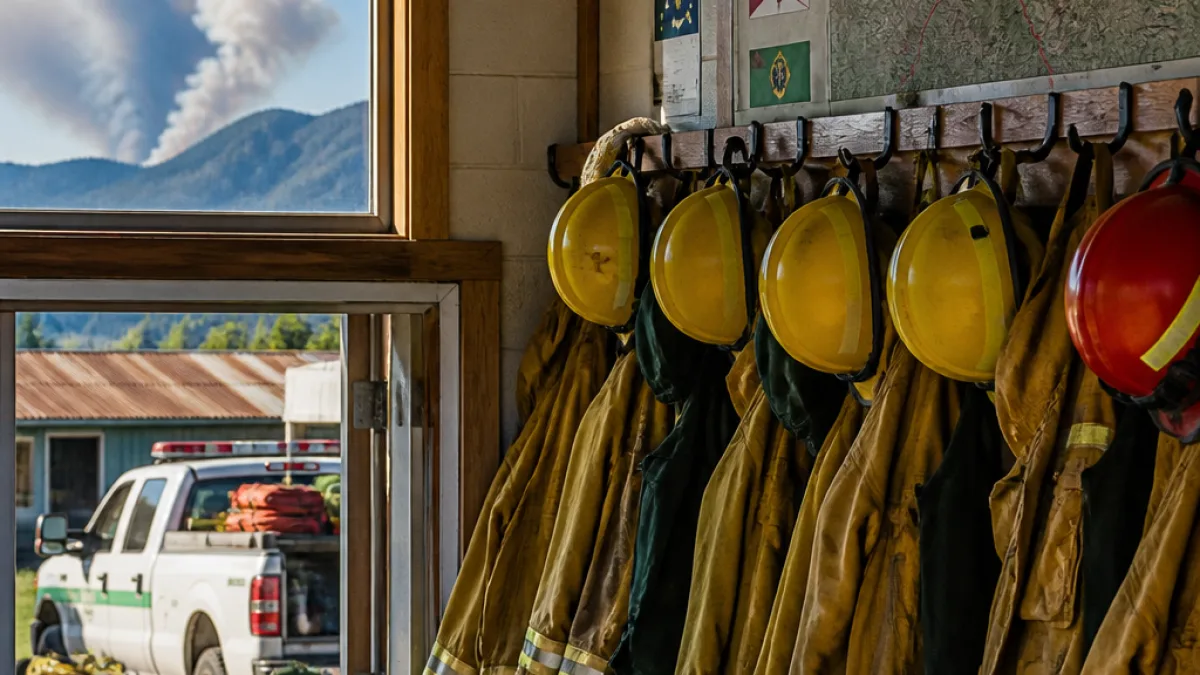
Whitehorse — Yukon First Nations Wildfire (YFNW) is publicly questioning why its crews were not deployed to British Columbia this summer even as international firefighters arrived from as far away as Australia, New Zealand and Mexico to battle intense wildfires.
Indigenous crews left waiting
YFNW, a private contractor jointly owned by First Nations development corporations, provides Type 2-certified crews — teams trained to support a range of lower-risk wildfire operations. For the past five years, those crews have been deployed outside the territory through arrangements coordinated by the Yukon government and the Canadian Interagency Forest Fire Centre (CIFFC).
This year, however, YFNW says it hasn’t had any such deployments.
“Everybody trains all summer to be able to go out on these deployments, and then they aren’t allowed to when the time comes. It makes them feel less than or unequal to,”
That is the assessment of Nick Mauro, chief executive officer of YFNW, who spoke to APTN News. He described the situation as “really frustrating,” noting crews prepare all season for the chance to be sent where they are needed.
How deployments are meant to work
The usual mechanism for sharing wildfire resources across Canada involves CIFFC, which coordinates requests between provinces and territories. Because YFNW is based in the Yukon and operates as a contracted service rather than a provincial or territorial core firefighting unit, any request for its deployment to another jurisdiction would have to flow through the Yukon government and then through CIFFC for interjurisdictional coordination.
Sarah Buss, a fire information officer with the BC Wildfire Service, told APTN News that the service recognises the important role Indigenous crews play in wildfire response. She noted, however, that because YFNW is located outside of British Columbia, it would have to be deployed through the Yukon government, with CIFFC coordinating that request.
Morale and equity concerns
For YFNW personnel, the lack of deployments this season has had an emotional and professional impact. Mauro said crews train all summer specifically to be eligible for interjurisdictional deployments. Not being included in the rotation while international crews were flown in has left some members feeling overlooked and undervalued.
YFNW’s situation raises questions about equitable practice in emergency management — not only about which crews get sent when resources are strained, but also about the mechanisms by which Indigenous-run companies are integrated into provincial and national response systems.
- YFNW operates Type 2-certified crews, contracted through First Nations development corporations.
- Type 2 crews are trained for a variety of lower-risk wildfire operations; Type 1 crews are the highest level and are typically employed by provincial or territorial services.
- Deployment coordination ordinarily goes through the Yukon government and CIFFC for requests outside the territory.
Questions for governments and agencies
The story highlights friction between the reality of available local resources and how requests for assistance are processed. YFNW’s complaint centres on not receiving deployment offers even though its crews were available and ready. Mauro noted the incongruity of international crews being flown in while Yukon crews were reportedly told there wasn’t enough money to send them south.
At the same time, BC Wildfire Service reiterated that a deployment of an out-of-province crew requires formal coordination. That points to a policy and process question: if a territory or a First Nations contractor has capacity, how are those assets flagged, requested, and approved in an emergency? The answer affects timeliness, cost and local engagement.
Local implications
For Yukoners, this debate matters on several levels. First, it touches on the recognition and respect of Indigenous-run emergency services that invest in training and capacity. Second, it speaks to the territory’s role within the national mutual-aid framework for wildfire response. Third, it has practical consequences: deployments are a source of experience and revenue for crews, and they help maintain readiness.
YFNW’s public remarks are likely to prompt follow-up from the Yukon government and CIFFC about why crews were not deployed this year and whether the process for requesting and approving Indigenous contractors needs review.
As the wildfire season continues to evolve, the issue of who gets called — and who gets left behind — remains a pressing operational and policy concern for northern communities and the agencies that serve them.