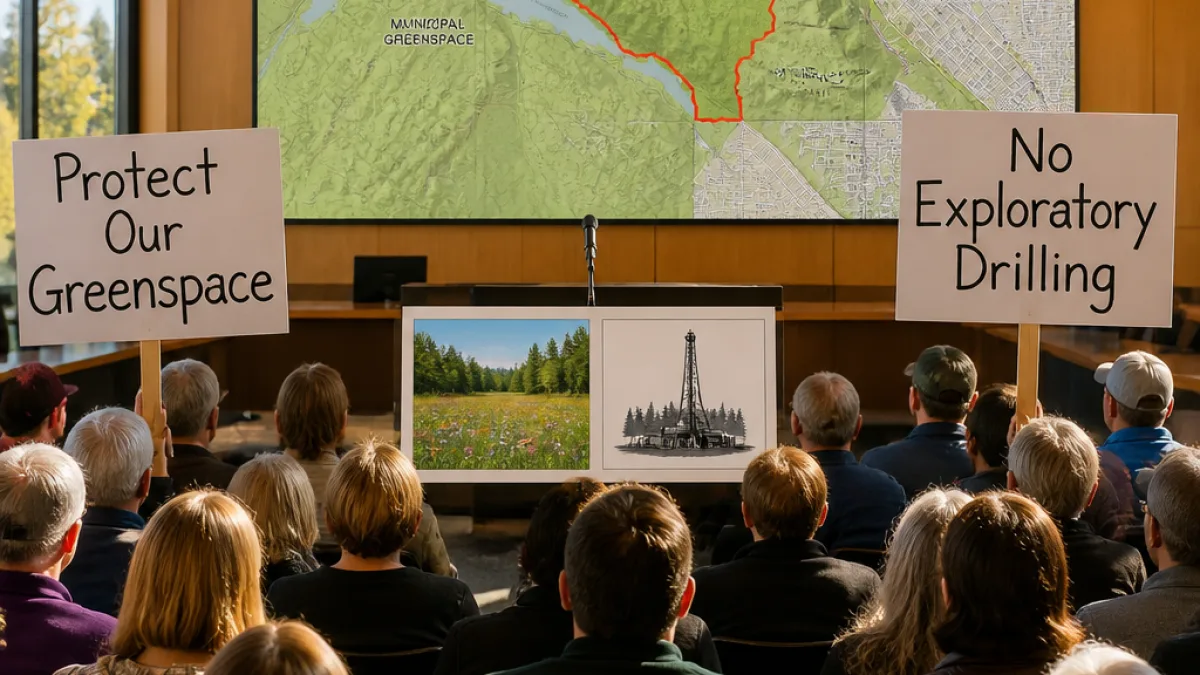
City hall hearing draws packed chambers, heated public input
Whitehorse city council heard several hours of public testimony Aug. 24 on a proposal that would redesignate just under 80 hectares of municipal greenspace as “future planning” land and temporarily permit mineral exploration, including exploratory boreholes, on those lands.
The application, submitted in July by Vancouver-based exploration company Gladiator Metals, is the company’s second attempt to alter the city’s land-use rules after an earlier bid this year that sought permission for exploratory drilling across all city lands was halted by council.
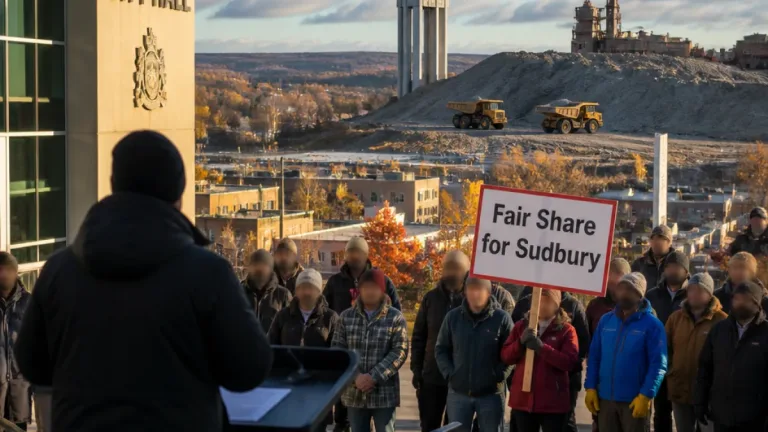
The hearing closed a weeks-long engagement process that prompted more than 200 written submissions to the city. Council chambers were full for the meeting — with attendance estimated at just over 100 people — and organisers set up a secondary room with a live-stream to accommodate overflow.
Arguments from both sides focus on environment and process
Speakers at the hearing represented a range of views, but opponents of the amendment dominated the time available. Many urged council to prioritise protection of greenspace and areas the Official Community Plan identifies as environmentally sensitive. They said converting those lands for potential exploration would undermine conservation goals embedded in the city’s planning documents.
Other residents framed their objections around process. They told council the company appeared to be trying to change municipal rules before the city completes a planned policy package specifically addressing mineral exploration and extraction within Whitehorse. That mineral framework has been under development since last year and was expected in July, but the process has been delayed as council and staff shifted focus to the Gladiator proposals.
What the proposal would change
- Redesignation of almost 80 hectares from greenspace to future planning designation.
- Amendments to land-use bylaws to permit mineral exploration as a temporary use on future planning lands, including exploratory drilling.
- Application lodged by Vancouver-based Gladiator Metals; this represents the firm’s second attempt at amending the city’s rules.
City staff will now prepare reports and recommendations for council consideration, and the matter will return to a future council meeting for deliberation and a possible decision. Council must weigh immediate neighbourhood and environmental concerns against the applicant’s request and the broader municipal policy work that remains outstanding.
Local context and consequences
For Whitehorse residents, the case presents a collision between competing priorities: conserving urban greenspace valued for recreation, wildlife habitat and climate resilience, and accommodating resource-sector interest that proponents argue can bring economic opportunities. The city’s Official Community Plan guides how municipal lands are protected and developed; changes of this kind could set precedents for future applications.
Indigenous people, community groups and long-time residents have repeatedly stressed the importance of keeping sensitive areas intact, while proponents of exploration say modern, regulated exploratory work can be undertaken with mitigations. Until council makes a decision or the city’s mineral framework is finalised, uncertainty will persist about how the municipality balances those objectives.
| Item | Reported figure |
|---|---|
| Area proposed for redesignation | ~80 hectares |
| Public submissions received | >200 |
| People attending hearing | >100 |
Council members have previously delayed a standalone mineral policy while responding to the Gladiator applications. Those delays mean that a comprehensive framework designed to govern exploration and extraction near city lands is not yet in place — a fact that many residents highlighted during the hearing as a reason to reject or postpone the company’s request.
The coming weeks will determine whether council moves to adopt the bylaw changes Gladiator seeks, asks for revisions, or waits until the broader mineral framework is completed. Whatever the outcome, the debate has underscored how land-use decisions in Whitehorse can quickly become local flashpoints, drawing in voices concerned about environmental stewardship, municipal decision-making and the pace of development.