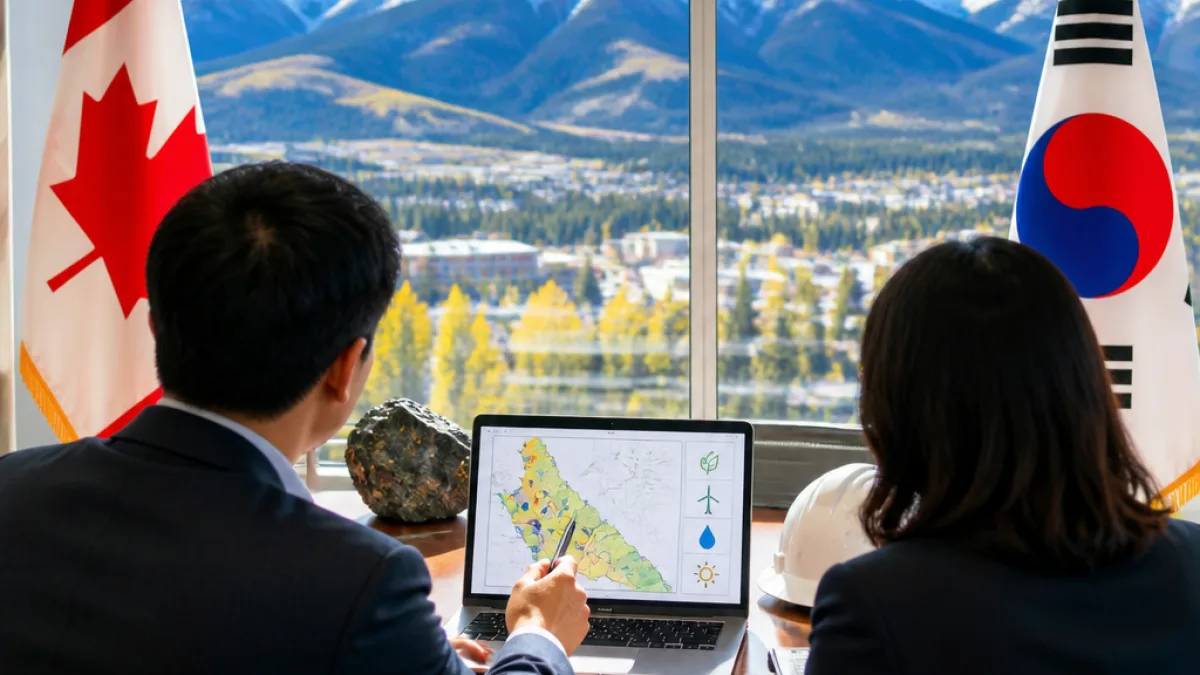
Whitehorse — The Consular General of the Republic of Korea, Kwangsuk Lee, sat down this week with Yukon Minister of Energy, Mines and Resources Ted Laking to explore areas of shared interest between the territory and South Korea, chiefly energy and the extraction of critical minerals.
Conversation focused on energy security and minerals
Laking said the pair discussed the territory’s energy needs and the challenges Yukon faces, including the risk of shortages similar to those experienced last winter. He noted South Korea’s reputation for advanced energy and industrial technologies as a point of mutual interest.
“At a high level we discussed the energy needs of the territory, [and] the energy challenges that the territory is facing when it comes to the potential shortages [like what] we faced last winter,” Laking said.
Both officials flagged critical minerals as a central theme. Laking described Yukon as “endowed with a significant amount of critical minerals,” and said there is strong global demand for those resources because they are essential to modern economies and technologies.
South Korea’s industrial profile and its interest
Lee told Laking his country is keen to explore Yukon’s potential as a supplier of raw materials to South Korean manufacturers. The consul general framed the value of deeper ties in light of shifting global trade patterns and a desire among South Korean industry to secure stable, commercially viable sources for component materials.
According to the territorial description of the talks, South Korea is viewed worldwide as a leader in several technology and manufacturing sectors. These sectors were identified during the meeting as potential areas where South Korean know‑how could intersect with Yukon resources:
- nuclear energy
- battery production
- electric vehicles
- manufacturing for heavy industry and defence
| Yukon topics | South Korea sectors of interest |
|---|---|
| Energy needs and security | Nuclear energy; energy technologies |
| Critical mineral resources | Batteries; EVs; heavy industry manufacturing |
What this could mean locally
Officials in Whitehorse did not announce any deals or concrete investments following the meeting. Still, the conversation underscores how international manufacturers are scouting supply chains for reliable sources of minerals used in batteries and advanced technologies.
For Yukoners, renewed diplomatic and business attention can carry several practical implications if it leads to follow‑up activity:
- potential for new exploration and development projects focused on minerals designated as critical
- opportunities to attract technology partnerships and investment in energy innovations
- a need for continued dialogue on environmental safeguards, regulatory certainty and benefits for local communities
Laking emphasised the strategic importance of critical minerals in global markets and the territory’s role within that context. Lee echoed that South Korean industry is actively looking for stable, dependable sources of raw materials to feed manufacturing supply chains.
Next steps and context
Neither official provided timelines or detailed follow‑up plans publicly. The meeting fits into a broader pattern of Yukon engaging with international partners to seek investment, expertise and markets for its resource sectors while balancing local priorities.
As Yukon navigates questions about energy resilience and resource development, the territory’s government will likely weigh economic opportunity against environmental stewardship and community interests. Any move toward foreign partnerships or sourcing agreements would normally involve further consultations, regulatory processes and, where necessary, Indigenous and municipal engagement.
For now, the Whitehorse meeting signals interest from an East Asian manufacturing powerhouse and opens a channel for more targeted discussions about how Yukon’s natural assets might contribute to shifting global supply chains.
Reporting from Whitehorse.