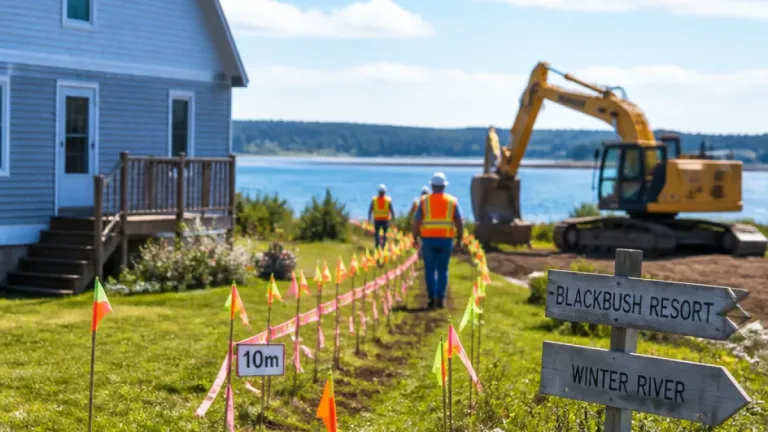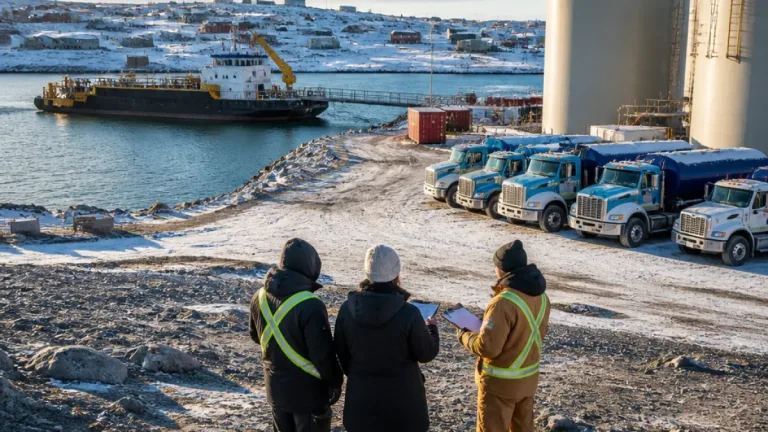
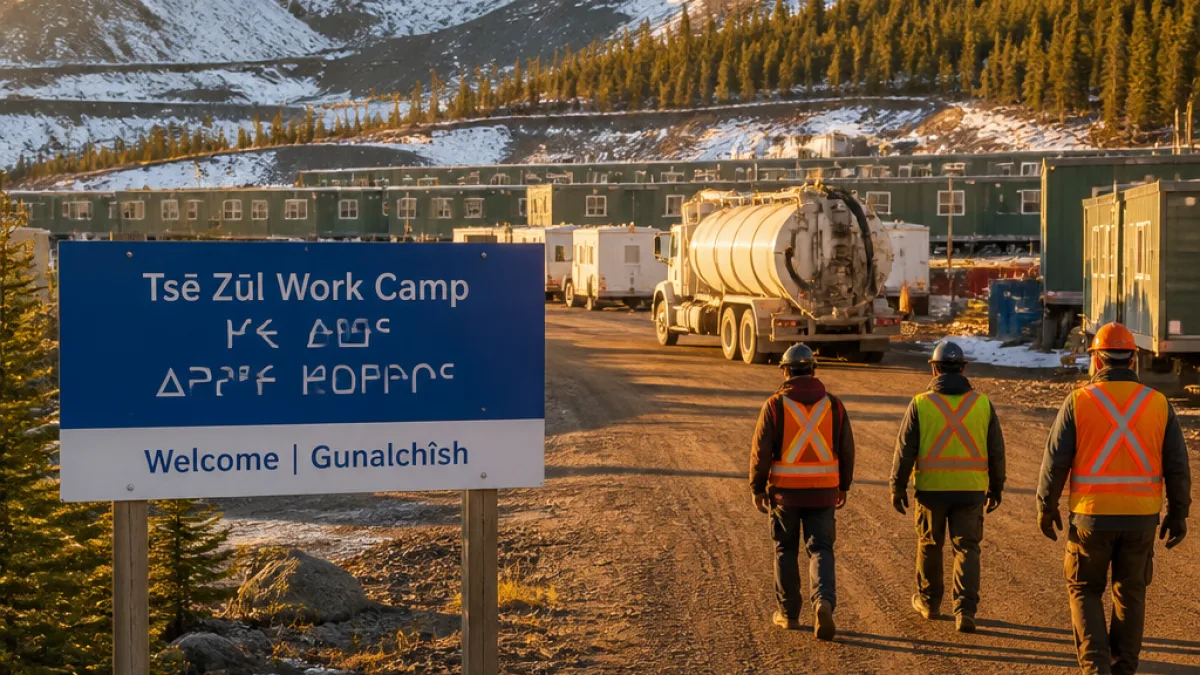
After decades of conversation around who will lead and benefit from the Faro mine remediation, the Ross River Dena Council has taken a tangible step: the opening of a worker camp owned and operated by its development corporation, Dena Nezziddi.
Local control and capacity for a complex cleanup
Called Tsē Zūl — the traditional place name for this part of Kaska territory — the camp is large enough to house roughly 300 workers. It sits near the abandoned Faro mine site in central Yukon, a federal contaminated site that has been the subject of extensive planning since the mine closed in the 1990s. The site is located about 200 kilometres northeast of Whitehorse.
While physical remediation work at Faro has not yet started, federal officials have signalled that activity is imminent. When work begins, the presence of Tsē Zūl means a portion of the workforce will have on‑the‑land accommodation operated by a Kaska Nation organisation.
Economic sovereignty and community priorities
Ross River Dena Chief Dylan Loblaw framed the camp as more than a place to sleep. For his Nation, it represents a way to secure meaningful and lasting economic benefits from a project that sits on unceded Kaska territory. Loblaw said members deserve full inclusion and involvement in the remediation and the economic opportunities that accompany it.
"We've always been here, in our traditional territory, in our country, and we're able to secure meaningful opportunities that are needed to clean up some of these environmental catastrophes," Loblaw said.
He added that the camp will generate long‑term revenue for the Ross River Dena Council and allow the Nation to have a greater say in what happens on their land.
Operational and regional implications
The creation of a camp owned and run by a First Nation development corporation is significant in several respects. It provides logistical capacity for a technically demanding cleanup, reduces the need for workers to commute long distances, and channels some spending and employment into the host Nation. It may also strengthen Indigenous oversight and contracting opportunities as the federal project moves from design into field operations.
Those field operations will involve complex tasks: treating contaminated water, stabilizing stockpiles of mine waste, and managing decades of environmental legacy issues common to large metal mines. The presence of on-site accommodation helps project planners and contractors manage crews in a remote area where local services are limited.
What the community and region can expect
For nearby communities and for the Ross River Dena Council, the camp is likely to bring a mix of short‑ and long‑term effects:
- Employment opportunities: jobs in camp operations, subcontracted services and the remediation work itself.
- Revenue generation: lease or operation income for the development corporation and potential downstream business for local suppliers.
- Increased activity: more traffic and people in a remote area, requiring coordination on safety, environmental protection and community relations.
How those benefits are distributed — between the Nation, local residents and outside contractors — will be shaped by procurement choices and agreements yet to be finalised between federal authorities, contractors and Kaska leadership.
Context and next steps
The Faro mine cleanup has been one of Canada’s largest and most technically challenging mine‑site remediation efforts. Its scale and complexity have made partnerships with Indigenous nations, technical contractors and multiple levels of government essential. By establishing Tsē Zūl now, the Ross River Dena Council is positioning itself to be an active participant rather than a passive host.
With the camp now open, attention will turn to the details of hiring, contractor selection and environmental safeguards as the federal remediation program moves into an operational phase. For residents of Ross River and neighbouring communities, the coming months will offer the first clear indications of how many jobs will be local, how training opportunities will be structured, and what long‑term benefits the project will deliver to the Kaska people.
The opening of Tsē Zūl underscores a broader shift in northern resource and remediation projects: Indigenous governments are increasingly asserting control over economic opportunities tied to work on their lands, seeking not only jobs but also decision‑making power over activities that affect their territories.
| Item | Detail |
|---|---|
| Camp name | Tsē Zūl |
| Owner/Operator | Dena Nezziddi (Ross River Dena Council development corporation) |
| Capacity | ~300 workers |
| Location (approx.) | 200 km NE of Whitehorse, near Faro mine |
| Mine status | Closed in the 1990s; federal contaminated site |