
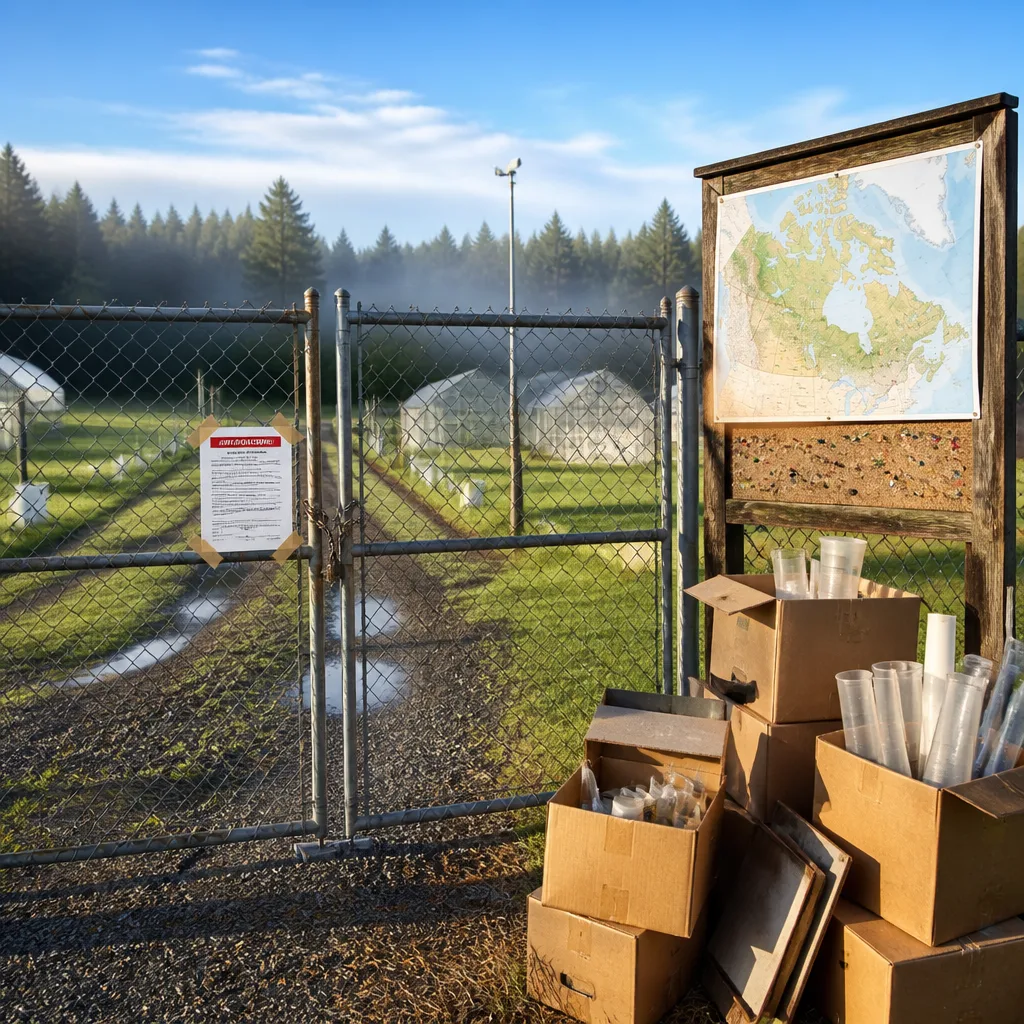
The federal government will not back down from its decision to close seven agricultural research centres and experimental farm sites, saying the move reflects a deliberate rebalancing of resources toward research expertise and activities rather than maintenance of multiple facilities.
Ottawa defends shift in research strategy
In response to recommendations from the House of Commons committee on agriculture and agri-food, the government reaffirmed this week that it intends to proceed with the planned closures, which are part of a wider cost-cutting exercise. The government’s response said the closures allow officials to prioritise "investment in research expertise and activities" over ongoing operations and maintenance expenses.
"This approach was taken to improve cost efficiency, while sustaining investment in innovation that strengthens the agriculture and agri-food sector and helps grow the economy."
Officials told the committee that the closures will not end all scientific work associated with the sites and stressed that 17 research centres will remain in operation across the country. The government also noted that "every province will continue to have at least one Agriculture and Agri-Food Canada research centre," which it said preserves a national footprint and regional coverage.
Opposition raises food-security and laboratory concerns
The opposition Conservatives have criticised the plan, arguing that shutting the facilities undermines Canada’s capacity to support farmers and protect the food supply. The committee previously recommended the government keep the seven centres open.
Separately, the House committee urged the Canadian Food Inspection Agency to reconsider plans to discontinue analytical work at its Longueuil laboratory. The lab performs verification of nutritional information for food labels and acts as a national reference and research centre for food allergens.
The government confirmed the CFIA will discontinue laboratory activities at Longueuil and indicated the closure has been planned for the 2028-29 fiscal year. Officials said essential functions now performed at Longueuil will be transitioned to other CFIA laboratories and, where appropriate, to external partners.
What stays and what changes
Key points from the government's response to the committee:
- Seventeen Agriculture and Agri-Food Canada research centres will remain open.
- Every province will retain at least one AAFC research centre, according to the government.
- The CFIA’s Longueuil laboratory analytical work is slated to stop by 2028-29, with functions transferred elsewhere.
Citing fiscal pressures, the government frames the closures as a way to concentrate scientific talent and programming at fewer, better-funded sites, and to reduce the cost of maintaining multiple facilities. The response emphasised sustaining investment in innovation as the rationale for the decisions.
| Item | Stated status |
|---|---|
| AAFC research centres remaining open | 17 |
| Provinces with at least one AAFC research centre | All provinces (at least one each) |
| CFIA Longueuil analytical lab | Planned discontinuation (2028-29) |
Implications for research and industry
Researchers, producer groups and some opposition figures have warned that closing regional centres and concentrating expertise risks eroding on-the-ground capacity for locally tailored research, rapid diagnostic services and emergency responses to pests, disease and other threats. The government’s response maintains that leveraging expertise in other locations and within a broader ecosystem can preserve national and regional coverage while delivering cost efficiencies.
Exactly how functions and personnel will be reallocated, and how quickly transitions will occur, were not detailed in the response beyond the planned timeline for the Longueuil laboratory. The committee had recommended retaining the seven sites in order to safeguard research continuity and regional support for agriculture and agri-food stakeholders.
The debate underscores a broader tension in Ottawa’s stewardship of public research infrastructure: balancing fiscal restraint with the need to sustain scientific capacity that supports a sector critics call vital to national food security and economic stability.
Parliamentary follow-up and scrutiny are likely as stakeholders press for clarity on how the government will maintain research outputs, diagnostic services and regional engagement once the closures proceed.