Saskatchewan Premier Scott Moe publicly urged U.S. decision-makers to avoid purchasing potash from Belarus, saying such an arrangement would amount to supporting Russian aggression and undercut Canada’s ethically and economically preferred supply chain.
Premier frames potash as ethical and strategic
Moe reacted to a social-media post by U.S. President Donald Trump indicating Washington was pursuing a large potash purchase from Belarus. In his response, the premier stressed that buying fertilizer sourced through Belarus — and transported via Russia — would be neither ethical nor sensible for North American purchasers.
"Buying blood potash from Belarus is supporting Russian aggression," Moe wrote on social media.
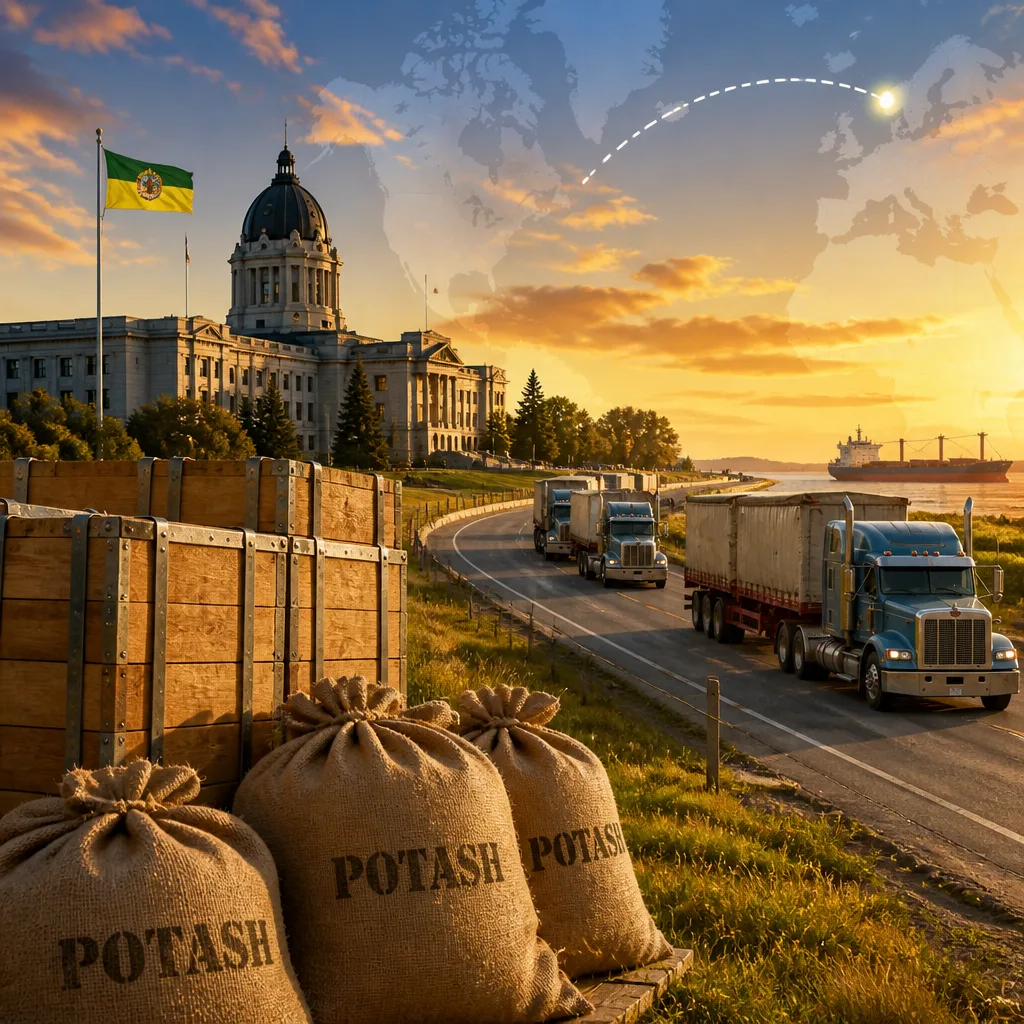
The premier’s comments spotlight the strategic importance of potash — a mineral widely used in fertiliser production — and the central role Saskatchewan plays in supplying it. Federal data show that nearly a third of worldwide potash production in 2024 came from Canada, and all 10 of the country’s active potash mines are in Saskatchewan.
Industry and trade implications
The discussion places Canadian producers at the centre of a geopolitical and commercial conversation. Major companies linked to Canadian potash production include Nutrien Ltd., The Mosaic Company, Compass Minerals and K+S Potash Canada. BHP is constructing the Jansen mine in Saskatchewan and anticipates commercial production in mid‑2027.
When pressed for comment, Nutrien directed requests to Fertilizer Canada, an industry trade group. In an email to reporters, Fertilizer Canada noted that U.S. farmers have long relied on Canadian potash because of proximity and reliability.
- Canada supplied almost a third of global potash output in 2024.
- All 10 active Canadian potash mines are located in Saskatchewan.
- BHP’s Jansen project is expected to start commercial production in mid‑2027.
Sanctions context and allies
Moe also noted that more than 40 countries, including Canada and key allies, have imposed sanctions on Belarus for actions in support of Russian operations in Ukraine. That cut of the international community frames his argument that buying Belarusian potash would indirectly underwrite objectionable policies.
Questions about where essential agricultural inputs come from have sharpened since geopolitical crises exposed vulnerabilities in supply chains. For Canadian officials and industry representatives, the issue now is to reinforce the advantages of North American supply — reliability, shorter transit times and existing commercial ties — against any short‑term price incentives that might prompt alternative sourcing.
| Item | Detail |
|---|---|
| Canada's share of global potash (2024) | Almost one third |
| Active potash mines in Canada | 10, all in Saskatchewan |
| Major Canadian-linked producers | Nutrien Ltd., The Mosaic Company, Compass Minerals, K+S Potash Canada; BHP building Jansen |
What this means for Canada-U.S. relations
The episode is likely to prompt discussions in Ottawa and Regina about how to reinforce Canada’s position as a dependable supplier of agricultural inputs. For Saskatchewan, the political and economic signalling is immediate: provincial leaders are prepared to frame resource exports as not only commercial goods, but as strategic assets tied to foreign-policy and sanctions considerations.
For U.S. buyers, the trade‑off is between potential short‑term cost savings and the reputational, logistical and geopolitical implications of sourcing from a sanctioned jurisdiction. Fertilizer Canada’s statement emphasised the existing long‑standing relationship between Canadian producers and U.S. farmers, pointing to continuity and established supply channels.
As global geopolitical tensions continue to affect commodity markets, the debate over potash sourcing is likely to remain a live issue among policymakers and industry players in both countries.