
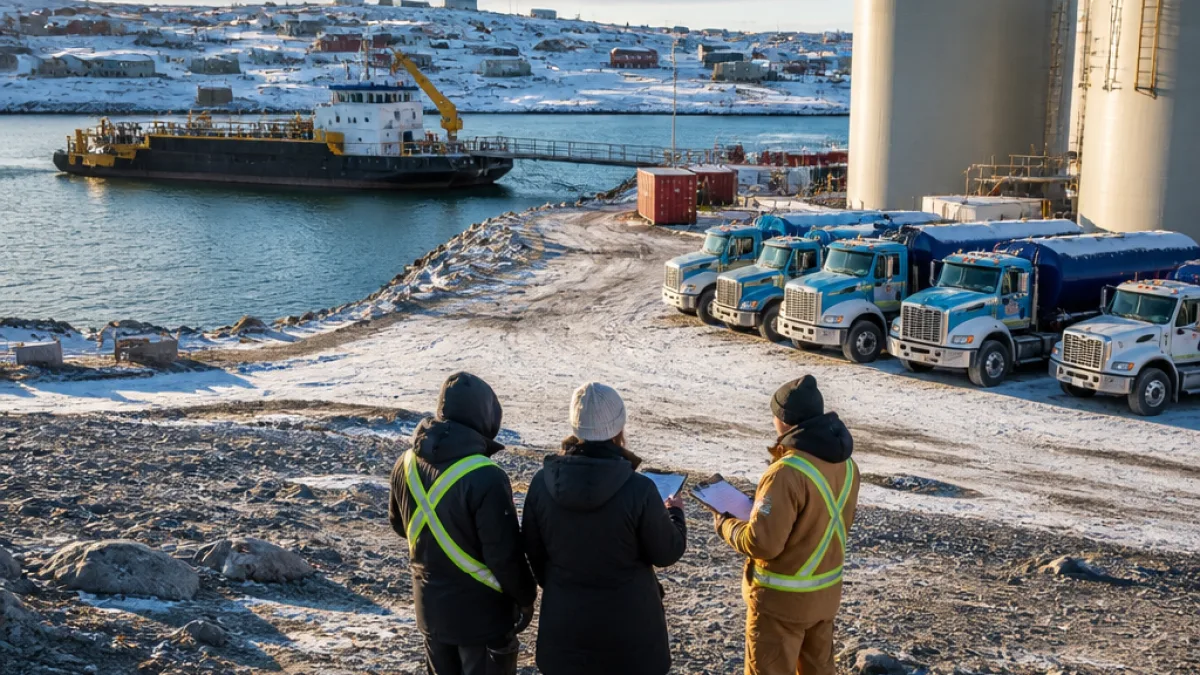
The annual sealift carrying fuel to Igloolik has been postponed to Sept. 26, prompting a request from local officials that residents conserve water and, by extension, fuel. The hamlet of just over 2,000 people depends on the single yearly delivery to refill community tanks used for heating, electricity and municipal services.
Immediate measures and contingency plans
Igloolik’s senior administrative officer, John Ivey, said the hamlet has limited municipal fuel resources and is restricting operations to extend supplies. "So our water and sewer trucks are not on the road any more than necessary," he wrote by email.
Nunavut’s Department of Transportation and Infrastructure confirmed the resupply has moved from an original Sept. 17 date to Sept. 26. Spokesperson Greg Belanger said a contractor transferred diesel between storage tanks to increase available fuel by 80,000 litres, and territory officials expect that will be sufficient to last until the delayed ship arrives.
"And while we do not currently anticipate the need to airlift fuel, the option is available if required,"
Belanger told WE NEWS the sealift was held up by "a combination of logistical factors." He did not provide additional details on those logistical issues, but said there are no current plans to expand permanent fuel storage in Igloolik. He noted the territory is prioritizing other communities with greater infrastructure needs.
Local concerns point to broader infrastructure pressures
Municipal staff and residents have raised concerns that the community’s single annual delivery and current storage capacity are not keeping pace with population growth. Michael Rowan, who works with Igloolik’s municipality, described the shortage as symptomatic of a larger mismatch between services and a growing hamlet.
Municipal leaders can opt into a second annual resupply, Belanger said, but that would be a local decision and not part of current territory-wide plans. For now, officials are relying on conservation, fuel transfers and the scheduled arrival of the sealift in nine days.
What residents are being asked to do
Given the intertwined nature of fuel use and municipal services in Arctic communities, authorities have recommended specific conservation measures to extend supply until the ship arrives. Steps include reduced non-essential vehicle use, minimizing water consumption and limiting heating to essential levels. Municipal water and sewer trucks are only operating when necessary to preserve diesel.
- Avoid non-essential travel to save fuel.
- Conserve household water to reduce pumping demand.
- Limit heating to safe, essential settings and seal drafts where possible.
Sealift schedule and volumes
The territory’s annual reliance on sealift deliveries is a common logistical reality across Nunavut but makes communities vulnerable to schedule changes. The following table summarises the key dates and the interim fuel measure taken for Igloolik.
| Item | Detail |
|---|---|
| Original resupply date | Sept. 17 |
| Rescheduled resupply date | Sept. 26 |
| Additional diesel made available | 80,000 litres (transferred between storage tanks) |
Why a single annual delivery matters
Many Nunavut communities rely on brief summer sealifts to bring in fuel, freight and large supplies. That system concentrates risk: if a ship is delayed by weather, mechanical issues or other logistics, local stores and essential services can be strained. In Igloolik, that strain affects heating and electricity generation as well as municipal water and sewer operations.
Officials maintain airlifting fuel remains a contingency option but say it is not currently anticipated. For residents, the immediate focus is practical conservation and careful municipal operations to bridge the nine-day gap.
The situation highlights longstanding discussions about northern infrastructure and the costs and complications of expanding storage or increasing delivery frequency in remote, ice-affected regions. For now, Igloolik is relying on a combination of transferred reserves and temporary conservation to get through until the sealift docks on Sept. 26.
WE NEWS will continue to monitor the arrival of the resupply and any further territory updates on contingency measures or changes to fuel storage policy.