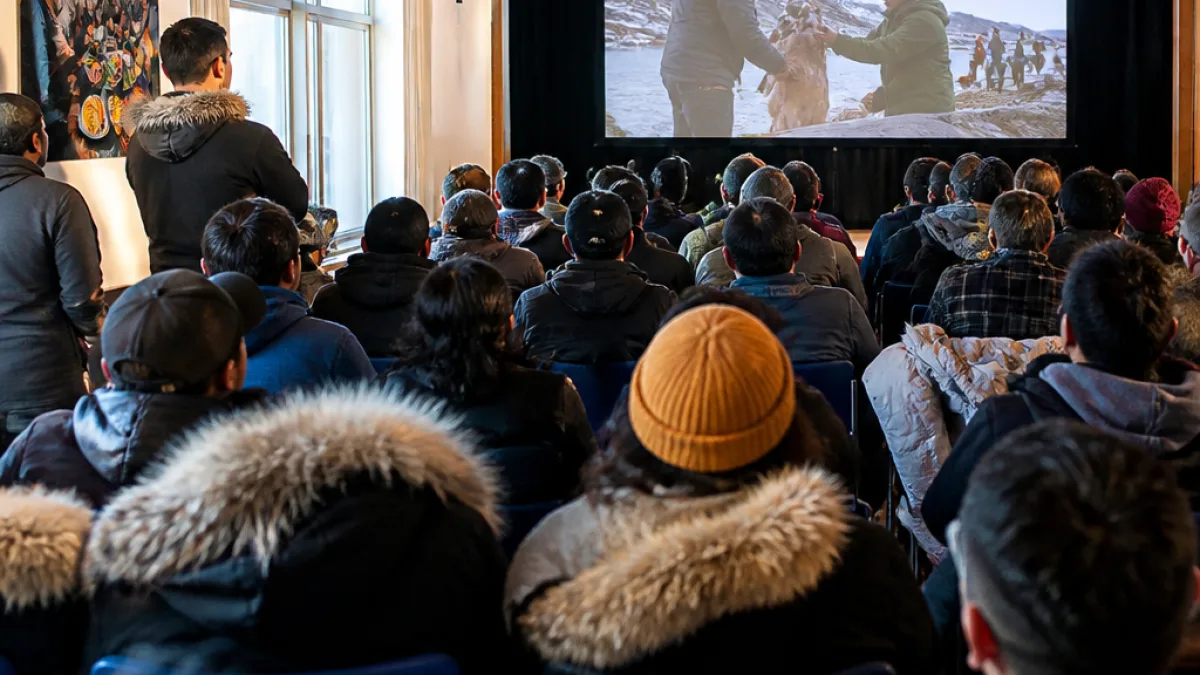
The Astro Theatre in Iqaluit was full on Sept. 15 when Nirilaurta: Let Us Eat, the first feature documentary by Malaya Qaunirq Chapman, screened to a standing‑room crowd. The film centres on families in Taloyoak who combine traditional hunting and fishing with part‑time work and community workshops to feed relatives and neighbours in the face of rising costs.
Documentary puts lived experience at the centre
Chapman chose Taloyoak because of the community’s strong mutual support networks and active harvesting culture. Intercut with contemporary footage are scenes from the 1967 Netsilik Series produced by the National Film Board, offering viewers historical context for the harvesting practices Chapman wanted to show.
“My idea behind it was to show Inuit in their element, in their healthy traditional day‑to‑day life, where they’re hunting together, they’re sharing food together and they’re healthy,” Chapman said during a question‑and‑answer session after the screening. She told the audience she grew up with food insecurity and channelled her anger into making the film.
“We’ve been made to just accept the high cost of living, the high price of groceries as soon as you get to the grocery store… We don’t need to just be silent and take it anymore. We can stand up and voice our concerns about it. We demand to be heard.”
The screening drew intense interest: the 105‑seat theatre was packed, with some audience members standing in aisles. Organizers said capacity limits forced about 40 people to be turned away.
What the film shows and what it questions
Through portraits of hunters, fishers and workshop leaders, Nirilaurta explores how people balance wage labour and harvesting. One subject in the film works as a school janitor to afford groceries that complement harvests on the land — a detail that underscores the mixed cash‑and‑country‑food economy many households navigate.
The documentary also focuses scrutiny on processed foods, retail groceries and the federal Nutrition North subsidy program. It frames these elements as part of the structural reasons why so many people struggle to access affordable, healthy food in Nunavut.
The scale of the problem
The film reminds viewers that roughly half of Nunavummiut experience some level of food insecurity — a statistic that has been documented by researchers and agencies studying the territory’s food systems. Chapman’s film ties those numbers back to everyday household decisions and to the cultural practices that continue to sustain communities.
- Venue: Astro Theatre, Iqaluit
- Film: Nirilaurta: Let Us Eat
- Director: Malaya Qaunirq Chapman
- Screening date: Sept. 15
| Detail | Information |
|---|---|
| Theatre capacity | 105 seats |
| Turned away | ~40 people |
| Topic highlighted | Food insecurity, traditional harvesting, federal subsidy scrutiny |
Local reactions and wider implications
Audience members responded with questions and discussion after the screening, signalling a desire for the sort of public conversation Chapman said she hoped to spark. The film’s emphasis on self‑determination — that Inuit do not have to quietly accept high food costs — resonated with viewers and with people who work on food policy and community programming.
While the documentary documents everyday resilience — hunters sharing meat, elders teaching youth, workshops that pass on skills — it also underscores that these practices alone cannot erase the inequities that produce hunger and poor nutrition. The film invites policymakers, program administrators and the public to look again at how subsidies and food systems influence diets and health.
The timing of the Iqaluit screening reflects a broader conversation across Nunavut about the future of food access and the place of traditional harvesting in ensuring food security. Chapman’s work is rooted in lived experience, and the packed theatre showed there is appetite in the capital for storytelling that links culture, policy and survival.
For many in the audience, the screening was more than a film showing; it was a call to action. The visual archive Chapman interweaves with contemporary testimony provided not only an emotional account of hardship but also a reminder that Inuit knowledge and community networks are central to any durable solutions.
As communities and governments continue to discuss food programs and supports, films like Nirilaurta aim to make the stakes and the human faces behind the statistics impossible to ignore.