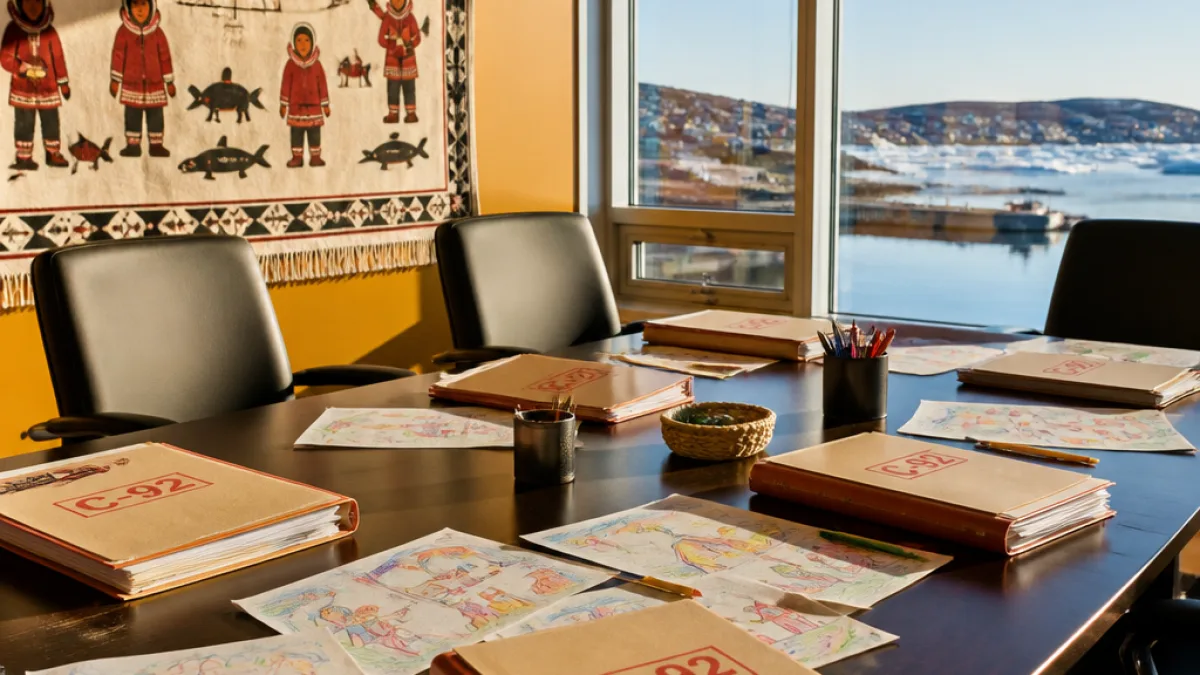
Nunavut Tunngavik Inc. (NTI) is exploring a possible transfer of responsibility for child and family services in Nunavut — a move that could reshape how Inuit children are cared for and monitored in the territory. The proposal would use federal Bill C-92, which enables Indigenous organisations to assume authority for child welfare currently delivered by provincial and territorial governments.
What NTI says and why it matters
In a news release following its August board meeting, NTI said it is "exploring ways to strengthen support, advocacy, and oversight for Inuit children and families." The organisation framed the work as part of a broader effort to make services more culturally appropriate and accountable to Inuit priorities.
"Continuing this work for our children is not simply something we want to do, it is something we must do," NTI vice-president Paul Irngaut said in the release.
Former Nunavut premier Paul Quassa described the current system as modelled on southern approaches. "That concept of social services is coming in from the south," he said in media interviews. "Qallunatitut, it's a foreign way of helping Inuit." The suggestion from Quassa and NTI supporters is that taking control would allow child welfare practice to better reflect Inuit culture, language and family systems.
Legal pathway: Bill C-92
Signed into law in 2019, Bill C-92 affirms Indigenous jurisdictions' right to establish and administer child and family services. The legislation has been used by several Indigenous governments to assume responsibility for children in their communities.
| Community | Province | Action |
|---|---|---|
| Peguis First Nation | Manitoba | Took over child welfare |
| Louis Bull Tribe | Alberta | Took over child welfare |
| Cowessess First Nation | Saskatchewan | Took over child welfare |
Local context and community concerns
Nunavut has long faced scrutiny over the representation and cultural fit of social services imposed from outside Inuit communities. Advocates argue that colonial structures, policies and casework methods have contributed to family separation and the erosion of traditional supports.
NTI's review raises questions for governments, front-line workers and families about how a transfer of authority would be structured, resourced and phased in. Key considerations include how Inuit law and values would be integrated into decision-making, what training and capacity-building would be required for caregivers and social workers, and how jurisdictions would handle existing caseloads, standards and accountability.
Practical next steps and potential hurdles
NTI has not announced a formal plan or timeline. Any move to assume responsibility would require detailed negotiations with the federal government and the Government of Nunavut, as well as legislative and administrative adjustments. Financial arrangements, workforce development and the creation of Inuit-governed institutions to deliver services would be essential elements.
- Negotiations: Agreements with federal and territorial authorities would be required.
- Capacity building: Recruitment and training of Inuit social-service professionals would be needed.
- Transition planning: Clear protocols for transferring cases and reporting obligations must be developed.
Why this is about more than services
For many in Nunavut, control over child and family services is tied to broader goals of self-governance and cultural continuity. Supporters see an Inuit-led system as a step toward restoring family-based responses rooted in community knowledge, language and traditions rather than external, southern models.
Observers caution that the work will require careful, well-resourced planning and sustained political will. Examples from other Indigenous jurisdictions show that legal authority alone does not automatically resolve practical challenges such as funding, staffing and accountability frameworks.
As NTI continues its exploration, communities across the territory will be watching for details about how Inuit voices, elders and knowledge-keepers will be central to designing any new system. For many families, the ultimate measure of success will be whether children remain connected to their language, culture and kinship networks while receiving the protection and services they need.