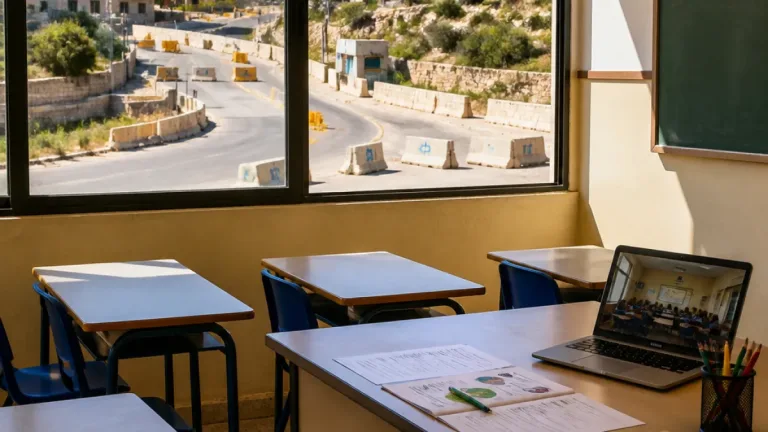

A growing reliance in Nunavut classrooms
Nunavut’s schools are relying more heavily on teachers who do not hold the usual education degree, with the number working under temporary letters of authority rising to 93 in the 2025-26 school year.
The figure is nearly double the level recorded five years earlier. In 2021-22, more than 50 teachers held those authorizations. The increase has continued year by year, according to the figures provided by the Department of Education.
The issue reaches beyond a staffing statistic. In communities across Nunavut, schools are central places for learning, language, relationships and daily community life. The people standing in front of classrooms are part of that foundation, and the territory’s ability to recruit and retain qualified educators affects how consistently students experience school.
What a letter of authority means
A letter of authority is issued for one year when the Department of Education cannot fill a teaching position with someone who has a bachelor of education or an equivalent qualification. It allows the person hired to teach even though they do not meet the standard credential normally required for the job.
That arrangement can keep a classroom open when no qualified applicant is available. But the steady rise in authorizations also shows the difficulty Nunavut is having filling teaching positions through the regular supply of trained educators.
| School year | Teachers with letters of authority |
|---|---|
| 2021-22 | More than 50 |
| 2025-26 | 93 |
Minister says schools need the staff
Education Minister David Akeeagok said he is not troubled by the current number. He placed the total against a teaching workforce of more than 800 people, arguing that the authorized teachers represent a relatively small share of the overall group.
“We're not concerned. There's over 800 [teachers], and 93 is a small number of the percentage, and it's reflective of the need for us to make sure the school operates.”
Akeeagok attributed the increase to a teacher shortage affecting the country. His position is that the letters provide a practical way to ensure students have an operating classroom when a fully qualified candidate cannot be found.
Teachers’ association warns of dependence
Justin Matchett, president of the Nunavut Teachers’ Association, offered a different assessment. He said the number is significant because it amounts to about 10 per cent of the association’s membership.
“That's 10 per cent of our membership [that] is unqualified. So it is a concern of ours.”
Matchett also said Nunavut’s schools depend substantially on these teachers and that schools could not operate without them. His concern is not only the presence of temporary authorizations, but the territory’s growing reliance on them as a regular response to unfilled positions.
- 93 teachers held letters of authority in 2025-26.
- The total was more than 50 in 2021-22.
- The authorizations are issued for one year when a qualified teacher cannot be found.
- The minister and the teachers’ association disagree over the significance of the increase.
A staffing solution with a wider question
The competing views point to two different measures of the problem. From the government’s perspective, the immediate test is whether a school can remain open and staffed. From the union’s perspective, the proportion of teachers without the standard qualification signals a deeper weakness in the territory’s education workforce.
Neither side disputes that the authorization system is being used. The figures show that it has become more common over the past five years. The disagreement is over what that growth means for Nunavut students and for the people responsible for teaching them.
For families, the distinction can be felt in the balance between continuity and preparation. A letter of authority makes it possible to place someone in a classroom, but the credential requirement exists to identify formal training for teaching. The source material does not provide a breakdown of the 93 teachers by community, grade, subject or previous experience, so it is not possible to determine where the increase is concentrated or how many students are directly affected.
The shortage remains the central pressure
The minister’s explanation ties Nunavut’s trend to a broader shortage across Canada. In the territory, that pressure is reflected in the gap between the number of teaching positions that need to be filled and the number of applicants who meet the formal requirement.
That leaves the Department of Education with a difficult choice: use a temporary authorization to keep a position filled, or leave the position vacant while continuing to search for a qualified teacher. The rising total suggests the first option is being used more often.
The figures also make the question of long-term planning harder to avoid. A system that uses letters of authority occasionally is different from one in which nearly one in every 10 teachers represented by the union is working without the usual qualification, as Matchett described it. The available information does not say whether the department has set a target for reducing the number or how many authorized teachers go on to obtain formal credentials.
For now, the territorial government says the number is not a cause for alarm, while the teachers’ association says it is a warning sign. What is clear is that Nunavut’s classrooms are increasingly being staffed through a temporary measure designed for vacancies that cannot otherwise be filled. The next question for the territory is whether that measure remains a bridge to qualified recruitment or becomes a permanent feature of the school system.