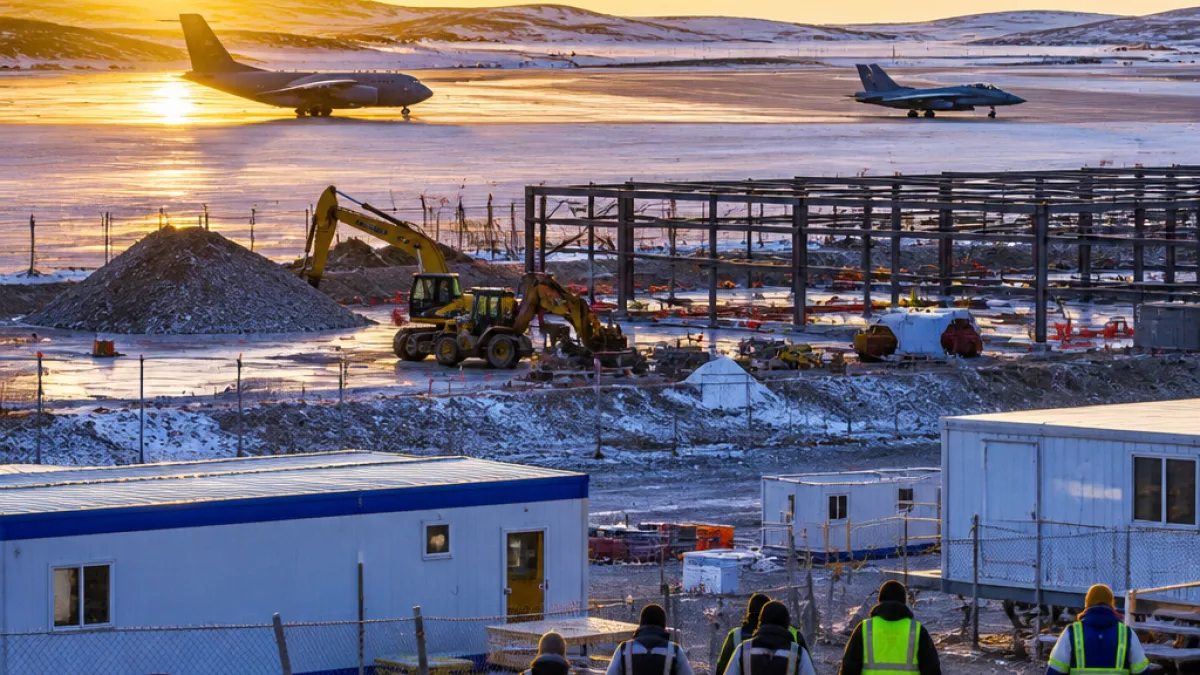
The Royal Canadian Air Force will build a forward operating location beside Iqaluit Airport in a project federal officials say will run from 2029 to 2040 and cost about $5 billion.
What officials disclosed
Details were provided during a Department of National Defence panel at the Nunavut Trade Show on Sept. 15. Christian Middleton, the department’s project manager for the Iqaluit base, described the facility as one that will support fighters, maritime patrol aircraft — including the new P‑8 — search and rescue aircraft and, when needed, transport aircraft for resupply during extended operations or exercises.
“Here in Iqaluit, you’re more likely to expect the fighters to operate out of here — maritime patrol aircraft, the new P‑8, which is about a 737‑sized aircraft, operate out of here. Search and rescue aircraft, and then, as required, some transportation aircraft would come in and out resupplying in the case of any kind of prolonged operation or or an exercise,”
Middleton said the present base infrastructure at Iqaluit includes six fighter jet bays and a small garage. The draft plan for the new facility envisions a longer runway, ammunition storage, fuelling stations, expanded hangars, operations centres and warehouses, all adjacent to the existing hangars at Iqaluit Airport.
Phased northern build and rationale
Iqaluit will be the last of four Arctic locations set to receive new or expanded basing under the NORAD Northern Basing Infrastructure program, with construction beginning earlier at CFB Goose Bay, N.L., Yellowknife and Inuvik. Officials said construction will be staggered so the government can avoid overwhelming northern suppliers and to allow lessons learned at earlier sites to inform later work.
“What that will do is it’ll give Iqaluit time to take a look at Inuvik, and say, ‘What did they do? Do we like that?'” Middleton said during the panel.
Procurement and Inuit participation
The Department of National Defence expects to issue a request for construction proposals for the Iqaluit base in January 2028. Whether contracts for the NORAD Northern Basing Infrastructure (NNBI) work will be reserved for Inuit-owned firms has not been decided, Antoine am Rhyn, procurement manager at Defence Construction Canada, told the panel.
“The determination of if NNBI will be reserved to Inuit firms or not has not been completed at this time,”
The question of how much contract and employment opportunity will flow to Nunavut businesses and residents will be a central issue as planning moves toward procurement.
Local implications and unanswered questions
The announcement confirms a major federal investment in Iqaluit’s role as an Arctic operations hub, with potential implications for the city’s economy, workforce and transportation infrastructure. But many details remain unspecified in the public briefing:
- Whether there will be formal Inuit benefits agreements or reservation of work for Inuit-owned businesses;
- How environmental assessments, if required, will address local concerns and the sensitive Arctic environment;
- What labour strategies will ensure the inclusion of Nunavummiut in construction and ongoing operations.
These are typical lines of inquiry for large projects in the North, where communities rightly expect clarity about jobs, training, environmental protections and long‑term social impacts.
Timeline and known elements
| Milestone | Status / Date |
|---|---|
| Draft plan details released | Sept. 15, 2026 (Nunavut Trade Show briefing) |
| Request for construction proposals expected | January 2028 |
| Construction window | 2029–2040 |
| Estimated project cost | $5 billion |
Context from a northern perspective
Building major defence infrastructure in the Arctic crosses into community life: it touches housing, essential services, shipping, workforce development and land use. For residents of Iqaluit and surrounding Nunavut communities, the coming years will present opportunities for jobs and business, alongside questions about how construction will be managed and how benefits will be shared. Federal timelines stretching to 2040 mean this is a long‑term transformation rather than a short‑term project.
As planning continues, Nunavummiut will need clear engagement from federal authorities on procurement rules, Inuit participation and environmental processes. The staged approach with other northern sites offers the chance to learn from earlier projects — but it also lengthens the period in which communities wait for concrete decisions and local benefits.
Officials have provided the broad outline; the next year, particularly around the 2028 request for proposals, will be critical for turning high‑level plans into detailed commitments that affect everyday life in Nunavut.