RANKIN INLET — Twenty years after a short — but transformative — visit to the Kivalliq community, London, Ont., artist Jim Kogelheide has published a memoir built around his time here. The book, The Nunavut I Knew, draws on photographs and a detailed journal he kept during a 2006 trip that paired art workshops with conversations about the environment and the future.
From a single stop to a lasting connection
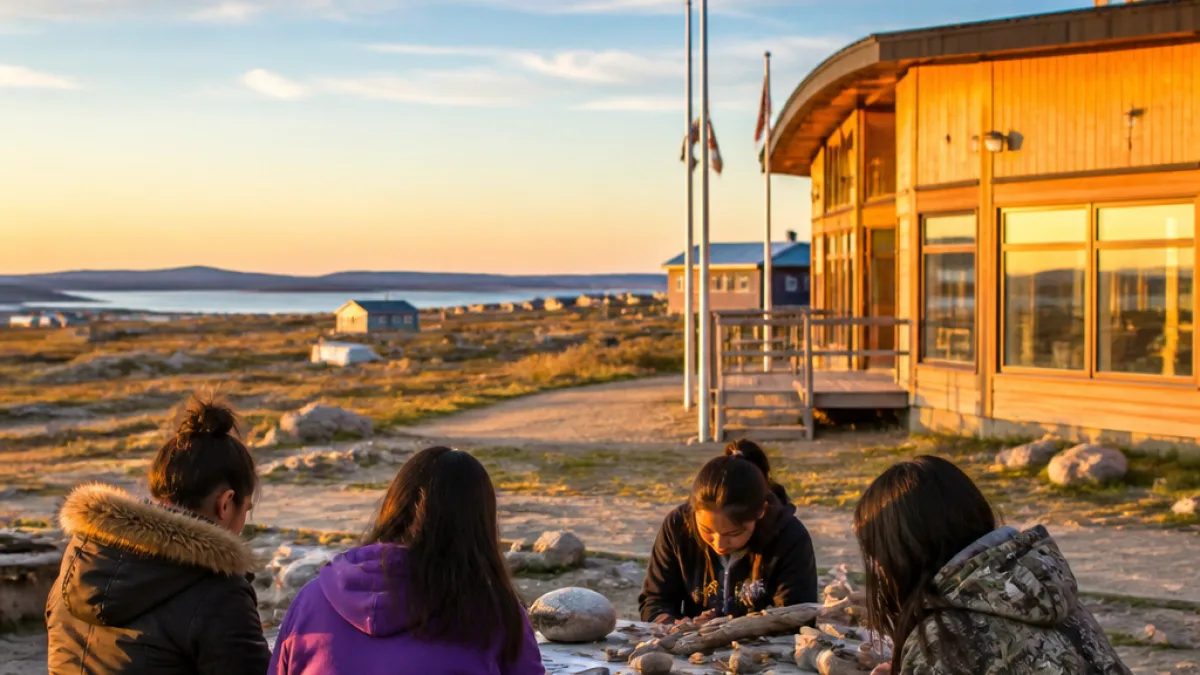
Kogelheide travelled to Rankin Inlet as part of a long-running project he began conceiving in 1998, called Canada: Glorious to Be. The project aims to produce 13 original works, one for each province and territory, while using art to foster dialogue about community, cooperation and environmental stewardship. Rather than relocating to the North, he used vacation time in 2006 to lead after-school workshops at the local friendship centre, working with students, community groups and the school.
The sessions combined painting, poetry and discussion. They were intended not only to teach technique but to open space for young people to talk about climate, land and peace — topics that resonated across generations in Rankin Inlet.
“The entire experience, from beginning to end, for all the days of these art workshops, was just a continuous celebration of life and the students’ energy,”
The memoir recounts small moments that stayed with Kogelheide — for example, when a student asked him to paint a peace symbol on her cheek. That gesture, and the spontaneous camaraderie it produced among classmates, is one of several scenes he returns to in the book to explain how the visit reshaped his thinking about art’s role in community life.
Practical realities of northern visits
Kogelheide’s account underscores practical challenges common to arts exchange in the North: distance, travel cost and the difficulty of long-term residency for artists based in southern Canada. He describes choosing to visit briefly yet intensively, using local partnerships to maximise impact during the workshops. The memoir also notes support from local organisers and the school that made the sessions possible.
Those logistical details are important context for anyone planning cultural programming in Nunavut. Local hosts often cover outreach and coordination, while visiting artists must adapt to shorter timeframes and rely on community relationships to sustain the work beyond a single visit.
Youth, creativity and environmental conversation
At the heart of Kogelheide’s project is a focus on the environment. For the Rankin Inlet workshops, painting and poetry were entry points to discussing ecological change and potential solutions. The approach reflects a broader trend among visiting educators and artists who frame creative activities as ways to surface youth perspectives on land, food security, and future livelihoods.
For parents, teachers and community organisers in Nunavut interested in similar projects, the memoir offers anecdotal lessons: integrate local organisers early, build flexible workshop plans that connect to lived experience, and allow young participants to lead the conversation as much as possible.
- Project origin: Concept started in 1998 — goal to make 13 works representing each province and territory.
- Rankin visit: Took place in 2006, included after-school environmental art workshops at the friendship centre.
- Focus: Painting, poetry, and discussions about peace, the environment and the future.
Memory, documentation and cultural exchange
Kogelheide’s use of a detailed journal and photographs to craft his memoir also points to the value of documentation when outsiders engage with northern communities. When done with respect and reciprocity, such records can preserve memories and create resources that benefit both the visiting artist and the local participants who contributed their stories and creativity.
But documentation should be reciprocal: communities may want copies of photographs and transcripts, and agreements about how material is used help maintain trust. The memoir’s existence is an example of how an artist turned those records into a narrative about connection and learning.
What this means for Nunavut
Stories like Kogelheide’s matter here because they show the northern end of cultural exchange — not as a one-way transfer but as a relationship that changes the visitor as much as the hosts. For Rankin Inlet, this book is a recognition that a brief residency can leave long-lasting impressions and that youth engagement through art can become a meaningful part of community life.
As more artists and educators consider northern work, Kogelheide’s memoir is a reminder of both the opportunities and responsibilities that come with travelling to Nunavut: to listen, to document respectfully, and to centre young voices in conversations about land and future possibilities.