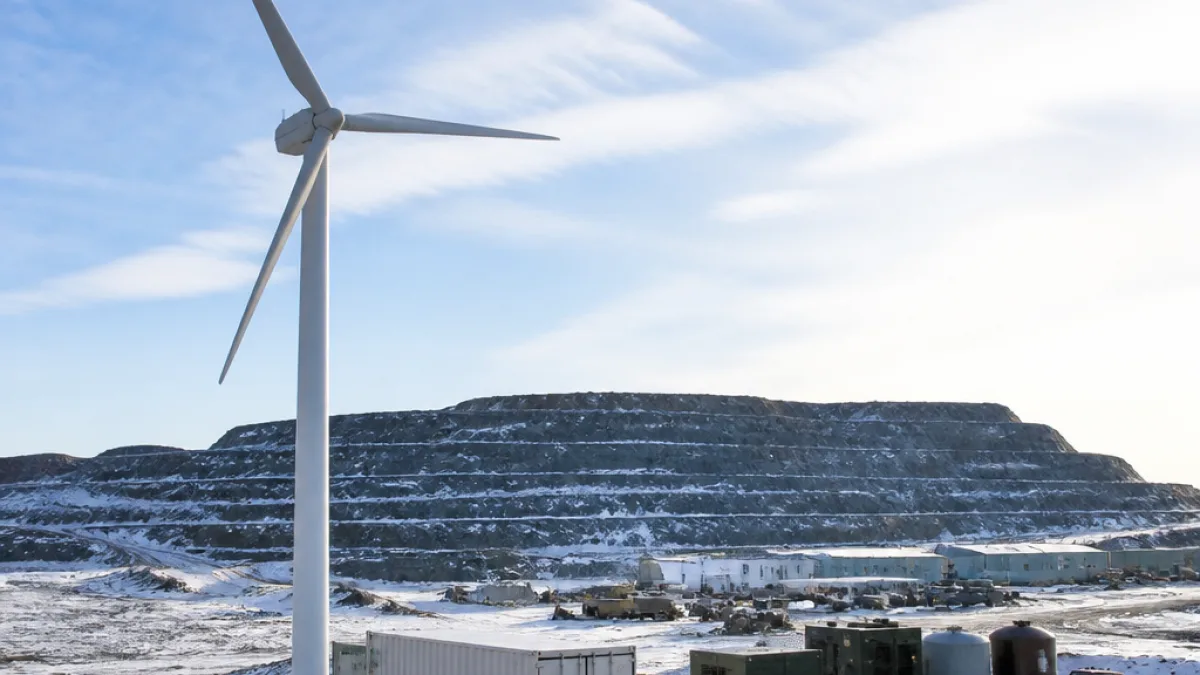
The Canada Infrastructure Bank (CIB) has reached financial close on a $20-million loan to the Kitikmeot Tugliq Limited Partnership, an Inuit-led venture formed by the Kitikmeot Inuit Association and Tugliq Energy, to build a wind-plus-storage project adjacent to Agnico Eagle Mines Ltd.’s Hope Bay operation in Nunavut.
Project basics and expected impacts
The renewable energy installation will include a 4.2-megawatt wind turbine paired with a 4-megawatt battery energy storage system. Under a long-term power purchase agreement with Agnico Eagle, the system will be integrated with the mine’s conventional power infrastructure.
Officials say the project could reduce diesel-based electricity generation by up to three million litres annually and cut greenhouse gas emissions by roughly 13,000 tonnes per year. The reduction in fuel use will also lower the need for long, costly fuel shipments into the Arctic.
Local ownership, jobs and long-term revenues
The partnership structure is intended to advance Inuit participation and capture economic benefits locally. The CIB said the project is expected to employ about 15 people at peak construction, and to generate ongoing revenues for the Kitikmeot Inuit through profit-sharing arrangements.
For remote communities where opportunities are limited, such ownership arrangements are significant: they create a revenue stream tied to regional natural-resource activity and can support skills development for residents who work on renewable-energy infrastructure and mine-site services.
Federal support and the broader context
Natural Resources Canada has already contributed $25 million to the Hope Bay project through its Smart Renewables and Electrification Pathways program, meaning federal financing for the initiative comes from multiple sources.
The CIB noted this is its second project in Nunavut, following a $6.7-million loan for a wind project in Sanikiluaq. The Hope Bay financing marks a continued federal push to integrate renewables into northern energy systems and reduce diesel dependency.
Mining, community concerns and precedent
Agnico Eagle gave its final investment decision for the Hope Bay mine in May. The company has pursued other northern renewable projects in the past; a proposed wind farm near the Meliadine operation faced local opposition and was withdrawn after the Nunavut Impact Review Board recommended rejecting the expansion.
That history underlines the importance of Inuit-led partnerships and meaningful community engagement in projects that affect land use, local employment and long-term economic benefits.
What this means for Nunavut
For residents and leaders across the territory, the Hope Bay project demonstrates two emerging trends: greater Indigenous ownership of energy assets serving resource developments, and a pragmatic move to substitute high-cost diesel with renewable alternatives where feasible.
Reducing diesel consumption by millions of litres each year could lower operating costs for remote mines and reduce Arctic fuel transport risks. At the same time, locally shared revenues help keep more economic value in the region rather than having all benefits flow to outside corporations.
Project figures at a glance
| Item | Value |
|---|---|
| CIB loan | $20 million |
| NRCan contribution | $25 million |
| Wind turbine capacity | 4.2 MW |
| Battery capacity | 4 MW |
| Estimated diesel reduction | Up to 3 million litres/year |
| Estimated emissions reduction | About 13,000 tonnes CO2e/year |
Looking ahead
Construction employment will be limited in scale but locally meaningful; the CIB’s statement projects about 15 jobs at peak. Over the longer term, the key measures of success will be reliable integration of wind and storage into mine operations, predictable revenue flows to the Kitikmeot Inuit, and whether this model can be replicated in other parts of Nunavut where mines and communities face high diesel costs.
- Inuit-led ownership aims to secure long-term community benefit from resource development.
- Diesel reductions of up to three million litres will lower fuel transport and emissions.
- Federal support from both CIB and Natural Resources Canada underpins the financing.
The Hope Bay project sits at the intersection of economic development, energy transition and Indigenous rights in Nunavut. How effectively the partnership delivers jobs, revenues and environmental gains will be watched closely across the territory as more remote projects consider renewables to replace diesel.