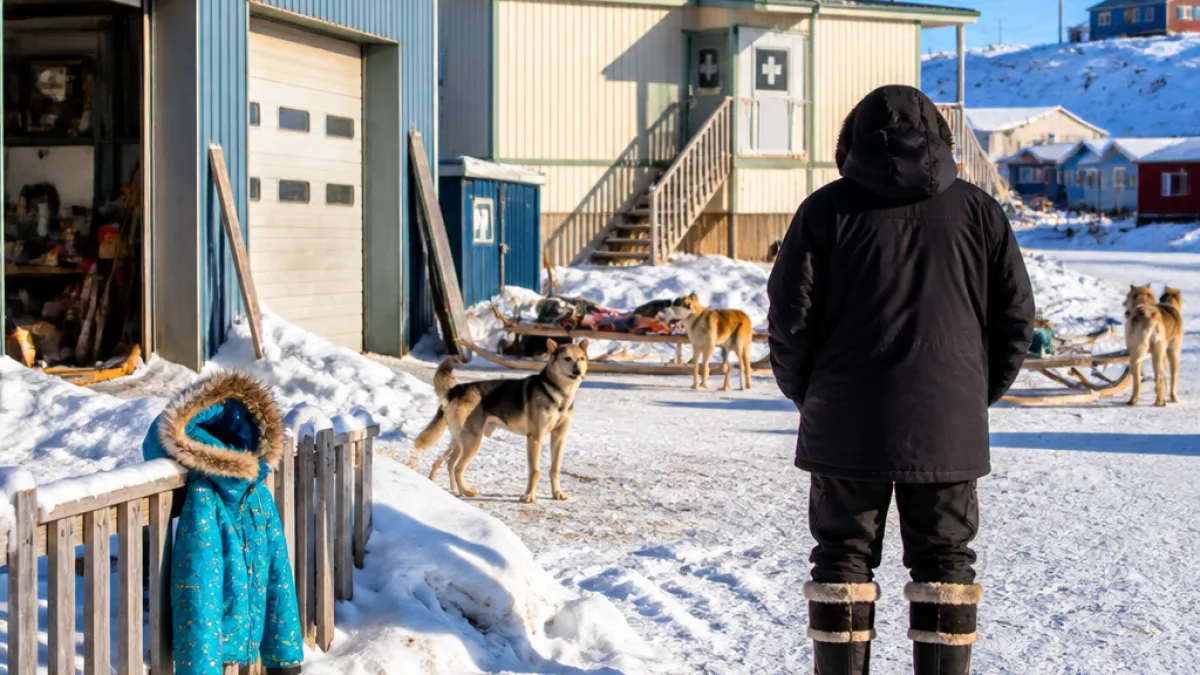
AUPALUK, Nunavik — A six-year-old girl is recovering after being bitten by three dogs in Aupaluk last month, prompting calls from her father for stronger animal-control measures in the community.
The girl’s father, who runs a vehicle repair garage in the community of roughly 200 people, said the child was walking toward his workplace in early August when she was attacked. The family says the girl was treated at the local nursing station for multiple bite wounds and is now recovering physically, though still processing the trauma.
“I think it’s mostly thanks to her thick coat that she was wearing that day. The wounds would have been a lot worse if it wasn’t for her coat,” said the girl’s father.
Calls for change in a small community
The father told reporters he wants dog owners to keep animals secured and for the community to consider designated facilities or processes for dealing with loose dogs. He said the animals involved were claimed by owners after the incident, but another girl was reportedly attacked by dogs about a week later.
Local officials were not available for comment. Nunatsiaq News was unable to reach Aupaluk Mayor Maggie Akpahatak before publication.
Health and safety concerns
Beyond immediate injuries, dog bites in the North raise public-health questions, including concerns about potential rabies exposures and the resources available for prevention and treatment. A 2020 study published in BMC Public Health by researchers with the Université de Montréal and the Nunavik Regional Board of Health and Social Services found children were disproportionately affected by animal exposures across the region: children aged 5 to 14 accounted for about one-third of the 320 reported exposures recorded between 2008 and 2017.
In small, remote communities such as Aupaluk, access to medical care is limited by geography and staff capacity. Nursing stations handle many urgent needs, but follow-up care and specialist services often require travel to larger centres. That can complicate post-exposure prophylaxis decisions and wound care for bite victims.
Community impact and responses
Residents in hamlets and villages cope daily with the presence of dogs—both working sled dogs and household pets. When animals roam free, the risk of harassment or attack increases, particularly for children playing outdoors. The father in this case says his daughter is still wary of loose dogs despite resuming play with friends.
“She’s doing a lot better now. She’s still playing outside with her other friends,” he said. “But I think, mentally, she’s still scared of loose dogs.”
He recommends clearer expectations for owners, including keeping animals tied or confined and creating a community process to manage stray or roaming dogs, rather than relying on ad hoc responses after incidents occur.
Practical measures communities can consider
- Clear local bylaws or community agreements that set expectations for securing dogs and outline consequences for repeated off-leash incidents.
- Designated holding areas or humane shelters where unclaimed or dangerous dogs can be kept safely while owners are contacted.
- Community education campaigns on dog safety for children and adults: how to avoid provoking dogs, safe ways to approach animals, and first-aid responses after bites.
- Strengthened reporting and tracking of animal bites to inform public-health decisions and vaccination follow-up where needed.
| What happened | Where | When |
|---|---|---|
| Six-year-old bitten by three dogs | Aupaluk, Nunavik | Early August |
Residents and leaders face trade-offs in small Arctic communities where dogs often serve important cultural and practical roles. Any proposed measures will need to balance animal welfare, traditional uses of dogs, and child safety.
For now, the child remains under care and the family is urging neighbours and community leaders to consider steps that could prevent similar incidents. The calls echo concerns raised across Nunavik and other northern regions about the vulnerability of children to animal exposures and the need for clear, locally appropriate strategies.
Reporting from the North requires attention to lived experience and community context; families here say they want solutions that protect children while respecting local ways of life.