
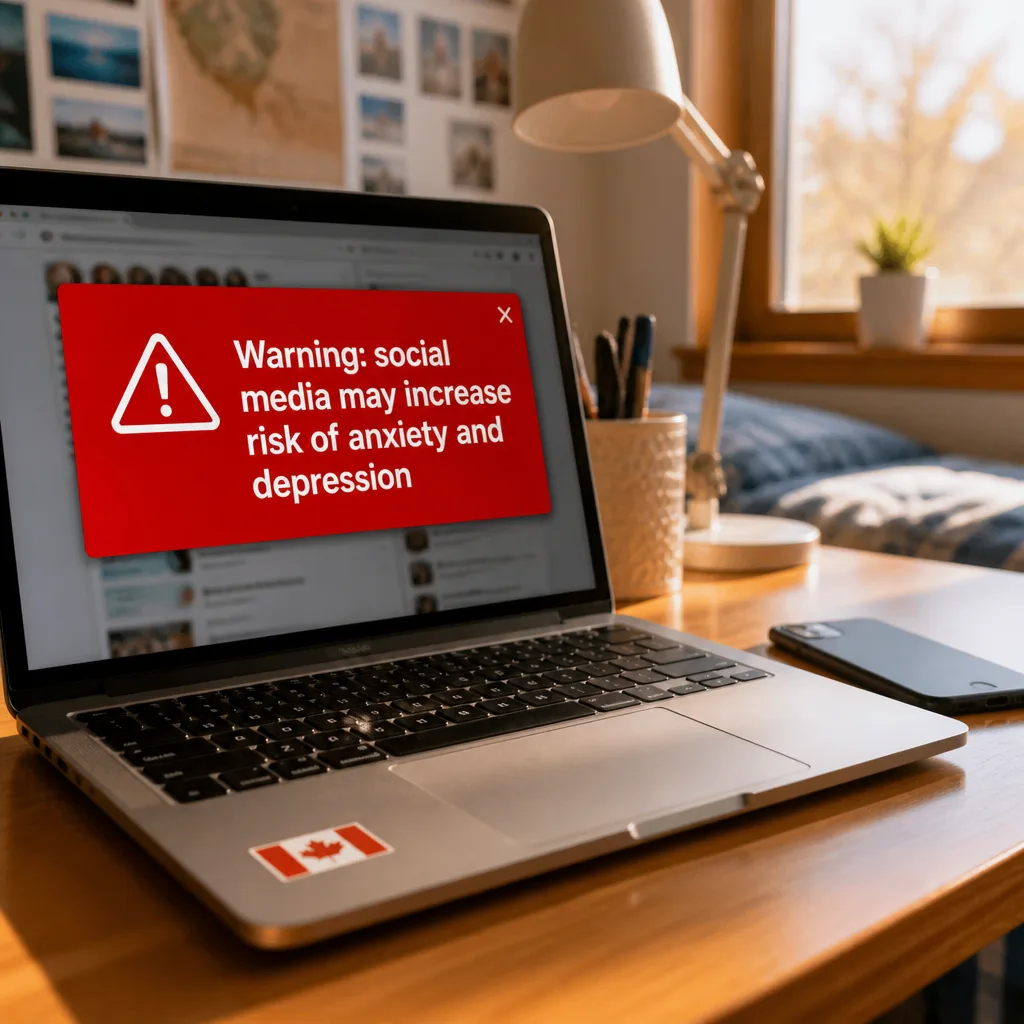
Pop-up warnings about mental health harms were associated with reduced self-reported social media use and higher awareness of risks among young people, according to a new Stanford Medicine study published Sept. 4 in JAMA Health Forum.
What the study did and found
The online experiment surveyed roughly 1,000 teens and young adults to test responses to a set of warning messages about social media. Researchers evaluated 15 different messages to determine which resonated most with participants and which were most likely to influence behaviour.
Messages that described overall mental health harms or that specifically named risks such as depression and anxiety were the most effective in the study at prompting respondents to say they would reduce their social media use. Participants also reported increased knowledge of the potential harms associated with social media after seeing the warnings.
“Teens and young adults consistently reported that they felt the warning messages we tested would reduce their social media use compared with a control message,”
Those words come from Thomas Robinson, M.D., the Irving Schulman, M.D., Professor in Child Health and a senior author on the paper. Lead author Anna Grummon, Ph.D., an assistant professor of paediatrics, said the idea was inspired by a 2024 call from then-U.S. Surgeon General Vivek Murthy to add health warnings to social media similar to labels used for tobacco and alcohol.
Policy context and limitations
The study arrives amid growing policy activity in the United States: a bipartisan bloc of 42 state attorneys general urged federal action on warning labels, and four states have enacted legislation requiring warnings. California’s law is set to take effect on Jan. 1, 2027.
Researchers framed warning labels as one among multiple strategies to promote healthier social media habits. They emphasised that prior to this trial, the specific wording of such warnings had not been thoroughly evaluated, and that small differences in phraseology can change how people respond.
Why this matters for young people’s mental health
Nearly all teens and young adults in the United States use social media. Previous studies have linked heavy and problematic use to a range of negative outcomes, including depression, anxiety, poorer body image and sleep disruption. While this trial measured immediate reactions and intentions rather than long-term behaviour change, its findings suggest that carefully worded warnings could be a feasible tool to shift attitudes and potentially reduce time spent on platforms.
- Study design: online experiment testing 15 different warning messages.
- Sample size: about 1,000 teenagers and young adults.
- Most effective messages: those mentioning overall mental-health harms and specific risks such as depression and anxiety.
Next steps and caveats
Authors recommended further work to refine the language of warnings and to assess whether these messages produce durable reductions in social media use and improvements in mental-health outcomes. The paper underscores that warnings are not a standalone solution but could be part of a broader public-health approach, which may also include education, platform design changes and policy interventions.
As jurisdictions consider requiring such labels, this study provides empirical evidence that young people notice and respond to health warnings — a finding that policymakers and public-health officials will likely weigh when debating regulatory approaches to social media and youth mental health.