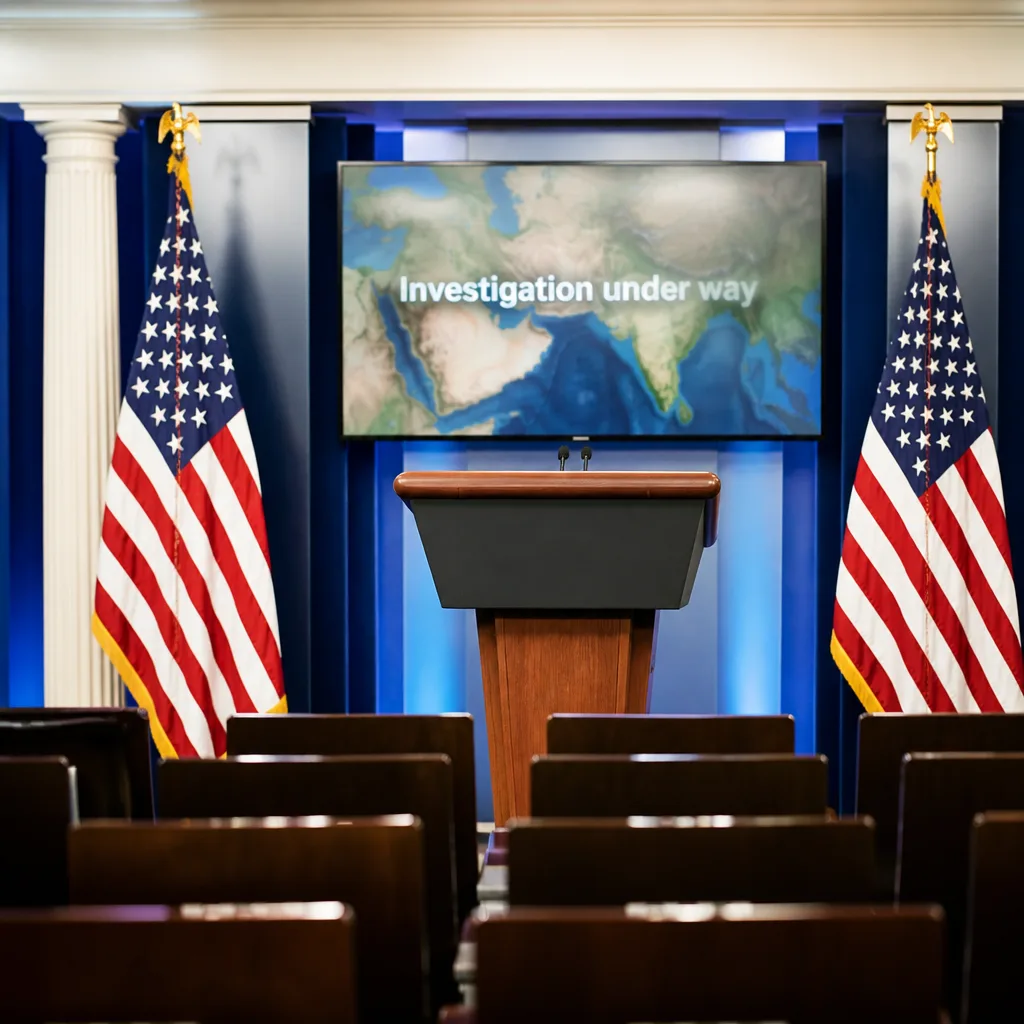
The U.S. vice‑president on Thursday rebutted Iranian state media reports that recent American strikes hit a wedding party in Iran, saying Washington has no confirmed information and that it is investigating the claim.
Speaking at a White House briefing, the vice‑president characterised Tehran’s state‑run outlets as unreliable and reiterated a long‑standing U.S. position that American forces do not deliberately target civilians.
“I’m extremely skeptical of this. What I can say with 100% confidence is that unlike [Iran], the United States never targets civilians in combat. We never will do that. We never have done that, and unfortunately, obviously, sometimes things happen,” he said. “But in this particular case, I don’t think that we have any information one way or the other. We’re investigating because obviously we care.”
Claims, caution and an inquiry
The vice‑president’s remarks came in response to questions about reports from Iranian media alleging that U.S. strikes had hit a wedding party. He described the reporting by Iran’s state outlets as deficient and stressed that U.S. authorities are looking into the matter.
He framed a contrast between the two countries’ approaches to civilian harm: if U.S. forces err, he said, the military examines mistakes and attempts to learn from them. That, he argued, distinguishes U.S. behaviour from Iran’s.
He did not provide new operational details or confirm whether any U.S. action was connected to the reported incident. He said investigators were working quickly to determine what happened.
Broader context: personnel and posture
In the same session, the vice‑president offered effusive praise for Defence Secretary Pete Hegseth amid scrutiny of the Pentagon’s leadership. He called Hegseth a “very good friend” and described him as an “amazing secretary of war,” saying he agreed with Hegseth’s aim of a cultural shift within the department to “revive the warrior spirit.”
The comments underscore how personnel and tone at the Pentagon are becoming intertwined with public explanations of military operations and civilian‑harm inquiries.
- Investigation under way: The vice‑president said U.S. officials have no confirmed information either way and are investigating the reports.
- Distinction drawn: He asserted the U.S. does not target civilians and learns from mistakes, contrasting that with Iran’s conduct.
- Defence leadership: He publicly defended Defence Secretary Pete Hegseth and endorsed a cultural change at the department.
What officials said earlier the same day
The administration’s public timeline of related developments that emerged around the same period included a series of statements and actions linked to national security and personnel policy. Reporting that day also noted the Pentagon had stepped back from recently posted clinical guidelines on testosterone testing policy, and other political disputes were unfolding on Capitol Hill.
| Timing | Reported item |
|---|---|
| Earlier the same day | Vice‑president held a press briefing that addressed the reports |
| Same day | Pentagon retreated from posted clinical guidelines on testosterone testing policy |
| Ongoing | Capitol disputes and other national security headlines continued to develop |
The administration’s rapid assertion of an inquiry follows a familiar pattern: when allegations of civilian harm surface, U.S. officials often say they will investigate while urging caution about initial reports, particularly those from adversary state media.
For now, there is no public confirmation from U.S. authorities that strikes struck a wedding, nor is there additional on‑the‑record information about casualties or targets connected to the allegation. The vice‑president’s pledge to probe the reports signals intent to establish facts, but it leaves open the timeline and possible findings of that review.
How the inquiry proceeds and whether its findings are made public will matter for diplomatic relations with Iran and for domestic debates over the conduct and oversight of U.S. military operations abroad.