
TEHRAN — Iran’s foreign ministry spokesperson reiterated on Monday that Tehran will not compromise in defending its national security and insisted the country has the right to strike the source of any act of aggression — a warning aimed at states that host foreign military assets.
Message to states hosting foreign forces
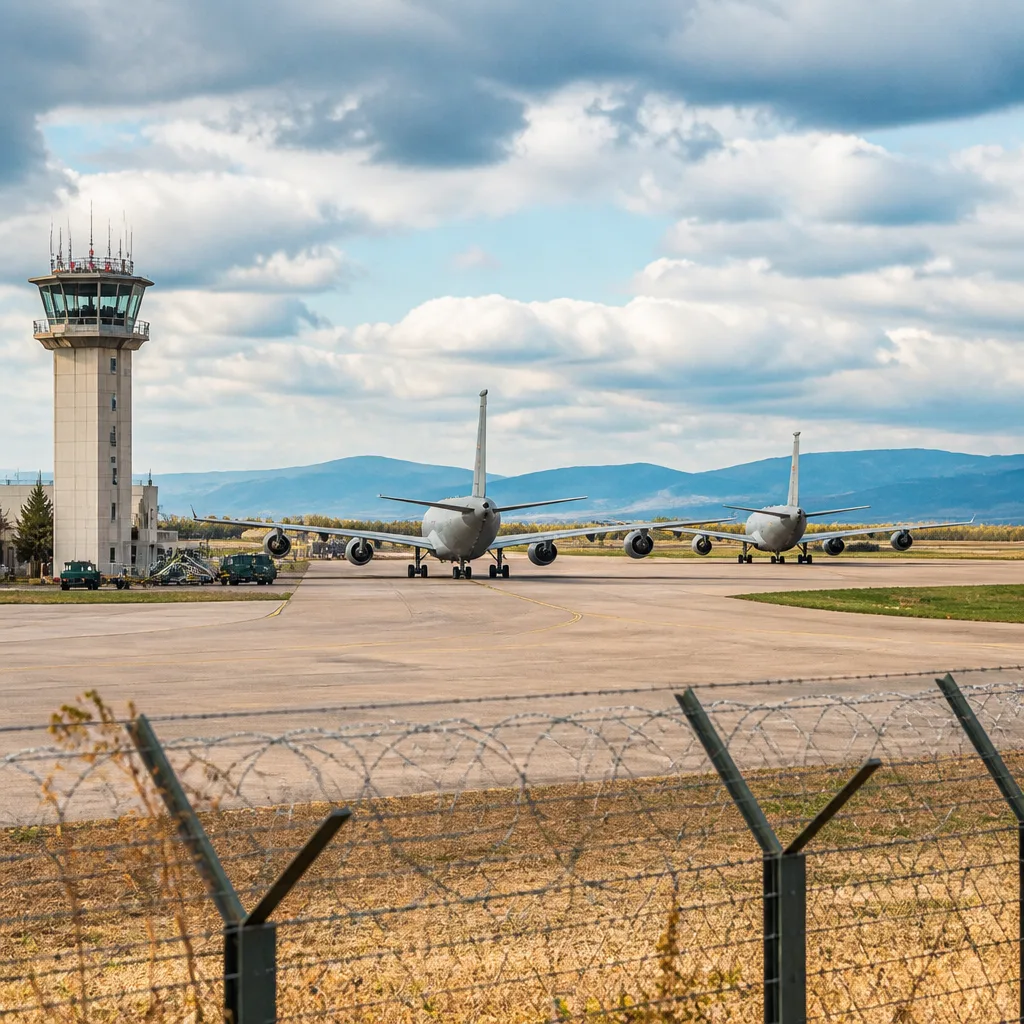
At his weekly press briefing, spokesperson Esmaeil Baqaei framed the presence of US military equipment on allied bases as potential complicity in aggression, saying Iran would treat participation in facilitating attacks as an aggressive act itself. The comments came after two US Air Force KC-135 tanker aircraft were reported to have left Bulgaria’s Bezmer Air Base following a temporary deployment that drew sharp criticism in Tehran.
“It is Iran’s right to target the source and origin of an act of aggression,”
Baqaei emphasised that Tehran would not make concessions when it comes to defending the country’s existence and reiterated that Iran had not initiated hostilities but would not allow the terms of an end to be set by the aggressor. He described the removal of US tankers from Bulgarian soil as tied to earlier concerns over the deployment.
Diplomatic and legal context
Iran’s remarks referenced Bulgaria specifically, saying the deployment of US military assets there was contrary to international law and amounted to support for US aggression. According to the foreign ministry spokesman, states that provide military facilities to countries planning or conducting attacks should expect Tehran to treat those facilities as legitimate targets.
The source material notes that the US requested the temporary deployment under an agreement governing joint use of military facilities, and that the Bulgarian parliament had approved the move on July 22. Bulgarian defence officials later said the aircraft departed and described their operations as training flights over allied countries.
Consequences and regional implications
The statement reinforces Tehran’s long-standing posture linking external basing and transfers of military capability to its security calculus. By explicitly declaring the right to strike the origin of aggression — and by extending that logic to states that host or facilitate foreign military assets — Iran is signalling a broadened targeting rationale that could complicate diplomatic ties and raise the risk calculus for third-party states.
For NATO members and partners that operate or host US and allied aircraft, the public rebuke adds pressure to carefully weigh force posture decisions and the political messaging that accompanies temporary deployments. Those decisions now carry not only diplomatic friction but, in Iran’s formulation, the possibility of being considered instrumental to any attack against Tehran.
- Targeting rationale: Iran says it can strike the source of aggression, which it defines to include states facilitating attacks.
- Bulgaria case: Parliament approved the temporary basing on July 22; two KC-135 tankers later departed Bezmer Air Base.
- Diplomatic fallout: Statements raise pressure on host countries and complicate routine allied training or temporary force posture adjustments.
When asked about remarks from President Masoud Pezeshkian regarding an end to the war, Baqaei reiterated that Iranian officials have consistently stressed their determination to defend territory and that the Iranian people will not accept conditions dictated by an aggressor.
| Item | Detail |
|---|---|
| Approval of deployment | Bulgarian parliament approved temporary use of base on July 22 |
| Aircraft | Two US Air Force KC-135 tankers |
| Departure | Bulgarian defence minister said the aircraft departed following the temporary deployment |
The foreign ministry’s comments close a loop between diplomatic protest and public warning, underscoring how sensitive basing and temporary deployments have become in the region. Whatever the operational facts behind last month’s tanker presence, Tehran’s framing makes clear that it intends to hold not only direct attackers but also those who enable them to account.
That posture will be watched closely by capitals across Europe and the Middle East as they calibrate military cooperation with the United States and consider the potential political and security costs of hosting allied assets.