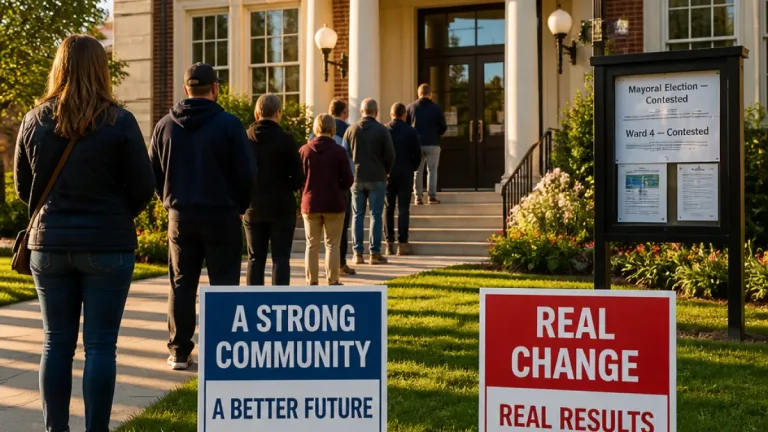
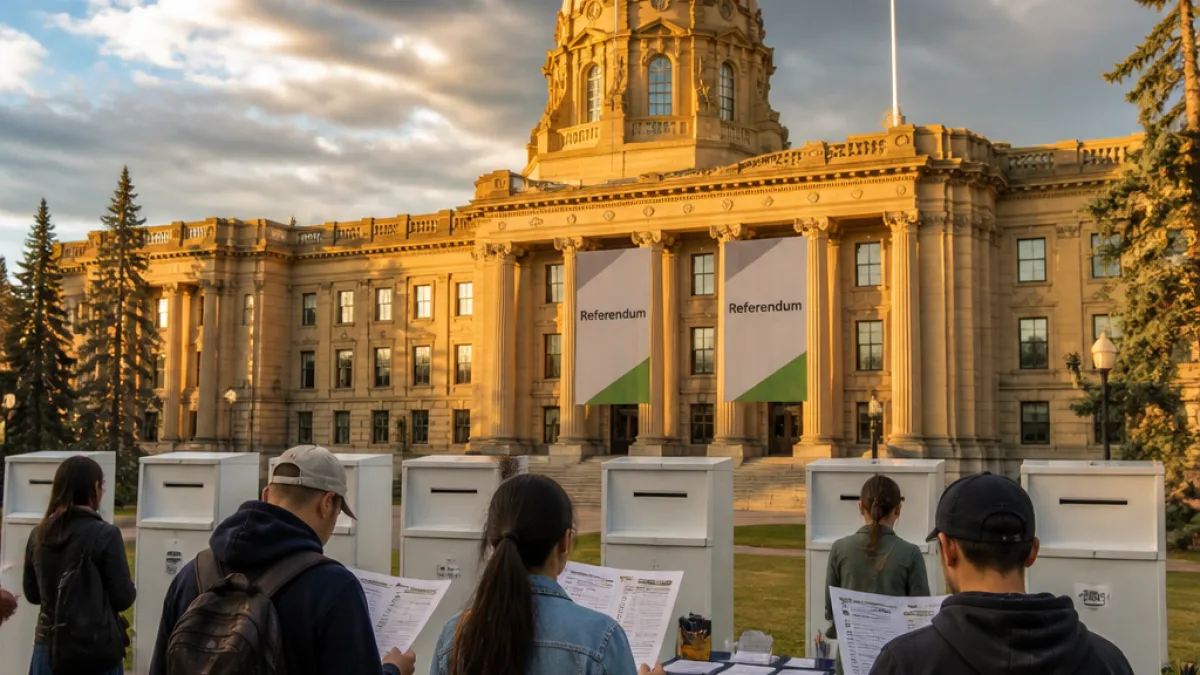
Alberta’s referendum delivered a clear rebuke to separatist proposals, but other results released in unofficial returns have amplified concerns among immigrants and temporary residents about their place in the province.
Clear No on independence, mixed signals on immigration
Last week’s vote was widely read across Canada as a decisive rejection of independence for Alberta, with more than three-quarters of voters opposing separation. The outcome has also been hailed as a political win for Prime Minister Mark Carney.
But a closer look at the referendum returns shows a more complicated picture. Unofficial tallies indicated the Yes side led on eight of the nine other referendum questions — including all five that addressed immigration and access to public services — signalling appetite among voters for changes that could tighten rules for temporary residents and expand provincial control.
What the results mean for newcomers
The referendum’s anti-immigration tone during the campaign has left many newcomers uneasy about their future in Alberta. Temporary residents, who make up less than 10 per cent of the province’s population, were repeatedly singled out during debates over who should receive public services.
"I can hardly make ends meet as a student. Paying more for less health care would put many people off from coming here as students in the future."
— Alhan Arsal, temporary resident and master’s student at the University of Calgary
Arsal, who is from Bangladesh and pursuing graduate studies in Calgary, said the vote’s anti-immigrant messaging made him consider leaving Alberta after graduation. His concerns are echoed by immigrant-focused media and community leaders who say the referendum amplified rhetoric that paints newcomers as a political problem rather than an economic asset.
Voices from the newcomer community
Dozie Anyaegbunam, managing editor of The Newcomers, said the results were predictable but still disheartening. He argued that the campaign turned temporary residents into a "lightning rod," detracting from the positive economic and social contributions immigrants make to the province.
Another recent citizen, lawyer Imtiaz bin Hafiz, who moved to Alberta in November 2022 and took his oath on Oct. 21, told reporters he was not surprised by the outcome. While his remarks were cut off in the published report, the pattern of unease among newly arrived and temporary residents is consistent in community reporting.
Practical consequences and political stakes
The referendum results could strengthen the provincial government under Premier Danielle Smith as she presses for more provincial authority over immigration and seeks to limit services available to temporary residents. That trajectory would have immediate administrative effects and longer-term repercussions for Alberta’s labour market and post-secondary institutions, which rely on international students and temporary workers.
- Temporary residents account for under 10% of Alberta’s population.
- Unofficial returns showed the Yes side led on eight of nine non-secession questions.
- All five referendum questions about immigration and access to services saw the Yes side leading in unofficial counts.
Looking ahead
It is unclear how quickly the provincial government might move to convert referendum findings into policy changes. Federal-provincial jurisdiction over immigration is complex; any move to carve out new provincial controls could trigger legal and political fights with Ottawa.
For now, the immediate impact is psychological. Newcomers and temporary residents report growing uncertainty about whether Alberta remains a place for them to study, work and stay. Post‑secondary institutions, employers and community organisations will be watching closely as elected officials decide whether to act on the referendum’s immigration-related outcomes.
| Issue | Unofficial referendum outcome |
|---|---|
| Independence | No — more than three-quarters rejected separation |
| Other referendum questions | Yes led on 8 of 9 questions (including all 5 on immigration) |
| Temporary residents | Make up less than 10% of Alberta's population |
The referendum has closed one chapter — a widespread rejection of secession — while opening another that centres on how Alberta treats newcomers. The policy and political choices that follow will determine whether the province keeps the international students, skilled workers and families it needs to sustain growth, or whether uncertainty drives them elsewhere.
Reporting from Calgary.