
Alberta’s government says it will introduce a package of bills this fall aimed at easing household costs and strengthening consumer protections, with measures expected to tackle auto insurance, utility billing, ticket resales and the sale of used vehicles.
Legislative agenda framed as consumer-first
Government House Leader Joseph Schow told reporters the proposed laws will also include new rules for the development of artificial intelligence data centres and a change to public-sector hiring rules the government describes as intended to ensure appointments are “merit based.” The announcements come as the legislature reconvenes next week, roughly a year and a half before the next general election scheduled for Oct. 18, 2027.
“Each of these initiatives I’ve laid out are addressing some of the very real concerns that we have heard from Albertans,”
Schow said the timing of the legislation is driven by those concerns rather than electoral considerations.
What’s been flagged so far
Details remain limited until bills are formally tabled, but the government has signalled a focus on areas seen as directly affecting household budgets and consumer fairness.
- Auto insurance — measures intended to lower premiums.
- Utility bills — new protections for consumers around billing practices.
- Ticket resales — rules to regulate secondary markets and protect buyers.
- Used-vehicle sales — enhanced consumer protections for purchasers.
- AI data centres — stronger rules governing development and presumably data handling or land-use.
- Public-sector hiring — reforms described as promoting merit-based hiring.
Political responses
The opposition NDP’s leader took aim at the hiring reforms, suggesting the government’s emphasis on “merit” is a coded attack on diversity-focused hiring practices. He argued the language signals that women and visible minorities could be disadvantaged by the new rules.
“When they use ‘merit,’ that means don’t hire the ethnic people for these jobs (and) don’t hire women for these jobs,”
The Alberta Union of Provincial Employees — which represents about 22,000 government workers — has been referenced by opponents concerned about the potential implications of any change to hiring processes within the public service.
Context: referendum result and caution on immigration laws
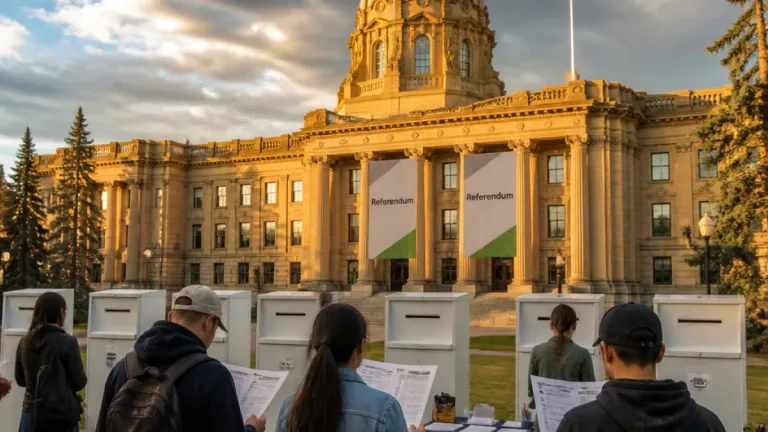
The legislature resumes just over a week after a historic provincial referendum in which voters overwhelmingly backed remaining in Canada. Voters also approved several measures related to immigration reforms, but by narrow margins. Premier Danielle Smith has said the government will proceed cautiously on immigration changes; Schow confirmed no legislation on that topic will be tabled until at least spring.
Practical impact and questions ahead
If the bills become law, Albertans could see policy shifts in several everyday areas. Lower auto insurance costs and tighter rules around utility billing would have direct effects on household spending. Changes to ticket-resale and used-vehicle rules could improve market transparency and reduce instances of consumer harm. Regulation of AI data centres may affect local planning and investment in data infrastructure.
Key questions remain that the government will need to answer when the bills are introduced:
- How will auto-insurance reductions be achieved without destabilizing insurers or reducing access to coverage?
- What concrete protections will be put in place for consumers who face disputed utility charges?
- Will ticket-resale rules include caps, disclosure requirements or technological controls?
- What specifics will govern AI data-centre development — environmental safeguards, data residency, or security standards?
- How will “merit-based” hiring be defined and measured to avoid unintended discrimination?
| Area | Stated aim |
|---|---|
| Auto insurance | Lower premiums |
| Utilities | Consumer billing protections |
| Ticket resales | New consumer rules |
| Used vehicles | Enhanced purchaser protections |
| AI data centres | Stronger development rules |
| Public hiring | Merit-based reforms |
The coming weeks should bring clarity as the government tables specific bills and opposition parties and stakeholders scrutinize the measures. For Albertans watching for tangible relief on household costs, the details — and how they will be implemented — will determine whether the initiatives deliver results or become fodder for political debate as the next provincial general election approaches.
Cody MacLeod, WE NEWS — reporting from Edmonton.