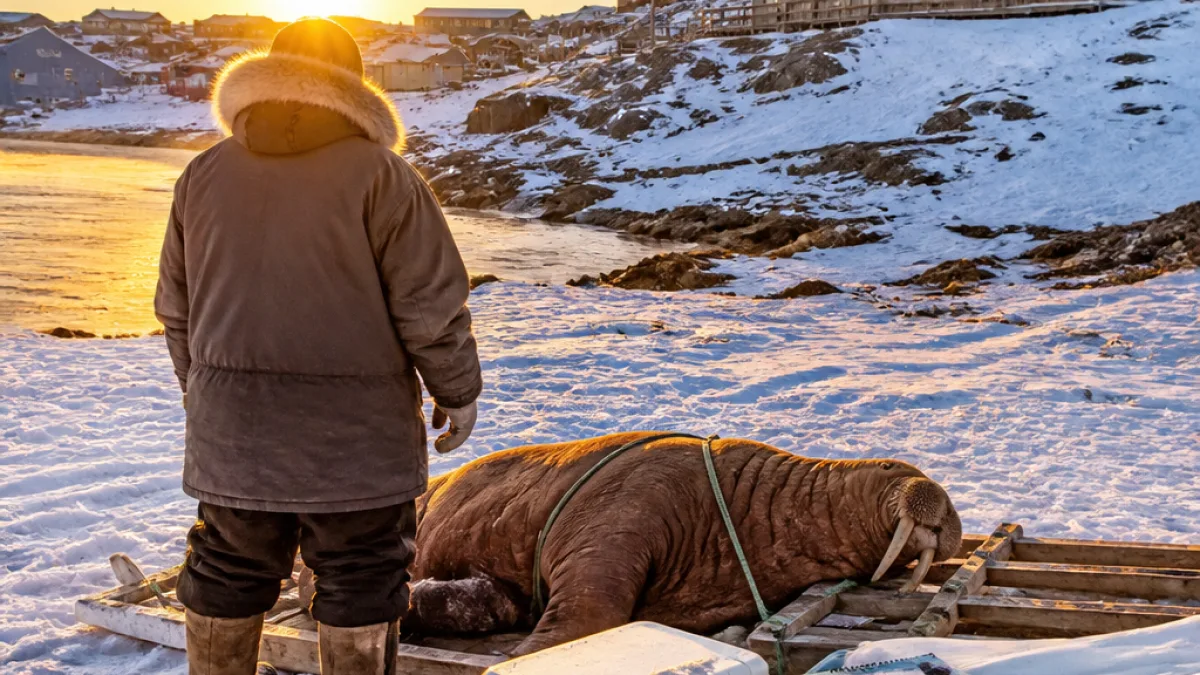
The Nunavut Department of Health is advising residents of Naujaat that a walrus harvested on Aug. 10, 2026 has tested positive for trichinella, a parasitic roundworm that can cause trichinosis in people who eat infected, uncooked meat.
What residents should look for
Health officials say people who have eaten uncooked or undercooked walrus and who are now experiencing symptoms should contact their health-care provider and tell them about their exposure. The department listed common signs associated with trichinella infection, including:
- stomach pain
- muscle pain
- diarrhea
- swollen eyelids
- sweating and weakness
Testing the harvested walrus is the only way to confirm whether that meat is safe to eat and to prevent further cases in the community. Hunters who submit animals for testing are helping to protect their families and neighbours, the department said.
Handling, storage and preparation advice
The department emphasised that common traditional preservation methods such as freezing or fermenting do not kill trichinella. The parasite is destroyed only by thorough cooking. People handling uncooked walrus are urged to sanitise utensils and surfaces that come into contact with raw meat and to avoid feeding uncooked walrus to household pets.
| Concern | Recommended action |
|---|---|
| Possible exposure to uncooked walrus | Contact a health-care provider and report consumption of uncooked walrus |
| Preparing walrus meat | Cook thoroughly — freezing or fermenting is not sufficient |
| Handling raw meat | Wash and sanitise utensils; do not feed raw meat to pets |
Community context and public-health implications
Naujaat is a small Inuit hamlet on the Arctic Circle in the Kivalliq Region of Nunavut. Walrus hunting is a long-standing part of food security and culture across Nunavut. Because trichinella cannot be detected without testing, any harvested walrus could potentially carry the parasite. The department specifically thanked hunters who chose to have their walrus tested, noting those actions help prevent infection chains within tight-knit communities.
For residents, the advisory is a reminder that traditional food practices and modern public health guidance intersect. Testing harvested animals and ensuring meat is cooked thoroughly are practical steps that protect individuals while allowing harvesting traditions to continue.
Practical steps for hunters and households
- Ask whether any walrus you are given has been tested before cooking or consuming it.
- If you hunt, consider submitting samples from your catch for testing even if the animal appears healthy.
- Cook walrus meat thoroughly; do not rely on freezing or fermenting to eliminate risk.
- Sanitise knives, cutting boards and any surfaces that touch raw walrus meat.
- Keep pets away from raw meat and offal to avoid them becoming carriers or sick.
Local health centres can provide testing information and guidance for anyone concerned about exposure. Residents experiencing the listed symptoms after eating walrus should inform their health provider about the possible exposure so appropriate testing and treatment can be arranged.
In a community where sharing harvested food remains central, public-health notices such as this balance cultural practices with measures to reduce infectious risks. Testing, clear communication among hunters and thorough cooking are the immediate tools available to reduce the risk of trichinellosis in Naujaat.