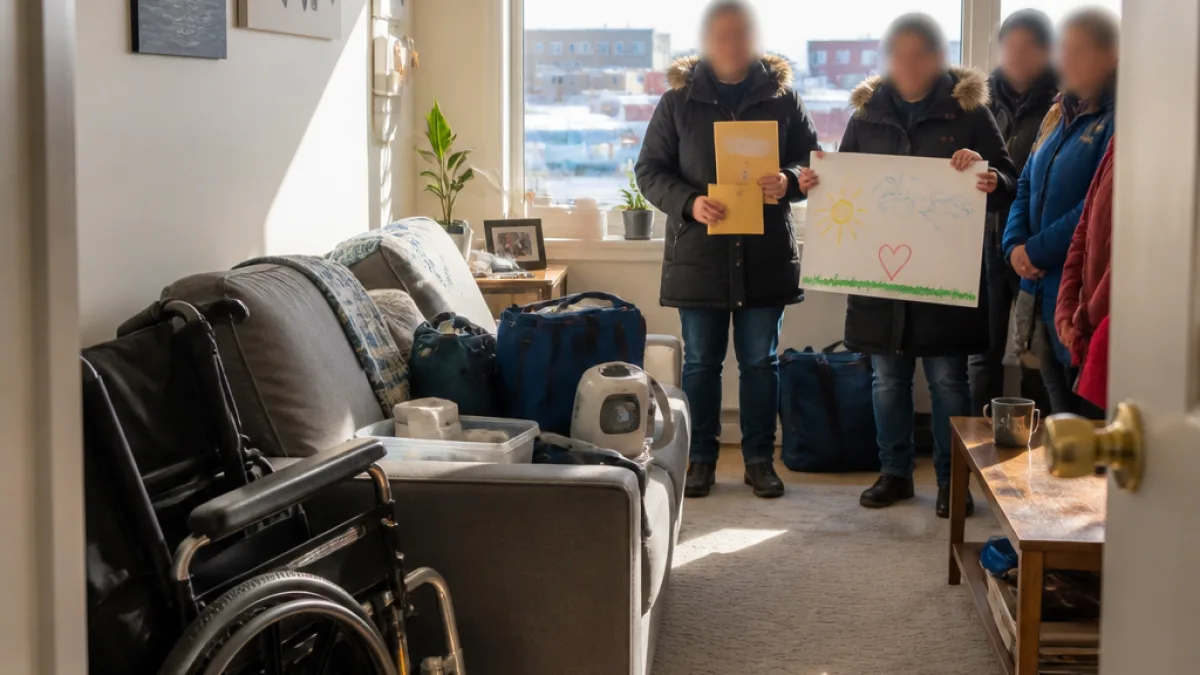
When 78-year-old John Amagoalik arrived in Iqaluit on June 12, family and friends celebrated a long-awaited homecoming. Amagoalik — widely recognised for his role in the creation of Nunavut — had been living at Embassy West, a long-term care centre in Ottawa, for 16 months. Loved ones raised funds, arranged at-home medical supports and secured subsidized housing so he could spend his final days in the territory he helped create.
Homecoming complicated by funding rules
The reunion has now been placed in jeopardy after the Nunavut Department of Health informed Amagoalik and his representatives that it can only provide a fraction of the ongoing supports the family says are needed. Department officials told the family the department’s Home Care Program cannot fund privately contracted care services or pay for independent housing arrangements.
“Privately contracted care services and independent housing arrangements remain separate from department-funded Home Care Services. Consequently, they cannot be provided or funded through the department’s Home Care Program,”
The message, delivered in writing by Heather Hair, assistant deputy minister of health, makes clear the department considers housing and privately arranged supports outside the scope of its Home Care funding.
Costs and comparisons
Amagoalik’s supporters say publicly available figures suggest the cost of his care in Ottawa could have been in the region of $32,000 per month. They estimate that providing his housing and care in Iqaluit would be roughly half that amount. The department, however, maintains it cannot reallocate funds tied to existing elder facility contracts to private housing for individuals.
| Location | Estimated monthly cost |
|---|---|
| Embassy West, Ottawa | $32,000 (family estimate) |
| Iqaluit (home care + housing) | Approximately half of Ottawa cost (family estimate) |
Those figures have not been publicly confirmed by the department but were used by Amagoalik’s supporters to argue that a transfer of care to Nunavut would be both culturally preferable and cost-effective.
Policy vs. practice
The predicament exposes a dissonance between policy commitments and practical capacity. Nunavut’s elders strategy, released in 2024, emphasises the importance of providing elder care closer to home. The territory’s leadership has publicly acknowledged the cultural and social value of enabling elders to receive care within their communities. Yet, as this case shows, administrative boundaries between housing, private supports and provincially funded home care can block that outcome.
Families and community members who worked to bring Amagoalik back say their plan depended on government support for long-term care funding after the move. Without that backing, they warn the arrangement is unsustainable and he may have to return to Ottawa.
What this means for other elders
While this story centres on a well-known public figure, the underlying issue is broader. Many Inuit elders leave home for care in southern facilities because services are unavailable or unaffordable in their home communities. Returning home is not only a personal matter: it is connected to language, ceremony, food security and the continuity of family networks.
- Families seeking to bring elders home often need to coordinate housing, private care providers and medical supports.
- Territorial Home Care funding may not cover privately contracted services or independent housing arrangements.
- Without flexible funding or dedicated programs to bridge the gap, elders may be unable to remain in Nunavut even when returning would be cheaper and culturally preferable.
Next steps and questions
The department’s written response raises several questions for policymakers and the public: Is there a mechanism to reassign funds from existing contracts to individual care needs? Could the department create special provisions for repatriation of elders whose family and community support can supply some services? And how can the territory align its elders strategy with on-the-ground funding processes to avoid situations where moving an elder home becomes impossible despite local will and lower overall cost?
The stakes are not just financial. For Inuit families, the ability to care for elders within their communities is central to cultural continuity and dignity in later life. This case puts pressure on the territorial government to reconcile policy commitments with administrative practice so that elders, regardless of their public profile, can spend their final months at home if that is their and their family’s wish.
For now, Amagoalik’s future in Iqaluit — and what his case might mean for other elders who want to return to Nunavut — remains uncertain.