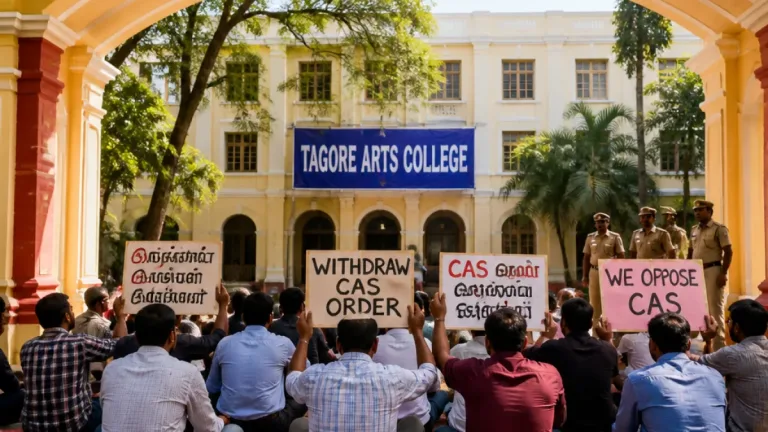
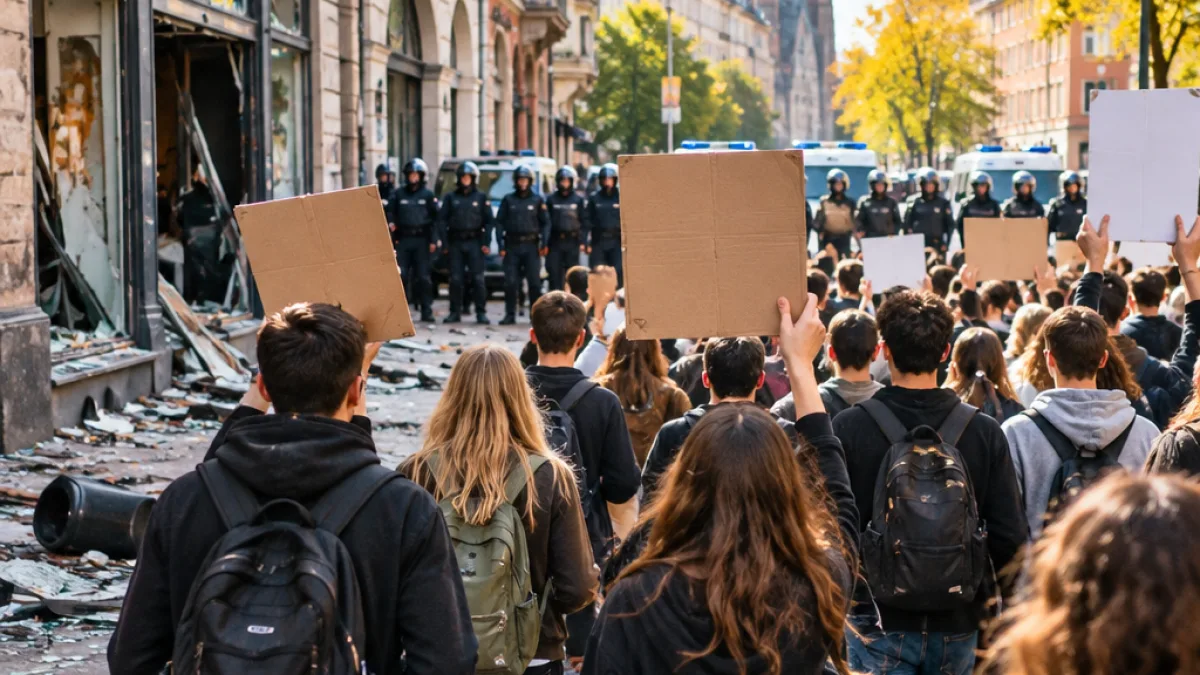
About 120,000 people, many of them young demonstrators, marched across Germany on Saturday in protests calling for better education, lower living costs, greater social justice and stronger climate protections. The largely peaceful demonstrations have since become the centre of a political dispute over migration and integration.
While some clashes and criminal acts were reported in several cities, politicians have attributed the violence to young people described as having a migrant background. The source of those claims has not always been supported by publicly presented evidence, shifting the focus from the protesters’ demands to questions about identity and public order.
Education demands meet accusations about unrest
The demonstrations followed protests in other European countries and took place in several German cities over the weekend. Organizers and participants were presented as seeking broader equality from German authorities, with education among the central concerns. The demonstrations were described as largely peaceful overall, although violence occurred in some locations.
That distinction has become important in the political response. On Sunday, Nov. 1, German Interior Minister Alexander Dobrindt blamed unrest in cities including Frankfurt, Cologne, Hamburg and Berlin on what he called violent left-wing groups and troublemakers from migrant communities. The conservative CSU politician made the remarks at an event in Peißenberg, according to public broadcaster Deutschlandfunk, which reported on them Monday.
"Violent left-wing groups and troublemakers from migrant communities."
The comments placed migration at the centre of a debate that began with concerns about the cost and quality of daily life. For students and young people who joined the demonstrations, the political reaction risks obscuring the issues that brought them into the streets. The available account does not identify the protesters as a single political or demographic group, nor does it establish that people with migrant backgrounds were responsible for all or most of the unrest.
Frankfurt becomes a focus of the dispute
In Frankfurt am Main, about 10,000 people were estimated to have taken part in a demonstration on Oct. 31. Police later said that as many as 1,500 rioters were involved in violence and looting. The reported events included damage to businesses and several arrests.
Hesse Interior Minister Roman Poseck reinforced the argument that migration was linked to the disorder. He said that more than 100 police officers were injured in riots in Frankfurt, including one who was seriously hurt. Deutschlandfunk reported that Poseck, a conservative CDU politician, said the rioters were overwhelmingly from migrant backgrounds.
| Reported detail | Figure or description |
|---|---|
| People demonstrating across Germany | About 120,000 |
| Estimated participants in Frankfurt demonstration | About 10,000 |
| Rioters cited by police in Frankfurt | Up to 1,500 |
| Police officers injured in Frankfurt | More than 100 |
A widening debate about belonging
The competing narratives leave German authorities facing two separate responsibilities: responding to legitimate concerns about education and living costs, while also investigating violence and protecting people and businesses affected by it. The reporting describes the demonstrations as largely peaceful, but it also records serious incidents in some cities. Both parts of that account matter to families, teachers and students trying to understand what the protests mean.
The political dispute is now broader than the original demands. Rather than remaining focused on school conditions, social inequality and climate protection, the response has turned toward who belongs in German society and how migration is discussed in public life. Statements that connect unrest to migrant communities without clearly documented evidence can deepen that divide, while failing to address the education and economic pressures that brought large numbers of young people into the streets.
For now, the demonstrations have made visible a combination of concerns affecting young people across Germany: access to better education, the burden of rising living costs, the desire for a fairer society and demands for stronger climate protections. The events in Frankfurt and elsewhere have added questions about policing and violence, but the movement’s original education message remains part of the national conversation.
- Education: Young demonstrators called for improvements to education.
- Social pressures: Protesters also cited living costs, inequality and climate protection.
- Political response: German officials linked unrest to left-wing groups and migrant communities.
- Evidence dispute: The reported accusations were not always accompanied by supporting evidence.